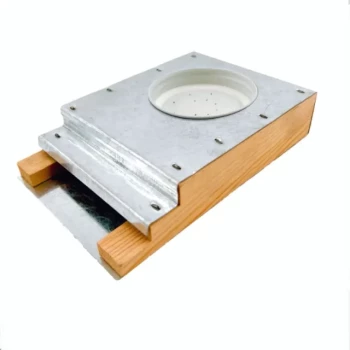
Professional supplemental feeders sustain bee populations by providing a controlled, quantitative delivery of sugar syrups and pollen substitutes during "food deserts" or environmental stress. These precision tools prevent colony collapse by maintaining the hive's basic life activities and reproductive cycles when natural forage is unavailable. By ensuring a stable energy source, they effectively bridge the nutritional gap created by monoculture farming, droughts, or seasonal fluctuations.
Professional supplemental feeding systems act as a critical insurance policy for commercial apiaries, stabilizing colony health and ensuring that honey production and pollination capacity remain consistent despite unpredictable environmental conditions.
Bridging the Gap in Resource-Poor Environments
Precision Nutrition Delivery
Professional feeders are engineered to allow beekeepers to provide precise energy sources exactly when they are needed most. During periods of nutritional scarcity, such as early spring or post-harvest, these tools deliver a consistent flow of nutrients that mimic natural nectar and pollen.
Strengthening Immune Resilience
Malnutrition is a leading cause of immune system decline and subsequent colony loss. Supplemental feeding provides essential amino acids and trace elements that bolster the bees' natural defenses against pesticide pressure and pathogens.
Maintaining Reproductive Rhythms
Without a steady influx of resources, a queen may stop laying eggs, leading to a rapidly aging and shrinking population. Feeders ensure the colony maintains a sufficient labor force, allowing the hive to be at peak strength the moment the next natural nectar flow begins.
Securing Commercial Stability and Yield
Mitigating Seasonal Risks
For commercial operations, the period between flowering seasons represents a significant risk to the bottom line. Utilizing professional-grade feeders allows for the maintenance of colony strength year-round, reducing the rate of seasonal mortality and protecting the beekeeper's initial investment.
Preventing Hive Absconding and Desertion
When resources become dangerously low, honey bee populations are prone to absconding, or completely abandoning the nest. Reliable feeding equipment provides the necessary buffer to keep the colony stationary and productive, even after natural disasters or during extreme droughts.
Optimizing Pollination Readiness
Feeders are essential for building up hive strength prior to specific pollination windows. By providing high-sugar formula feeds in the off-season, beekeepers ensure their bees have the physical stamina required for intensive agricultural pollination tasks.
Understanding the Trade-offs
The Risk of Pathogen Transmission
While feeders provide vital nutrients, poorly designed or unmaintained equipment can become a breeding ground for bacteria or fungi. It is critical to source easy-to-clean, professional-grade equipment to ensure that the feeding process does not inadvertently introduce disease to the hive.
Nutritional Imbalance
Artificial supplements, while effective, are not a 1:1 replacement for the complex biodiversity found in natural forage. Over-reliance on a single type of supplement without considering the full spectrum of nutritional needs can lead to long-term deficiencies if not managed by an expert.
Dependency and Foraging Behavior
There is a strategic balance required in supplemental feeding to avoid creating a "lazy" colony. Feeders should be used to augment survival, not replace natural foraging behavior, to ensure the bees remain active and effective when natural resources return.
How to Apply This to Your Portfolio
As a distributor or wholesaler, understanding the technical necessity of these tools allows you to position your inventory as a comprehensive solution for apiary resilience.
- If your primary focus is risk mitigation for clients: Emphasize the "insurance" aspect of feeders in preventing total hive loss during droughts or extreme weather.
- If your primary focus is yield optimization: Highlight how precision feeders prepare colonies for peak pollination windows and maximize honey production cycles.
- If your primary focus is operational efficiency: Focus on sourcing a full-spectrum portfolio of feeders and supplements from a single partner to ensure rapid response times and ultra-fast delivery for your end-users.
Investing in high-quality supplemental feeding systems is the most effective way to ensure the long-term survival and commercial viability of bee populations in an increasingly volatile environment.
Summary Table:
| Feature | Nutritional Impact | Commercial Benefit |
|---|---|---|
| Precision Delivery | Bridges forage gaps with stable energy | Maintains consistent pollination capacity |
| Immune Bolstering | Supplies essential amino acids/trace elements | Reduces seasonal mortality rates |
| Reproductive Support | Maintains queen laying & colony labor force | Ensures peak strength for nectar flows |
| Risk Mitigation | Prevents hive absconding & desertion | Protects capital investment in livestock |
Scale Your Success with HONESTBEE – Your Premier Wholesale Partner
Empower your commercial operations with HONESTBEE, the global specialist for distributors, wholesalers, and B2B resellers. We offer a comprehensive one-stop sourcing solution, providing a full-spectrum portfolio that includes everything from specialized hive-making and honey-filling machinery to professional-grade feeders and essential beekeeping consumables.
By partnering with us, you benefit from:
- Deep Industry Expertise: Products designed for maximum apiary resilience and yield.
- Optimized Supply Chain: Rapid response times and ultra-fast delivery to keep your inventory moving.
- B2B Focused Support: High profit margins, dedicated customer service, and full OEM/ODM capabilities.
Ready to enhance your product portfolio with premium beekeeping equipment? Contact HONESTBEE Today to discuss our wholesale offerings and secure your supply chain reliability!
References
- Jia Xing, Xueyan Chen. Pollinator Evolution in Response to Agricultural Practices: Insights from Bee Populations. DOI: 10.5376/me.2025.16.0004
This article is also based on technical information from HonestBee Knowledge Base .
Related Products
- HONESTBEE Professional Entrance Bee Feeder Hive Nutrition Solution
- HONESTBEE Entrance Bee Feeder Professional Hive Nutrition Solution for Beekeeping
- HONESTBEE Round Hive Top Bee Feeder for Syrup
- HONESTBEE Entrance Bee Feeder Efficient Hive Front Liquid Feeding Solution for Beekeeping
- Rapid Bee Feeder White Plastic 2L Round Top Feeder for 8 or 10-Frame Bee Hives
People Also Ask
- What types of bee feeders are available for beginners? Start with the Simple Entrance Feeder
- What are the advantages and disadvantages of using an entrance feeder for bees? Balance Convenience and Hive Security.
- How does a bee entrance feeder work? A Simple Guide to Convenient Hive Feeding
- What is a bee entrance feeder and what are its drawbacks? Essential Guide to Hive Security and Feeding Efficiency
- How to make an entrance feeder for bees? A DIY Guide for Safe & Effective Feeding