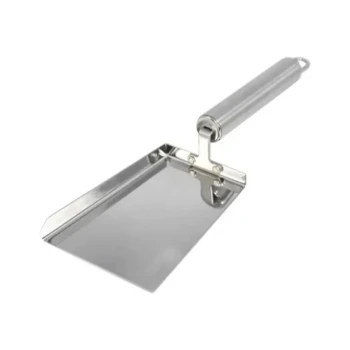
Specialized pollen collection devices facilitate honey product diversification by transforming apiaries from single-commodity honey producers into multi-stream suppliers of high-value bee by-products. By utilizing physical interception mechanisms at the hive entrance, these tools allow for the damage-free harvesting of pollen, propolis, and royal jelly alongside traditional honey. This shift enables distributors to source a comprehensive, full-spectrum product portfolio from a single origin, significantly increasing market resilience and per-order value.
Specialized pollen collectors move the apiary business model beyond honey alone, enabling the low-cost acquisition of premium raw materials that can be processed into health supplements or cultural gifts. For wholesalers, this means access to a diversified inventory that mitigates the risks associated with fluctuating seasonal honey yields.
Expanding the Revenue Architecture Beyond Honey
The Shift to a Multi-Product Revenue Model
The primary function of specialized pollen traps is to move an apiary away from a single honey-based economy. By mechanizing the collection of pollen brought back by bees, these devices allow beekeepers to harvest high-value by-products without compromising the health of the colony. This provides distributors with a broader range of raw materials—from raw pollen to propolis—enhancing the overall risk resilience of the supply chain.
Creating High-Value Cultural and Gift Merchandise
Beyond simple consumption, specialized processing equipment and molds allow for the conversion of honey and beeswax into themed cultural gifts. This expands the physical forms of honey products, increasing their added value and opening new market revenue channels. For resellers, this means the ability to offer "lifestyle" products rather than just food commodities, catering to premium gift markets.
Enhancing Colony Vitality for Consistent Supply
Diversification isn't just about the final product; it's about maintaining production capacity. Collected pollen can be processed into supplemental bee feed, such as pollen patties, which help maintain colony vitality during non-nectar flow periods. This ensures that the apiary remains productive year-round, leading to more reliable order fulfillment and consistent delivery schedules for wholesalers.
Technical Precision and Product Purity
Physical Interception and Automatic Screening
Specialized pollen collectors are installed at the hive entrance and use a specific physical grid structure. This grid guides bees to shed pollen pellets from their hind legs as they enter, allowing for automatic, damage-free collection. This mechanical precision ensures a high volume of harvest with minimal manual labor, supporting the rapid response times required by modern distributors.
Maintaining Purity and Reducing Contamination
Professional extraction and collection tools, including centrifugal extractors and propolis nets, ensure high product purity. By extracting materials efficiently without damaging the honeycomb structure, these devices significantly reduce impurity levels and bacterial contamination. This technical excellence guarantees that the final product meets the stringent quality standards expected in B2B trading.
Sophisticated Filling for Composite Products
To further diversify, specialized honey filling machines allow for the creation of composite bee products. By adjusting parameters for different viscosities, these machines can produce creamed honey, herbal honey, or honey infused with fruits and nuts. This capability allows distributors to offer differentiated product lines that meet modern consumer preferences for functional health foods.
Understanding the Trade-offs
Balancing Collection Yield and Colony Health
While pollen collection is highly profitable, over-harvesting can deprive the colony of essential nutrients. Expert calibration of the collection grids is necessary to ensure enough pollen remains for the brood. Distributors should partner with suppliers who demonstrate deep industry expertise in balancing commercial yield with long-term hive sustainability.
Equipment Investment vs. Market Agility
The transition to a multi-product model requires an initial investment in specialized machinery and consumables. However, the ability to harvest propolis, beeswax, and royal jelly simultaneously allows apiaries to maintain profitability even when honey yields fluctuate. This agility is a key competitive advantage for wholesalers looking to stabilize their price points in a volatile market.
How to Apply This to Your Sourcing Strategy
To maximize the benefits of specialized bee products, distributors should align their procurement with their specific market objectives.
- If your primary focus is Comprehensive Portfolio Growth: Source from apiaries utilizing full-spectrum collection devices to secure a one-stop supply of honey, pollen, and propolis.
- If your primary focus is Premium Brand Positioning: Prioritize products harvested through high-precision physical extractors that guarantee the highest levels of purity and nutritional integrity.
- If your primary focus is Supply Chain Reliability: Partner with suppliers who use collected pollen to create supplemental feed, ensuring their colonies—and your orders—remain stable throughout the off-season.
Leveraging specialized collection technology is the most efficient path to transforming a traditional apiary into a modern, multi-revenue enterprise capable of meeting global B2B demand.
Summary Table:
| Tool Category | Key Output | B2B Value Proposition |
|---|---|---|
| Pollen Collectors | Raw Pollen & Feed | Revenue diversification & colony vitality |
| Propolis Nets | Pure Resin Extracts | High-margin health supplement supply |
| Filling Machines | Infused/Creamed Honey | Rapid product differentiation & OEM support |
| Themed Molds | Cultural Merchandise | Value-added gift market entry |
Partner with HONESTBEE to Scale Your Beekeeping Wholesale Business
Looking to expand your product portfolio with high-margin bee by-products? HONESTBEE is your premier partner for one-stop sourcing. We provide commercial apiaries and distributors with a comprehensive range of professional machinery—from automated pollen collectors and high-precision filling machines to specialized cultural merchandise molds.
Our dedicated B2B services ensure your success through:
- Full-Spectrum Portfolio: Access everything from heavy machinery to essential consumables.
- Premium Trading Services: Benefit from OEM/ODM support and deep industry expertise to maximize profit margins.
- Efficient Fulfillment: Enjoy rapid response times and ultra-fast delivery to keep your supply chain reliable.
Ready to diversify your inventory? Contact HONESTBEE Today for a Wholesale Quote!
References
- Ranvir Singh, Alok K. Gupta. Practices and Constraints in Migratory Bee Keeping with European Honey Bee <i>Apis mellifera</i> L.. DOI: 10.55446/ije.2025.2663
This article is also based on technical information from HonestBee Knowledge Base .
Related Products
- Stainless Steel Pollen Shovel with Wooden Handle
- Removable Plastic Pollen Trap With Ventilated Tray for Bees Pollen Collector
- 30 cm Plastic Entrance Hole Bee Pollen Trap and Collector
- Plastic Bee Pollen Trap Strips Comb Catcher Collector
- Heavy-Duty Ergonomic Grip Galvanized Pollen Shovel
People Also Ask
- How do bee pollen collection tools affect the quality of bee pollen used in functional dairy ice cream production?
- Why should commercial apiaries focus on the collection of diversified bee products? Maximize Your Hive’s Profit Potential
- How does a specialized pollen collector facilitate the harvesting of diverse bee products? Automate High-Value Yields
- What is the impact of pollen collectors and associated equipment on the cost structure of pollen production? Maximize ROI
- What is the technical significance of using specialized cutting tools for propolis? Master Precision Pollen Harvesting