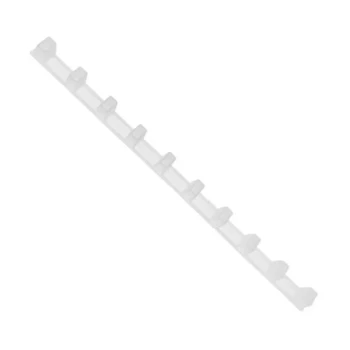
Standardized plastic frame feeders function as precision measurement tools within the hive environment, transforming the chaotic activity of resource collection into quantifiable data. By delivering exact quantities of sucrose solution and allowing researchers to measure the volume consumed over specific time intervals, these devices provide the metrics necessary to accurately calculate hoarding rates.
Core Takeaway To isolate hoarding behavior from environmental variables, researchers must control the energy input. Standardized feeders eliminate the interference of unpredictable natural nectar flows, ensuring that experimental data is repeatable and that comparisons between honeybee breeds are mathematically valid.
The Role of Control in Behavioral Studies
Eliminating Environmental Noise
In a natural setting, nectar sources are unstable and fluctuate based on weather, season, and flora availability. This variability makes it impossible to judge if a colony is hoarding less due to behavior or simply a lack of resources.
Standardized plastic frame feeders remove this uncertainty. They serve as a controlled energy source, ensuring that the "opportunity" to hoard is constant for every subject in the study.
Precision in Data Collection
The physical design of these feeders allows for exact measurements. Researchers provide a known quantity of sucrose solution at the start of the experiment.
By measuring the remaining volume after set intervals, the rate of consumption is derived. This converts abstract behavior into hard data points that can be statistically analyzed.
Enabling Breed Comparisons
Valid scientific comparison requires a level playing field. If one breed is tested during a heavy nectar flow and another during a dearth, the results are meaningless.
Plastic frame feeders ensure that different honeybee breeds are tested against the exact same constraints. This isolation ensures that observed differences in accumulation are due to genetic behavioral traits, not environmental luck.
Understanding the Trade-offs
The Context of Artificial Abundance
While these feeders measure the drive to hoard, they simulate a "free resource" rather than a foraging challenge.
The data reflects how bees manage an accessible surplus, not how well they forage in the field. Researchers must distinguish between the drive to store and the ability to locate resources.
The Necessity of Holistic Standardization
A feeder does not work in a vacuum; the entire hive environment impacts behavior.
As noted in broader studies of colony traits, the internal frame support system and hive structure must also be standardized. Deviations in the physical space—whether testing for hoarding or hygienic behavior—can alter colony stress levels and skew results.
Making the Right Choice for Your Research
To ensure your data withstands peer review, your experimental design must prioritize consistency above all else.
- If your primary focus is Repeatability: Ensure the sucrose concentration and feeder dimensions are identical across all trials to eliminate mechanical variables.
- If your primary focus is Genetic Comparison: Run simultaneous trials across different breeds using these feeders to negate the impact of temporal environmental changes.
By controlling the input, you transform the observation of honeybee behavior from anecdotal study into rigorous, reproducible science.
Summary Table:
| Feature | Impact on Behavioral Research |
|---|---|
| Resource Control | Eliminates natural nectar flow variability for consistent trials. |
| Data Precision | Allows exact measurement of sucrose consumption rates. |
| Standardization | Creates a level playing field for valid genetic and breed comparisons. |
| Repeatability | Ensures experimental data is reliable and withstands peer review. |
Elevate Your Apiary Research and Productivity with HONESTBEE
To achieve rigorous and reproducible results in honeybee behavioral studies, precision equipment is non-negotiable. At HONESTBEE, we specialize in supporting commercial apiaries and distributors with high-quality, standardized beekeeping tools designed for excellence.
Why partner with HONESTBEE?
- Comprehensive Wholesale Catalog: From precision plastic frame feeders to advanced honey-filling machines and hive-making hardware.
- Industry-Leading Quality: We supply the full spectrum of equipment and consumables required for large-scale operations and specialized research.
- Global Distribution Support: We cater to the unique logistics and volume needs of international distributors and commercial bee farms.
Whether you are looking to source specialized machinery or essential apiary consumables, HONESTBEE delivers the reliability your business demands. Contact us today to explore our wholesale offerings and see how we can optimize your beekeeping operations.
References
- Merzban Fatma., Abd El-Gayed Atef. EFFECT OF VENOM COLLECTION ON HYGIENIC AND HOARDING BEHAVIOR IN HONEYBEE. DOI: 10.21608/fjard.2021.222902
This article is also based on technical information from HonestBee Knowledge Base .
Related Products
- 3.5L Plastic Beehive Frame Feeder Deep Frame Water Feeder for In Hive Use
- Rapid Bee Feeder White Plastic 2L Round Top Feeder for 8 or 10-Frame Bee Hives
- Plastic Bee Frame Beekeeping Hive Frames for Wholesale
- Ergonomic Plastic Frame Spacer Tool for Rapid Hive Management Beekeeping
- Durable Plastic Frame Spacer
People Also Ask
- What are the technical advantages of using frame feeders for beehives? Maximize Efficiency and Colony Survival
- Can plastic frames be used in any type of beehive? Maximize Your Apiary Efficiency with Durable Solutions
- What are the technical functions and design requirements of plastic feeders? High-Performance Sourcing for Distributors
- What are the advantages of feeding bees inside the hive? Top Benefits for Colony Security and Health
- Are plastic bee hive frames good? A Guide to Modern Durability vs. Natural Appeal