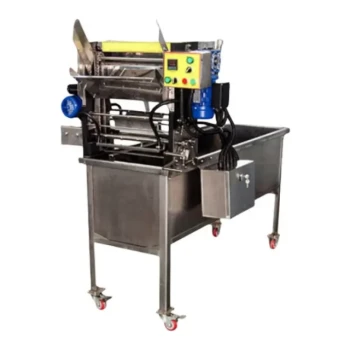
Wet honey cappings from Caucasian honeybees require more careful mechanical handling than dry, air-separated cappings. Because the wax lies directly against liquid honey, uncapping can release honey immediately, increase surface stickiness, and make torn wax more likely to adhere to knives, flails, conveyors, and extraction components. Automated lines should therefore use equipment configured for clean cutting, effective drainage, and frequent wax-and-honey removal.
Caucasian bees’ wet cappings do not prevent automation, but they make uncapper design, operating settings, drainage, and cleaning capacity more important. Heated vibrating knives or suitable flail uncappers can remove the cappings cleanly while reducing wax tearing and downstream clogging.
Why Caucasian Honeybee Cappings Behave Differently
The absence of an air gap
Caucasian honeybees (Apis mellifera caucasica) commonly produce cappings that rest directly on the honey surface rather than being separated by a small air space.
This makes the capped comb more vulnerable to weeping and leakage when frames are moved, tilted, or subjected to vibration.
Greater honey exposure during handling
When wet-capped frames enter an uncapping line, honey may appear on the comb surface before the wax has been fully removed.
That can make frame surfaces and machine components more adhesive, particularly when honey accumulates faster than the line can drain it.
How Wet Cappings Affect Automated Uncapping
They increase the need for clean, controlled cutting
A conventional cutting action may pull or tear wax that is already pressed against liquid honey. Torn cell walls can leave uneven wax fragments on the frame and release additional honey into the machine.
Heated vibrating knives can help slice through the capping layer more consistently, while reducing the dragging force applied to delicate comb.
They can increase wax buildup
Wet wax and honey can combine into a sticky residue on knives, flails, guides, and collection surfaces.
If this material is not removed efficiently, it may interfere with cutting depth, restrict moving parts, and require more frequent stoppages for cleaning.
Flail systems may require careful adjustment
Flail uncappers can be suitable for removing irregular or delicate cappings, but their speed, contact pressure, and clearance must be matched to the comb condition.
Excessive mechanical action can damage cell walls and create loose wax particles that are carried into downstream equipment.
How Wet Cappings Affect Honey Extraction
They can introduce more free honey before centrifugation
Because the comb may begin leaking during uncapping, some honey can reach collection trays, conveyors, or wax-separation systems before the frame enters the extractor.
The processing line therefore needs adequate drainage and collection capacity to prevent honey from pooling around the uncapping and transfer areas.
They can contribute to extractor fouling
Wax fragments and sticky honey entering the extraction stage can increase the risk of residue on baskets, screens, pumps, and transfer lines.
This does not necessarily make centrifugal extraction unsuitable, but it places greater importance on effective uncapping, wax separation, and routine sanitation.
They may affect throughput consistency
A line designed around dry, cleanly lifted cappings may experience more variation when processing wet-capped frames.
If cappings are removed unevenly, the extractor receives frames with different degrees of wax obstruction, potentially reducing the consistency of honey release during centrifugation.
Equipment Features That Matter Most
Heated vibrating knives
Heated vibrating knives are well suited to applications where cappings need to be sliced rather than forcefully torn.
Heat should be controlled carefully: the objective is to improve cutting performance, not to overheat the wax or compromise product handling conditions.
Adjustable flail uncappers
Flail systems provide an alternative for removing cappings through controlled mechanical contact.
For wet-capped Caucasian comb, adjustable operating parameters and appropriate frame support are important for minimizing cell-wall damage and loose wax production.
Strong drainage and collection systems
The uncapping station should provide clear flow paths for honey released during cutting.
Collection trays, screens, and transfer systems must be sized and positioned to handle leakage without allowing honey and wax to accumulate on working surfaces.
Accessible cleaning points
Because wet cappings can produce sticky buildup, machinery should be easy to inspect and clean.
For commercial users, access to knives, flails, screens, conveyors, and drains is not a minor convenience; it directly affects uptime and order-fulfillment capacity.
Designing the Processing Line Around Wet Cappings
Manage frames before uncapping
Frames should be handled carefully to limit unnecessary shaking, tilting, and compression before they reach the uncapping station.
Reducing pre-uncapping leakage helps the machine begin with a cleaner surface and lowers the initial load on drainage and collection components.
Match the uncapping method to comb condition
The correct choice depends on capping thickness, comb rigidity, frame dimensions, and line capacity.
Distributors and processors should confirm that the proposed machine can handle wet-capped Caucasian frames, rather than evaluating equipment only against standard dry-capping samples.
Coordinate uncapping and extraction capacity
An uncapping machine may operate effectively in isolation but still create a bottleneck if downstream wax separation, drainage, or centrifugal extraction cannot handle the released material.
A complete line assessment should cover the uncapping station, transfer conveyors, extractor loading, wax recovery, filtration, and cleaning procedures.
Understanding the Trade-offs
Higher equipment capability can increase operating complexity
Heated knives, vibrating mechanisms, adjustable flails, and improved drainage can make the line more suitable for wet cappings.
However, these features also introduce additional components that require inspection, calibration, cleaning, and spare-parts support.
Faster processing is not always better processing
Increasing uncapping speed may raise nominal throughput, but excessive speed can produce incomplete cuts, torn wax, or greater honey and debris carryover.
The practical target is stable throughput with acceptable frame integrity and manageable cleaning intervals, not maximum speed alone.
Automation does not eliminate product variation
Automated equipment improves consistency compared with manual uncapping, but it cannot remove the natural variation between frames.
Frame thickness, capping depth, honey content, and comb strength still influence machine performance and should be included in equipment trials and purchasing specifications.
Poor cleaning can erase productivity gains
Sticky honey-and-wax residue can gradually reduce cutting accuracy and increase stoppages.
A machine that is fast but difficult to clean may deliver lower real-world productivity than a slightly less aggressive system with reliable access and efficient sanitation.
Making the Right Choice for Your Operation
Wet-capped Caucasian honey requires equipment selection based on the entire processing workflow, not just the uncapping machine’s headline capacity.
- If your primary focus is clean uncapping: Prioritize heated vibrating knives or carefully adjustable flail systems that remove cappings without tearing cell walls.
- If your primary focus is high throughput: Select an integrated line with sufficient drainage, wax separation, conveyor capacity, and extractor loading performance.
- If your primary focus is low maintenance: Favor machines with accessible cleaning points, robust components, and dependable technical and spare-parts support.
- If your primary focus is equipment distribution or resale: Specify compatibility with wet-capped Caucasian frames and verify performance through representative product trials.
- If your primary focus is consistent honey quality: Control wax carryover, leakage, and downstream filtration rather than relying on extraction speed alone.
With the right uncapping method, drainage design, and maintenance plan, wet Caucasian cappings can be processed efficiently at commercial scale.
Summary Table:
| Aspect | Impact of Wet Cappings | Recommended Equipment/Strategy |
|---|---|---|
| Uncapping | Increased stickiness, tearing risk | Heated vibrating knives, adjustable flails |
| Extraction | Fouling, inconsistent throughput | Adequate drainage, easy cleaning |
| Line Design | Needs integration of drainage and cleaning | Coordinate uncapping, extraction, and wax separation |
| Maintenance | Frequent cleaning required | Accessible cleaning points, robust components |
Optimize your extraction line for wet cappings with HONESTBEE. We provide tailored solutions for beekeepers and distributors, ensuring efficient processing and reliable supply. Contact us today to enhance your operation. Get in touch.
Related Products
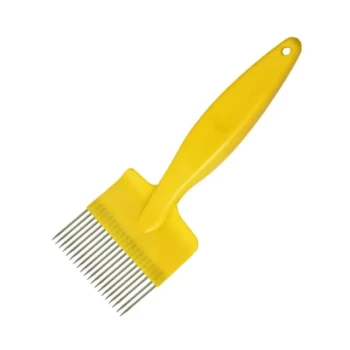
- Professional Durable Plastic Handle Honey Uncapping Fork
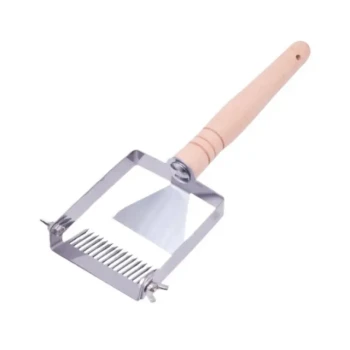
- Adjustable Stainless Steel Honey Uncapping Fork with Scraper for Beekeeping
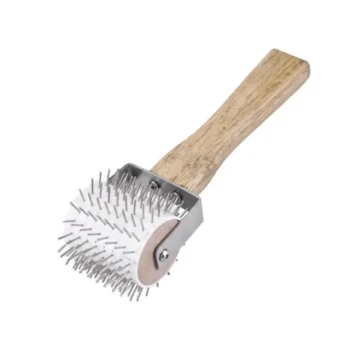
- Professional Honey Uncapping Roller for Efficient Harvesting
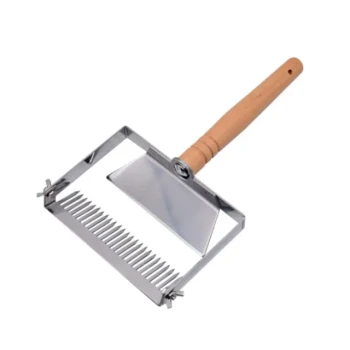
- Wide Adjustable Stainless Steel Honey Uncapping Fork with Scraper
- Adjustable Stainless Steel Honey Uncapping Fork with Scraper Beekeeping Tool
People Also Ask
- What is the design purpose of honey uncapping forks and honey uncapping tanks? Maximize Your Harvest Efficiency
- How does a honey uncapping fork supplement the use of an uncapping knife? Boost Your Honey Yield and Extraction Efficiency
- What other tools are available for honey uncapping besides knives? Find the Right Tool for Your Apiary's Scale
- What tools are used for honey uncapping? Choose the Right Knife for Your Harvest
- What is the primary function of specialized honey uncapping tools? Maximize Your Extraction Yield and Efficiency