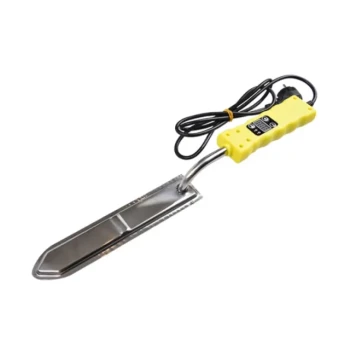
A heated blade facilitates precise sample preparation by utilizing localized thermal melting to sever fragile wax structures rather than forcing a physical edge through them. By melting a path through the material, the tool eliminates the mechanical stress that typically damages delicate specimens during the slicing process.
By substituting physical pressure with thermal action, a heated blade ensures that fragile honeycomb cells remain structurally sound, preserving the sample's original geometry for accurate analysis.
The Mechanism of Thermal Cutting
Localized Thermal Melting
The core function of the heated blade is to apply heat specifically to the cutting line.
This causes the wax to melt at the exact point of contact, allowing the blade to pass through without resistance.
Eliminating Mechanical Stress
Traditional blades rely on friction and pressure to separate material.
The heated blade effectively prevents the shear and compressive forces associated with these mechanical methods.
This absence of physical force is critical when working with materials that have low structural strength.
Preserving Sample Integrity
Protecting Thin-Walled Structures
Honeycomb samples are characterized by extremely thin, fragile cell walls.
Under normal mechanical cutting, these walls are prone to immediate collapse or deformation.
The heated blade ensures these fine structures remain upright and intact throughout the sampling process.
Retaining Micro-Morphology
For scientific analysis, the internal structure of the sample must remain unaltered.
This tool preserves the original micro-porosity and the specific morphology of the growth front.
This ensures that subsequent observations reflect the true state of the sample, rather than artifacts created by the preparation tool.
Common Pitfalls to Avoid
The Risk of Mechanical Distortion
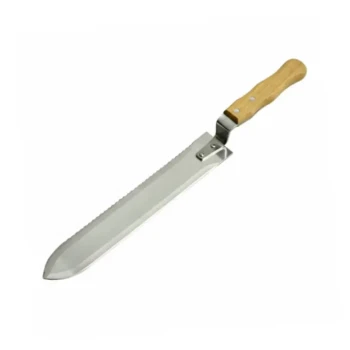
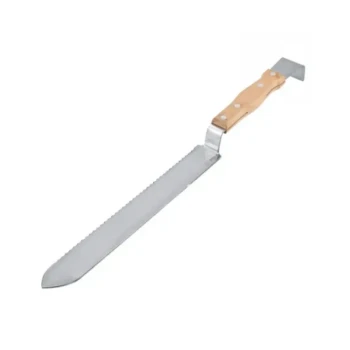
The primary error in preparing honeycomb samples is the use of standard, unheated mechanical blades.
These tools inevitably introduce drag and pressure that crush the cellular structure.
Once the walls are deformed, it becomes impossible to accurately assess the growth front or porosity.
Making the Right Choice for Your Goal
The use of a heated blade is not merely a convenience; it is a prerequisite for high-fidelity analysis of wax-based structures.
- If your primary focus is Structural Morphology: You must use thermal cutting to ensure the thin walls of the honeycomb maintain their original geometry without collapsing.
- If your primary focus is Micro-Porosity Analysis: You need a heated blade to prevent the compression of pores, ensuring the growth front remains open and observable.
The heated blade transforms sample preparation from a destructive physical process into a non-invasive thermal separation, safeguarding the data within the structure.
Summary Table:
| Feature | Traditional Mechanical Blade | Heated Thermal Blade |
|---|---|---|
| Cutting Mechanism | Physical pressure and friction | Localized thermal melting |
| Structural Impact | High risk of cell wall collapse | Preserves thin-walled structures |
| Sample Deformation | Significant shear/compressive stress | Eliminates mechanical stress |
| Data Accuracy | High artifact rate (distorted pores) | High-fidelity (original morphology) |
| Best Use Case | Robust, non-fragile materials | Precise wax-based sample analysis |
Elevate Your Beekeeping Operations with HONESTBEE
Precise sample analysis is the backbone of a successful commercial apiary or distribution business. At HONESTBEE, we understand the technical nuances of hive management and product quality. We empower commercial apiaries and distributors with a comprehensive wholesale range, including:
- Advanced Machinery: Specialized hive-making and honey-filling machines to scale your production.
- Professional Tools: A full spectrum of beekeeping hardware designed for durability and precision.
- Industry Consumables: Every essential supply needed to maintain healthy, productive colonies.
- Cultural Merchandise: Unique honey-themed products to expand your market reach.
Whether you are refining your sampling techniques or upgrading your entire production line, HONESTBEE provides the expertise and equipment to help you succeed.
Ready to optimize your honeycomb production? Contact us today to discuss your wholesale needs!
References
- Rahul Franklin, Nikhilesh Chawla. Unraveling the Mechanisms of the <i>Apis mellifera</i> Honeycomb Construction by 4D X‐ray Microscopy. DOI: 10.1002/adma.202202361
This article is also based on technical information from HonestBee Knowledge Base .
Related Products
- Professional Wide Blade Honey Scraper for Beekeeping and Honey Processing
- Electric Heated Honey Uncapping Knife for Beekeeping
- Professional Electric Honey Uncapping Knife with Heated Digital Temperature Control for Beekeeping
- Honeycomb Uncapping Knife for Apiculture
- Electric Hot Honey Uncapping Knife with Thermostat
People Also Ask
- What tools and machinery are essential to resolve common operational constraints such as equipment shortages and improper honey harvesting? Discover the complete honey-harvesting equipment lineup for commercial apiaries and distributors.
- How does environmental temperature control influence the efficiency of honey scraping equipment? Optimize Your Flow
- What operational considerations are critical during honey harvesting, and how do specialized honey processing tools add value to the final product? Optimize Quality and Yield
- What are the core functions of a honey processor? Master Moisture Control and Purification for Quality Honey
- What are the technical requirements for beekeeping equipment used in the production of comb honey compared to filtered honey?