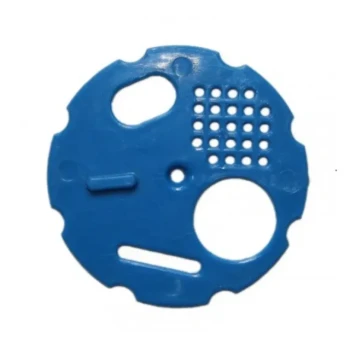
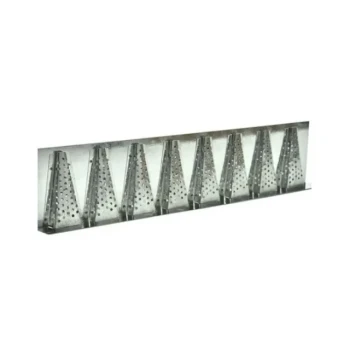
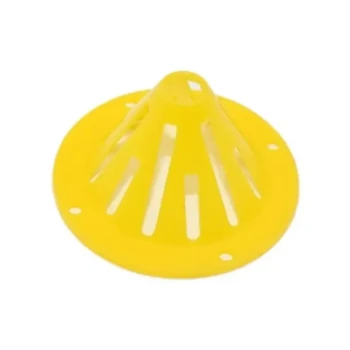
A sliding entrance blocker streamlines field management by allowing operators to mechanically control bee flight ranges without direct contact. This device enables personnel to switch hive activity levels using a simple sliding interface, effectively managing the hive's external interaction without the immediate need for protective suits or smoke.
By decoupling hive control from direct bee contact, this hardware allows non-expert personnel to safely manage pollination workflows, significantly reducing both labor costs and operational safety risks.
Democratizing Hive Access
Removing the Expertise Barrier
Traditionally, managing bee activity requires specialized knowledge of bee behavior and handling techniques. The sliding entrance blocker removes this prerequisite.
It creates a mechanical interface that allows personnel without specialized beekeeping experience to execute necessary control measures.
Eliminating Equipment Dependencies
Standard hive management often dictates the use of protective suits and smokers to sedate bees during interaction.
With a sliding blocker, the operator can switch the flight range from the outside. This removes the need to don cumbersome protective gear or manage ignition sources in the field.
Enhancing Operational Efficiency
Simplified Pollination Management
Managing large-scale pollination often requires precise timing regarding when bees are active.
This hardware significantly simplifies the management of the pollination process by allowing rapid toggling of hive access. Field teams can open or restrict flight ranges instantly via the sliding mechanism.
Reducing Operational Risk and Cost
Direct contact with hives carries inherent risks of stings and the associated liability.
By enabling a "hands-off" control method, the blocker reduces operational risks. Furthermore, because high-level experts are not required for these routine toggles, labor costs are significantly reduced.
Understanding the Operational Trade-offs
External Control vs. Internal Health
While the blocker optimizes traffic control, it is an external interface only.
It does not replace the need for skilled beekeepers to occasionally open the hive for health inspections or colony maintenance. Relying solely on the blocker does not provide data on the internal state of the colony.
Mechanical Reliance
The system relies on a simple sliding operation.
Operators must ensure the mechanism remains free of debris (such as propolis or wax) to maintain smooth operation. A jammed blocker could unintentionally lock bees inside or leave them fully exposed at the wrong time.
Implementing the Blocker for Best Results
To maximize the utility of sliding entrance blockers in your operations, align their use with your specific management goals:
- If your primary focus is Cost Reduction: Utilize the blocker to allow general farm labor to manage pollination schedules, reserving expensive master beekeepers for internal health inspections.
- If your primary focus is Safety: Mandate the use of the sliding mechanism for all routine activity checks to eliminate unnecessary direct contact and the need for smokers.
This simple hardware upgrade fundamentally shifts hive management from a specialized art to a scalable, manageable industrial process.
Summary Table:
| Feature | Traditional Management | Management with Sliding Blocker |
|---|---|---|
| Expertise Required | High-level beekeeping knowledge | Low (suitable for general labor) |
| Safety Gear | Full protective suits & smokers | Minimal to none for external toggling |
| Labor Efficiency | Time-consuming manual handling | Rapid, mechanical sliding interface |
| Risk Level | High (direct contact & sting risk) | Low (decoupled, hands-off operation) |
| Cost Profile | High (specialized labor costs) | Low (democratized field tasks) |
Scaling Your Beekeeping Operation with HONESTBEE
At HONESTBEE, we specialize in empowering commercial apiaries and distributors with the high-performance tools needed to industrialize beekeeping. Whether you require precision-engineered sliding entrance blockers, hive-making machinery, or professional honey-filling equipment, our comprehensive wholesale portfolio is designed to reduce your operational overhead and maximize safety.
Ready to optimize your workflow and increase profitability? Contact our expert team today to discover how our full spectrum of beekeeping hardware and industry consumables can transform your commercial business.
References
- Beatriz de Jesus Rodrigues, Daniel Nicodemo. An easy-to-manage two-entrance honey bee hive system for greenhouse pollination that improves fruit production. DOI: 10.33448/rsd-v10i11.20029
This article is also based on technical information from HonestBee Knowledge Base .
Related Products
- Multi-Functional Sliding Hive Entrance for Beekeeping
- Steel Round Disc Entrance Reducer for Flexzion Bee Hive Nuc Box Gate
- Beehive Entrance Discs Plastic Bee Entrance Disc for Bee Hives
- Beehive Entrance Reducer Guardian Metal Hive Entrance for Bees
- Professional Reversible Beehive Hive Entrance
People Also Ask
- What roles does the hive entrance (piquera) play in beehive management and colony health? Essential Guide for Pro Apiaries
- Where is the hive entrance typically located? Optimize Your Hive's Health and Honey Production
- What role does the size of the entrance play in hive ventilation? Master Beehive Climate Control
- What is the best entrance for a bee hive? Maximize Colony Health & Honey Production
- What happens if you block the entrance to a bee hive? Avoid This Dangerous Mistake