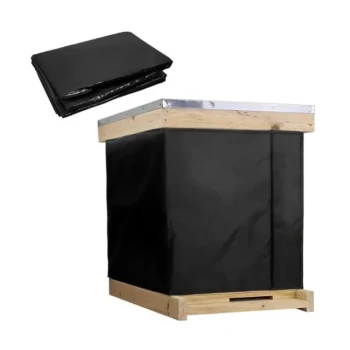
Ventilation rims or upper entrances are strictly necessary to create a designated escape route for moisture while retaining hive heat. Without these openings, the metabolic water vapor generated by the bees creates a humid environment that leads to condensation, wet bees, and eventual colony collapse.
While top insulation is critical for thermal conservation, it acts as a seal that can trap dangerous levels of humidity. Ventilation components provide the essential airflow required to evacuate metabolic moisture, preventing it from condensing on the hive roof and dripping back onto the winter cluster.
The Physics of Hive Moisture
The Source of Humidity
Honeybees do not hibernate; they vibrate their wing muscles to generate heat.
This metabolic process consumes honey and generates a significant byproduct: water vapor.
The Condensation Trap
Warm air holds more moisture than cold air, and as heat rises from the cluster, it carries this vapor to the top of the hive.
Without a ventilation rim or upper entrance, this warm, moist air hits the physical barrier of the hive cover.
Even with insulation, if the air cannot escape, it eventually saturates the top of the hive environment.
The Mechanism of Mortality
When trapped moisture makes contact with a surface cooler than the internal air, it condenses into liquid water.
Gravity causes this cold water to drip directly back down onto the cluster.
A wet bee is a dead bee. Once the bees' exoskeletons are wet, they lose their ability to thermoregulate, leading to rapid freezing and death.
The Role of Top Insulation Systems
Creating a Thermal Barrier
As noted in the supplementary data, professional hive insulation acts as a critical thermal barrier.
It increases the thermal inertia of the hive, shielding the colony from rapid external temperature fluctuations.
Reducing Energy Consumption
By retaining heat, insulation reduces the amount of honey the colony must consume to maintain core temperatures.
However, high-insulation synthetic hives or heavy top insulation can be too efficient at sealing the hive if ventilation is ignored.
Balancing Heat Retention and Airflow
The Chimney Effect
Ventilation rims utilize the natural physics of rising heat.
They allow the warm, moisture-laden air to exit the top of the hive before it condenses.
Active vs. Passive Regulation
Top insulation ensures that the internal temperature reflects the bees' active regulation rather than outside weather.
The ventilation rim ensures that this active regulation does not result in a toxic, high-humidity environment.
Understanding the Trade-offs
Heat Loss vs. Moisture Control
A common concern is that upper entrances let out too much precious heat.
However, the trade-off is non-negotiable: dry and cold bees can survive, but wet and warm bees will die.
The Risk of Over-Sealing
High-insulation materials are excellent for reducing heat loss, but they often lack the breathability of older, wooden structures with cracks.
Using modern insulation without deliberate ventilation creates a "Tupperware effect," trapping moisture that would otherwise seep out of a less efficient hive.
Making the Right Choice for Your Goal
To successfully overwinter your colonies, you must balance thermal efficiency with moisture management.
- If your primary focus is Colony Survival: Prioritize the installation of a ventilation rim or notched inner cover to ensure moisture can escape, even if it means sacrificing a small amount of heat.
- If your primary focus is Energy Efficiency: Combine heavy top insulation with a restricted upper entrance to maximize heat retention while still providing a controlled pathway for air exchange.
The most effective winter setup keeps the colony warm, but more importantly, it keeps them dry.
Summary Table:
| Feature | Function in Winter Hive | Impact on Colony Survival |
|---|---|---|
| Top Insulation | Retains core heat & reduces honey consumption | Prevents freezing; must be paired with ventilation. |
| Ventilation Rim | Provides escape route for metabolic water vapor | Prevents condensation and "wet bee" mortality. |
| Upper Entrance | Enables the 'chimney effect' for airflow | Ensures fresh air exchange while venting humidity. |
| Thermal Barrier | Shields bees from external temp fluctuations | Reduces metabolic stress and energy expenditure. |
Maximize Overwintering Success with HONESTBEE
Protecting your colony requires the perfect balance of thermal efficiency and moisture control. At HONESTBEE, we specialize in supporting commercial apiaries and distributors with professional-grade beekeeping equipment designed for survival.
Whether you need high-performance hive insulation, specialized ventilation hardware, or industrial hive-making machinery to scale your operations, our comprehensive wholesale portfolio has you covered. From essential consumables to advanced honey-processing tools, we provide the quality you need to keep your bees dry, warm, and productive.
Ready to upgrade your inventory or apiary setup?
Contact Us Today to Explore Wholesale Solutions
References
- Jamie Ellis, Katherine Hammons. Overwintering Honey Bee Colonies in Northern Climates. DOI: 10.32473/edis-in1006-2013
This article is also based on technical information from HonestBee Knowledge Base .
Related Products
- Steel Round Disc Entrance Reducer for Flexzion Bee Hive Nuc Box Gate
- Professional Reversible Beehive Hive Entrance
- Beehive Entrance Discs Plastic Bee Entrance Disc for Bee Hives
- Stainless Steel Round Beehive Air Vents for Ventilation
- Multi-Functional Sliding Hive Entrance for Beekeeping
People Also Ask
- What is the purpose of an entrance reducer for a beehive? Strengthen Colony Defense and Prevent Robbery
- Why are entrance reducers used to counter hornet infestations? Protect Your Hive with Strategic Choke Points
- Why is it critical to maintain a smaller entrance for a newly established bee hive? Boost Colony Growth and Security
- Under what conditions should a beekeeper adjust the size of a beehive entrance? Seasonal & Defense Management Tips
- What is the function of an entrance reducer on a beehive? Strengthen Colony Defense and Climate Control