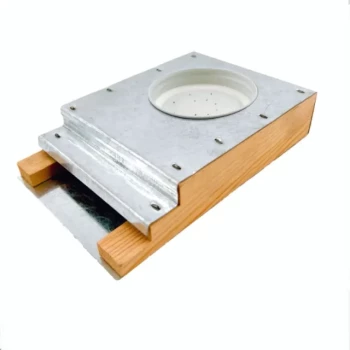
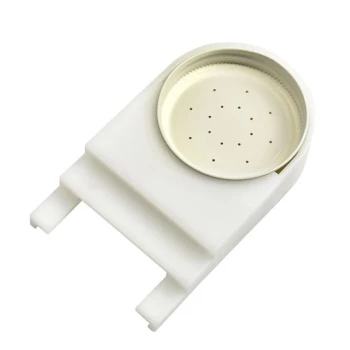
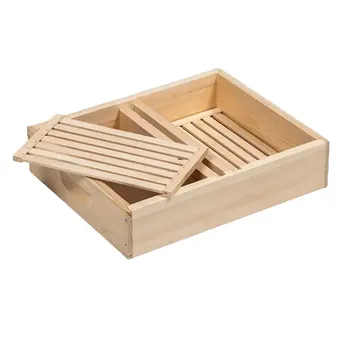
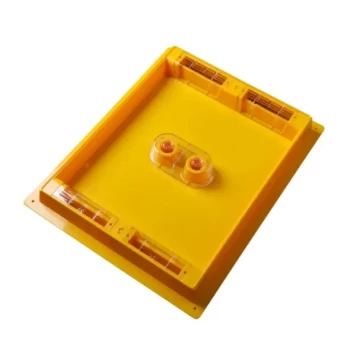
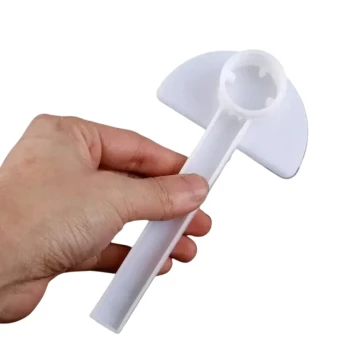
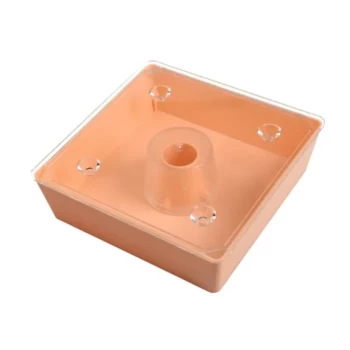
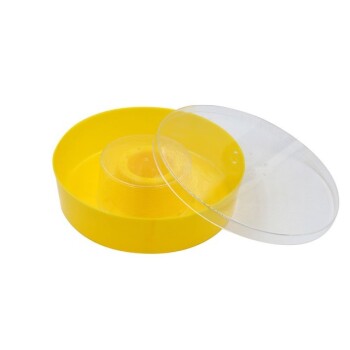
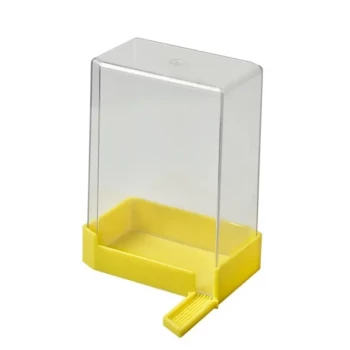
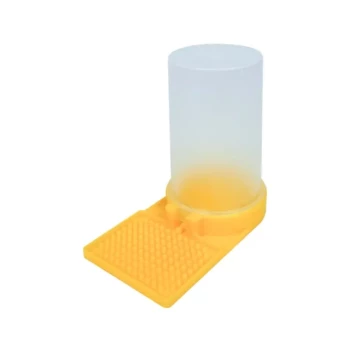
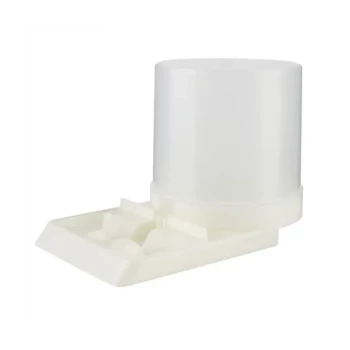
An inverted bucket feeder operates by controlled vacuum pressure: a syrup-filled plastic bucket is sealed with a tight-fitting lid and turned upside down over the feeding hole in the beehive crown board. The lid’s fine mesh or gauze opening allows bees to reach the syrup while atmospheric pressure prevents the entire contents from flowing into the hive.
The feeder works like a large contact dispenser: syrup remains suspended inside the inverted bucket until bees collect it through the mesh, providing supplemental feed with minimal disturbance to the colony.
How the Feeder Is Constructed
The Sealed Bucket
The feeder uses a plastic container filled with sugar syrup and closed with a tight-fitting lid. The seal is essential because the feeder depends on pressure balance to control syrup release.
The Fine Gauze Screen
A fine wire gauze or mesh section is incorporated into the lid. This creates a controlled feeding surface that bees can access without allowing the syrup to pour freely into the hive.
The Crown Board Opening
The crown board must have a suitable pre-cut opening beneath the feeder. When the bucket is inverted over this opening, the mesh is positioned where the bees can reach it from inside the hive.
How Syrup Remains in the Bucket
The Vacuum Principle
After the bucket is filled and sealed, it is turned upside down. A small amount of syrup may wet the mesh, but the container does not empty because air cannot freely enter to replace the displaced liquid.
This creates a partial vacuum, similar to the principle used by a liquid dispenser or inverted drinking container.
Controlled Air Entry
As bees remove small quantities of syrup through the mesh, air enters the container gradually. This allows additional syrup to reach the feeding surface without causing uncontrolled leakage.
The result is a self-regulating flow: syrup is available at the mesh, but the bucket remains substantially full.
How Bees Feed
Access Without Leaving the Hive
Bees approach the mesh from below through the crown board opening. They collect the exposed syrup directly from the gauze while remaining inside the hive chamber.
This is particularly useful when the colony needs supplemental feeding but the beekeeper wants to avoid opening the main hive body.
Reduced Colony Disturbance
Because the feeder sits above the crown board, feeding can often be replenished or monitored without removing brood boxes or heavily disrupting the colony.
For beekeepers, this can make routine feeding faster and less stressful for both the bees and the operator.
Suitable Supplemental Feeding
The feeder is commonly used when natural forage is insufficient or when a colony requires additional syrup to support development or survival. The correct syrup formulation and feeding schedule depend on the colony’s condition, season, and local beekeeping practice.
Why the Crown Board Matters
A Stable Feeding Interface
The crown board provides a flat, enclosed interface between the hive and the inverted bucket. Its opening must align properly with the gauze feeding area so bees can reach the syrup.
Protection From Light and Exposure
A properly fitted crown board and feeder help preserve the dark, enclosed environment preferred by honeybees. The feeder should not introduce unnecessary gaps that expose the colony to light, weather, pests, or drafts.
Secure Placement
The bucket must sit firmly over the opening and maintain a good seal. An unstable or poorly seated feeder can leak syrup, attract robbing bees, and create unnecessary disturbance.
Understanding the Trade-offs
Advantages for Beekeepers
An inverted bucket feeder offers:
- Low-disturbance feeding from above the crown board
- Simple construction using a container, lid, and fine mesh
- Large syrup capacity compared with many small internal feeders
- Cost-effective operation for routine supplemental feeding
- Rapid replenishment suitable for commercial or multi-hive operations
Leakage Risk
The vacuum principle only works when the lid and mesh assembly are correctly sealed. A damaged lid, loose fitting, blocked vent, or poorly installed screen can cause syrup to leak into the hive.
Robbing and Pests
Spilled syrup can attract bees from other colonies, wasps, ants, and other pests. Feeders should therefore be checked for leaks, and any syrup contamination or residue should be addressed promptly.
Cold or Viscous Syrup
Syrup flow through fine mesh can become slower in cold conditions or when the syrup is too concentrated. This may restrict bee access even when syrup remains in the bucket.
Hygiene and Maintenance
The container and gauze should be cleaned regularly. Fermented, mouldy, or contaminated syrup can harm colony health and reduce feeding efficiency.
Supplementary Design Claims
The inverted bucket feeder itself should not be confused with a specialized hive body or harvesting system. Its primary function is controlled syrup delivery through the crown board; claims about eliminating hive construction gaps or directing bee movement during honey harvesting apply to separate hive-design features, not to the feeding mechanism alone.
Making the Right Choice for Your Goal
An inverted bucket feeder is a practical choice when feeding capacity, speed, and minimal colony disruption matter.
- If your primary focus is low-disturbance feeding: Use a properly sealed bucket positioned securely over the crown board opening so bees can access syrup without opening the hive body.
- If your primary focus is commercial fulfillment: Source feeders with consistent bucket capacity, reliable lid seals, durable mesh, and readily available replacement components.
- If your primary focus is colony protection: Inspect regularly for leaks, pests, contamination, and gaps that could expose the colony or encourage robbing.
- If your primary focus is operational efficiency: Standardize feeder dimensions and crown board openings across apiaries to simplify stocking, installation, and rapid order fulfillment.
Used correctly, an inverted bucket feeder provides a simple, pressure-controlled way to deliver supplemental syrup while keeping the colony enclosed and disturbance to a minimum.
Summary Table:
| Feature | Description |
|---|---|
| Principle | Vacuum pressure controls syrup flow |
| Main Components | Sealed bucket, fine gauze lid, crown board opening |
| Feeding Process | Bees access syrup through mesh; air enters to replace removed syrup |
| Benefits | Low disturbance, large capacity, cost-effective |
| Drawbacks | Leakage risk, pest attraction, cold syrup flow issues |
Looking for reliable beekeeping supplies? At HONESTBEE, we offer a full spectrum of beekeeping tools and equipment, including feeders that ensure efficient colony management. As a one-stop source for commercial apiaries and distributors, we provide rapid response, dedicated service, and ultra-fast delivery. Contact us today to learn how we can support your operations with quality products and wholesale solutions.
Related Products
- In-Hive Dual Compartment Frame Bee Feeder for Targeted Colony Nutrition
- Professional In-Hive Bee Feeder HONESTBEE Frame for Beekeeping
- Professional In-Hive Frame Bee Feeder by HONESTBEE
- 3.5L Plastic Beehive Frame Feeder Deep Frame Water Feeder for In Hive Use
- Heavy-Duty Candy Board with Galvanized Mesh for Beekeeping
People Also Ask
- What are the advantages of using a frame feeder for bee colonies? Boost Growth and Prevent Robbing Efficiently
- Why should sugar syrup or dry sugar not be left out in the open when feeding bees? Avoid a Dangerous Feeding Frenzy
- What precautions should be taken when feeding bees inside the hive? Safeguard Your Colony from Robbing and Leaks
- How do in-hive feeders support honey bee colonies during autumn? Ensure Overwintering Success for Your Apiary
- How do high-quality in-hive feeders assist in managing bee colonies during pesticide contamination? Protect Your Apiary