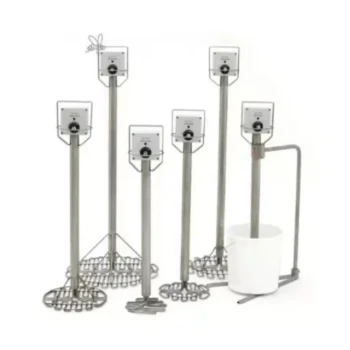
HACCP-compliant honey production line hardware serves as the essential technical gateway for entering the United States market. By utilizing stainless steel sterile pipelines, fine filtration systems, and precision temperature control, this hardware creates a physical barrier against biological, chemical, and physical hazards. These features are direct prerequisites for meeting the rigorous safety and hygiene standards enforced by the FDA (Food and Drug Administration) and USDA (United States Department of Agriculture).
To successfully penetrate the US market, distributors must view HACCP-compliant hardware as the foundation of regulatory eligibility. This infrastructure ensures the product safety and consistency required to move from local sales to high-volume, institutional contracts.
Navigating the Regulatory Landscape of the US Market
Meeting FDA and USDA Compliance
The US market is one of the most strictly regulated environments for food imports in the world. HACCP-compliant hardware is designed specifically to align with the Preventive Controls for Human Food rules mandated by the FDA.
Without these standardized systems, honey products often fail to pass border inspections. This results in costly shipments being rejected, destroyed, or returned, damaging the distributor's reputation and bottom line.
Sterile Infrastructure as a Risk Barrier
Stainless steel sterile pipelines and fine filtration systems are not just about cleanliness; they are about hazard control. These systems prevent environmental contaminants and foreign objects from entering the honey during processing.
By maintaining a closed, sterile environment, producers can guarantee that the honey remains free of pathogens. This physical assurance is the first thing auditors look for when certifying a production line for international export.
Leveraging Technical Verification for Large-Scale Distribution
Quantifiable Indicators and Quality Assurance
Modern HACCP hardware includes integrated testing and hygiene control equipment. These tools provide quantifiable data on moisture content, microbiological levels, and HMF (Hydroxymethylfurfural) values.
Distributors need this data to prove that the product meets the specific requirements of public procurement systems. Accurate technical verification allows a product to move from informal local sales into high-value legal public institutional markets.
Transitioning to Formal Markets
For a wholesaler, the ability to provide certified lab results and process logs is a competitive advantage. Hardware that automates this data collection reduces the risk of human error in quality reporting.
This transition is vital for securing long-term contracts with large retail chains and government bodies. It transforms the honey from a generic commodity into a verified premium product.
Scaling for High-Volume Export Requirements
Ensuring Physicochemical Stability
Industrial-grade honey processing and filling machines are built to handle large-scale primary production without compromising quality. These machines ensure that the physicochemical indicators—such as color, flavor, and enzyme activity—remain stable throughout the batch.
Stability is key for distributors who manage large inventories. It ensures that the first jar in a shipment is identical to the last, satisfying the expectations of American consumers and retailers.
Industrial-Grade Reliability and Supply Consistency
Large-scale processing hardware provides the technical assurance needed to maintain supply stability. High-volume filtration and filling systems allow producers to meet the massive order demands of the US market.
For B2B resellers, this reliability is the difference between a one-time sale and a recurring partnership. Efficient hardware minimizes downtime, ensuring that order fulfillment remains rapid and consistent.
Understanding the Trade-offs
The Cost of Entry vs. Market Access
The primary trade-off for implementing HACCP-compliant hardware is the significant initial capital investment. High-grade stainless steel and automated control systems are more expensive than traditional processing equipment.
However, opting for lower-cost, non-compliant hardware creates a "false economy." The risk of market exclusion, shipment seizures, and brand damage far outweighs the savings on equipment.
Operational Complexity and Maintenance
Advanced hardware requires a higher level of technical expertise to operate and maintain. Producers must invest in training and rigorous cleaning protocols to keep the HACCP certification valid.
Distributors should partner with suppliers who offer comprehensive support and "one-stop sourcing" to mitigate these operational burdens. A partner with deep industry expertise can simplify the transition to high-end hardware.
How to Apply This to Your Distribution Strategy
Strategic Sourcing for Global Growth
When evaluating suppliers for the US market, distributors must look beyond the product itself and examine the production infrastructure. The hardware used determines the legal and commercial viability of the honey.
- If your primary focus is rapid market entry: Prioritize suppliers who utilize full-spectrum HACCP-compliant lines to ensure immediate FDA/USDA alignment.
- If your primary focus is long-term brand building: Source from producers with industrial-grade filling machines that guarantee physicochemical stability and consistent quality across all batches.
- If your primary focus is supply chain efficiency: Partner with organizations that offer one-stop sourcing and ultra-fast delivery, backed by a robust, high-volume hardware infrastructure.
Implementing the right hardware today is the only definitive path to securing a profitable and sustainable presence in the American honey industry.
Summary Table:
| Hardware Feature | Hazard Control | US Market Benefit |
|---|---|---|
| Stainless Steel Pipelines | Biological & Chemical Barriers | Ensures FDA/USDA Compliance |
| Fine Filtration Systems | Physical Contaminants | Meets Strict Purity Standards |
| Precision Control Systems | Enzyme & HMF Stability | Quality Assurance for Premium Pricing |
| Automated Data Logging | Traceability & Verification | Eligibility for Institutional Contracts |
Scale Your Honey Distribution with HONESTBEE
Are you a distributor, wholesaler, or B2B reseller aiming to conquer the US market? HONESTBEE is your strategic partner for one-stop sourcing of professional beekeeping machinery and consumables. We provide a comprehensive portfolio of HACCP-compliant hardware—from hive-making machines to precision honey-filling lines—ensuring your products meet the highest global standards.
Why Partner with HONESTBEE?
- Comprehensive Sourcing: Full-spectrum equipment from hardware to cultural merchandise.
- Market Reliability: Rapid response times and ultra-fast delivery for high-volume fulfillment.
- Professional Expertise: Deep industry knowledge with OEM/ODM support to maximize your profit margins.
Ready to secure a reliable, high-performance supply chain? Contact our expert team today to discuss your wholesale needs!
References
- Liliana Marcela Bastos Osorio, E Guerrero. INTERNACIONALIZACIÓN DE LA EMPRESA DE ALIMENTOS OICATA DEL PRODUCTO MIEL HACIA ESTADOS UNIDOS. DOI: 10.47847/faccea.v14n1a4
This article is also based on technical information from HonestBee Knowledge Base .
Related Products
- Fully Automatic Honey Filling Packaging Machine for Processing Line
- Double Nozzle Small Honey Filling Machine Honey Sachet Packing Packaging Equipment
- Small Honey Filling Machine Sachet Packing Equipment Single Nozzle
- Electric Double Wall Honey Filtering Machine Purifier Equipment for Honey Processing Plant
- High Quality Honey Dehumidifier Dryer Thickening Machine for Beekeeping
People Also Ask
- Why are fully automatic honey filling and packaging lines essential? Boost Your Honey's Market Value and Quality
- What is a fully-automatic honey filler? Streamline Your Production with High-Precision Automation
- How do automated honey filling and packaging machines affect profitability? Boost Margins with HONESTBEE Technology
- How do automated honey filling and packaging machines contribute to the market value of honey products? Maximize Your ROI
- How do industrial-grade automated honey filling and packaging machines mitigate the risk of physical contamination?