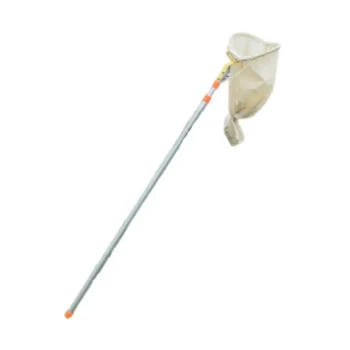
Swarming can turn a strong production colony into a major seasonal setback. When the old queen and roughly half or more of the worker population leave, the parent hive loses substantial foraging capacity just before or during a honey flow. The remaining colony must raise and mate with a new queen, interrupting development, while dedicated swarm-collecting equipment helps beekeepers capture the departing bees and convert a potential loss into a productive colony.
Swarming reduces short-term honey production by removing a large share of the field force and disrupting colony development. Swarm boxes, bait hives, nucleus hives, transport containers, and protective equipment allow commercial apiaries to recover valuable bees, preserve colony numbers, and expand production capacity.
How Swarming Affects Commercial Honey Production
The foraging population falls rapidly
A swarm usually includes the established queen and a large cluster of worker bees. Because worker bees are responsible for nectar collection, the parent hive may experience a sharp reduction in foraging immediately after the swarm departs.
This loss is especially damaging when swarming occurs near a major nectar flow. A colony that was expected to produce surplus honey may instead produce little or none for the season.
Colony development is temporarily disrupted
After the swarm leaves, the parent colony must produce and establish a new queen. The resulting period of queen maturation and mating can interrupt brood production and reduce the colony’s ability to rebuild its population.
The swarm itself also requires time to settle, establish a nest, and resume brood rearing. Both the original hive and the swarm may therefore contribute less to commercial production in the short term.
Apiary headcount and productivity are at risk
Unmanaged swarms may settle in a cavity beyond the apiary’s reach or relocate before the beekeeper can collect them. The result is not only lost honey potential but also the loss of valuable genetic stock and a productive colony unit.
For commercial operators, this creates a livestock-management problem as well as a honey-yield problem. Maintaining colony numbers is essential for predictable harvest volumes, labor planning, and customer commitments.
Why Dedicated Swarm-Collecting Equipment Matters
It enables rapid capture
Swarm clusters may remain in place for only a few hours or several days while scout bees search for a permanent nest site. A ready-to-deploy swarm box or nucleus hive gives the beekeeper a practical temporary home before the cluster relocates.
Timing is critical. A complete swarm-collection setup reduces the delay between receiving a call, reaching the swarm, and safely containing the bees.
It turns a loss into a new colony
A captured swarm can be transferred into a nucleus hive or another suitable hive configuration. With appropriate management, the beekeeper can establish it as an additional production colony rather than allowing the bees to disappear.
This helps preserve overall apiary headcount and can support controlled expansion without purchasing replacement colonies.
It improves transport and relocation
A swarm container provides a more controlled way to move bees from a branch, structure, or other temporary location to the apiary. Secure transport equipment reduces the risk of escape, exposure, and operational disruption during relocation.
Commercial teams benefit from standardized containers and hive components because equipment can be deployed consistently across multiple collection sites.
It supports safer field operations
Swarming bees are often less defensive because they are not protecting stored honey or brood. However, their behavior can still be unpredictable, and collection activities may disturb the cluster or place workers near people and structures.
Full-body suits, hooded veils, gloves, and related protective equipment remain essential for professional operators. Safety equipment protects collection crews and supports reliable service when handling swarms in residential, commercial, or difficult-to-access locations.
Swarm Capture Is Only One Part of Management
Prevent congestion before swarming begins
Swarming is commonly associated with brood-area congestion, high population density, and insufficient hive space during rapid spring expansion. Regular inspections help identify these conditions before the colony reaches the point of departure.
Additional brood boxes, supers, frames, and other modular hive components give the colony more usable space. This can relieve congestion and help retain worker populations inside the production hive.
Use traps and bait hives strategically
Swarm traps and bait hives can be placed around apiary boundaries or near locations where swarms are likely to cluster. Suitable cavity dimensions and effective scout lures can encourage an escaping swarm to settle where it can be recovered.
These devices are particularly valuable for commercial operations managing multiple apiaries or serving as professional swarm-rescue providers.
Consider controlled colony splits
Hive-splitting equipment and queen-management tools allow beekeepers to reproduce colonies under planned conditions. Controlled splits can reduce swarming pressure while preserving greater control over colony placement, queen supply, and production scheduling.
This approach does not eliminate the need for capture equipment. Natural swarms can still occur, and a commercial apiary needs both preventive and recovery capabilities.
What a Commercial Swarm-Management Portfolio Should Include
Capture and containment equipment
A practical product range may include:
- Swarm boxes
- Nucleus hives
- Swarm traps and bait hives
- Transport containers
- Frames and foundation
- Ready-to-use hive bodies and covers
Having these items available together improves response speed and reduces the risk of a swarm event becoming an unrecoverable colony loss.
Protective and inspection equipment
Field teams should also have access to:
- Full-body protective suits
- Hooded veils
- Protective gloves
- Hive tools
- Inspection accessories
- Secure handling and transport supplies
For distributors and B2B resellers, offering these products as a coordinated portfolio is more valuable than supplying isolated components. Beekeepers often need a complete operational solution immediately after identifying a swarm.
Expansion and prevention components
Commercial apiaries also require equipment that helps prevent overcrowding, including:
- Brood boxes
- Honey supers
- Frames
- Queen excluders
- Modular hive components
- Hive-splitting and queen-management supplies
A full-spectrum inventory allows customers to address the entire workflow: inspect, prevent, capture, transport, establish, and expand.
Understanding the Trade-offs
Capture does not restore lost honey immediately
Recovering a swarm protects future colony value, but it does not eliminate the short-term production loss caused by the departing workers. A newly captured swarm must build comb, establish brood, and develop before it reaches full commercial strength.
Swarm equipment should therefore be viewed as a loss-recovery and expansion tool, not a guarantee of same-season honey replacement.
Prevention requires labor and inventory
Routine inspections, space management, and controlled splits require trained personnel and sufficient equipment on hand. Maintaining extra boxes, frames, and protective gear also creates inventory and storage requirements.
For distributors, this makes dependable availability and rapid fulfillment important. A product that arrives after peak swarming conditions may have substantially less practical value.
Natural swarms are not the same as absconding
Swarming typically involves the queen and a substantial portion of the colony leaving while brood and resources remain in the original hive. Absconding is a more complete abandonment, often linked to severe stress, poor ventilation, or pest problems.
The response differs: swarm collection equipment addresses a departing cluster, while ventilation, pest-management, and environmental-control equipment help reduce the risk of absconding.
Equipment quality affects field efficiency
Poorly designed or incompatible equipment can slow collection, increase handling risk, and complicate hive establishment. Commercial users should prioritize standardized components, durable construction, secure containment, and compatibility across their existing hive systems.
Making the Right Choice for Your Goal
A reliable supply strategy should match the customer’s operational priority and the timing of the swarming season.
- If your primary focus is maximizing honey yield: Prioritize expansion equipment, regular inspections, and queen-management tools that reduce congestion before peak nectar flows.
- If your primary focus is recovering escaped colonies: Maintain ready-to-deploy swarm boxes, nucleus hives, traps, transport containers, and protective gear.
- If your primary focus is apiary expansion: Combine swarm-capture equipment with standardized hive bodies, frames, and nucleus-hive components for rapid colony establishment.
- If your primary focus is B2B distribution or resale: Offer a complete, compatible product portfolio supported by fast response, dependable fulfillment, technical expertise, and responsive customer service.
Effective swarm management protects both current honey production and the future value of the apiary.
Summary Table:
| Aspect | Impact | Equipment Solution |
|---|---|---|
| Foraging Population | Rapid reduction in worker bees reduces nectar collection | Swarm boxes, nucleus hives for quick capture |
| Colony Development | Disruption during queen rearing and mating | Nucleus hives and frames for smooth reestablishment |
| Apiary Headcount | Loss of valuable genetic stock and colony units | Swarm traps and bait hives for recovery |
| Transport & Relocation | Risk of escape and damage during movement | Transport containers and secure hive bodies |
| Preventive Measures | Overcrowding and congestion trigger swarming | Supers, brood boxes, and queen excluders |
Protect your apiary's productivity today. HONESTBEE offers a comprehensive range of swarm-collecting equipment, hive components, and protective gear designed for commercial beekeepers and distributors. Our one-stop sourcing, rapid delivery, and expert support ensure you minimize losses and maximize yields. Contact us now to build a resilient apiary management system.
Related Products
- Portable Electric Bee Vacuum with Lithium Battery and 20L Collection Bucket
- HONESTBEE Collapsible Tiered Bee Swarm Catcher for Beekeeping
- HONESTBEE Professional Telescopic Pole Bee Swarm Catcher
- Full Set Beekeeping Electronic Bee Venom Collector Machine Device for Bee Venom Collecting
- Stainless Steel Pollen Shovel with Wooden Handle
People Also Ask
- What are the advantages of using portable bee vacuums for sampling honey bees? Optimize Nosema Detection Efficiency
- Who is qualified to use a bee vacuum? Essential Safety and Experience Requirements for Effective Bee Relocation
- What potential problems can occur when using a bee vacuum? Prevent Colony Mortality and Ensure Safe Bee Removal
- What are the benefits of using a bee vacuum? Safely Remove & Preserve Honey Bee Colonies
- Why do people use bee vacuums? A Humane Solution for Live Bee Removal