Scaling commercial bee colonies turns honey handling into a capacity-and-consistency challenge. As colony numbers and harvest volumes increase, manual extraction, filtration, weighing, and bottling become operational bottlenecks. Commercial operators therefore need coordinated processing and filling machinery that increases throughput, reduces labor dependence, improves hygiene, and delivers consistent packaging for wholesale and export markets.
The larger the apiary, the more important it becomes to scale the entire post-harvest workflow—not just the filling machine. Extraction, straining, storage, filling, quality control, and order fulfillment must work as one system.
Why Colony Growth Changes Machinery Requirements
Manual processing becomes the bottleneck
A small apiary may manage harvesting and bottling with manual tools. At commercial scale, the same activities consume disproportionate labor time and create delays between harvesting and finished-product preparation.
The operational issue is not simply the number of hives. It is the volume that must be extracted, filtered, stored, filled, labeled, and dispatched within a controlled workflow.
Throughput must match production volume
Commercial operations require higher-capacity equipment, including centrifugal honey extractors, honey presses, strainers, storage containers, and filling systems.
If one stage processes honey faster than the next, it creates a bottleneck. For example, a high-capacity extractor provides limited value if the filling line or storage system cannot handle the resulting flow.
Packaging becomes a standardized production process
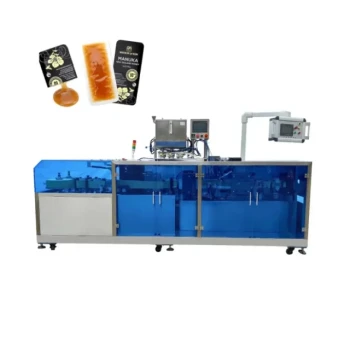
Wholesale buyers and export channels generally require consistent weights, reliable presentation, and repeatable product quality. Automated filling machines provide precise quantitative control and make it easier to produce uniform jars, bottles, or other retail formats.
This consistency is difficult to maintain when filling depends entirely on manual measuring and repeated handling.
How Processing Machinery Must Scale
Extraction capacity must increase first
Honey extractors use centrifugal force to separate honey from the frames. As colony counts grow, commercial operators need extraction equipment capable of handling larger batches with less manual intervention.
Honey presses can also recover residual honey from wax cappings, helping improve material utilization within the processing workflow.
Filtration and straining require sufficient capacity
Honey strainers remove solid particulates before storage or filling. At higher volumes, undersized filtration equipment can slow production and create handling queues.
Adequate straining capacity supports product purity and reduces unnecessary rework before packaging.
Storage becomes a core infrastructure requirement
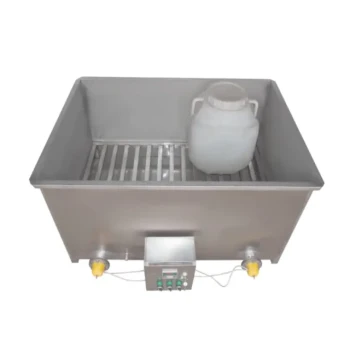
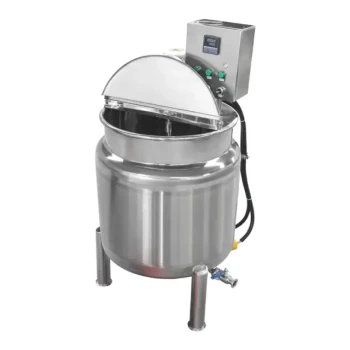
Harvested honey may need to remain in hygienic storage containers before filling, blending, or dispatch. Commercial equipment planning must therefore include sufficient storage capacity and a logical connection between extraction, filtration, storage, and packaging.
Storage is not an afterthought; it determines whether the operation can absorb peak harvest volumes without interrupting production.
Filling machinery must match product formats
An industrial honey-filling machine should be selected according to the required container formats, filling volumes, production speed, and level of automation. The objective is not maximum machine speed in isolation, but reliable integration with the rest of the line.
A properly matched filler improves packaging consistency, reduces labor costs, and supports food-safety and hygiene requirements.
Operational Benefits Beyond Faster Filling
Labor can be redirected to colony management
Mechanization reduces repetitive extraction, measuring, and bottling work. This allows personnel to spend more time monitoring colony condition, nutrition, and preventive management.
For commercial beekeepers, the value of automation is therefore broader than factory efficiency: it can improve how limited staff time is allocated across the entire business.
Production data supports better decisions
Precision measurement and quality-monitoring systems can provide useful feedback on processed volume and production fluctuations. Since honey yield is an important indicator of colony productivity and health, this information can support more informed beekeeping and equipment-investment decisions.
The data is most valuable when it is used alongside field observations rather than treated as a standalone measure of colony health.
Hygienic handling becomes more important
Every additional manual transfer creates another opportunity for contamination or inconsistent handling. Mechanized extraction, filtration, storage, and filling can reduce unnecessary contact and support more controlled hygienic production.
Equipment must still be properly cleaned, maintained, and operated. Automation does not replace sanitation procedures.
Secondary products expand the equipment plan
Commercial colonies may also produce royal jelly, bee pollen, beeswax, and propolis. These products require different collection, processing, storage, and packaging solutions.
A distributor or commercial operator planning for business expansion should therefore evaluate a broader equipment portfolio rather than treating honey filling as the only machinery requirement.
Configuring Equipment for Different Apiary Scales
Smaller operations need flexibility
Operations with relatively few hives may prioritize manual or semi-automatic tools because their volumes do not justify a complete industrial line. Flexible equipment can be more appropriate when production varies significantly by season.
The key requirement is avoiding premature overinvestment while preserving a path toward future expansion.
Growing enterprises need modular capacity
A beekeeper transitioning into commercial distribution typically benefits from a staged configuration. This may begin with improved extraction and filtration, followed by automated filling, higher-capacity storage, and additional quality-control capabilities.
Modular growth reduces the risk that one oversized machine sits underutilized while another process remains a bottleneck.
Large apiaries need coordinated systems
Large commercial enterprises require a more integrated setup covering extraction, straining, storage, filling, packaging, and production monitoring. The equipment should be evaluated as a complete workflow with compatible capacities and hygienic design.
High-intensity production may also require machinery for related activities, such as wax processing, pollen collection, and automated Varroa monitoring.
Understanding the Trade-offs
Automation requires capital and planning
Industrial machinery reduces labor requirements and improves consistency, but it requires upfront investment, installation planning, operator training, cleaning, and maintenance.
The correct decision depends on sustained production volume, labor availability, packaging requirements, and expected market growth—not colony count alone.
Maximum speed is not always the best choice
A faster filler cannot compensate for insufficient extraction, filtration, storage, or dispatch capacity. Buying equipment based only on headline speed can create imbalance across the production line.
A balanced system usually delivers more practical value than a single high-performance machine surrounded by slower processes.
Standardization can reduce flexibility
Automated equipment is highly effective when container sizes, filling weights, and production routines are consistent. Operations serving many package formats may need changeover capability or additional tooling.
These requirements should be identified before purchase so that the selected machinery supports the intended product range.
Data requires proper interpretation
Production feedback can reveal changes in yield and throughput, but it does not automatically explain why those changes occurred. Weather, forage availability, colony health, seasonal timing, and management practices can all affect results.
Use machine data to guide investigation and planning, not to replace beekeeping expertise.
How to Apply This to Your Project
Equipment selection should begin with the complete material flow from hive harvest to finished shipment.
- If your primary focus is reducing labor: Prioritize automated extraction, filtration, and filling equipment that minimizes repetitive handling and connects efficiently between process stages.
- If your primary focus is wholesale consistency: Select a precision filling system with dependable quantitative control, hygienic operation, and compatibility with your required container formats.
- If your primary focus is future expansion: Use a modular equipment plan that can increase extraction, storage, and filling capacity without replacing the entire workflow.
- If your primary focus is product diversification: Build a broader machinery portfolio that includes honey processing alongside equipment for pollen, wax, propolis, or royal jelly.
- If your primary focus is reliable sourcing and fulfillment: Work with a supplier capable of providing a full-spectrum product portfolio, responsive technical support, and coordinated delivery of compatible equipment.
The right machinery strategy converts colony growth into scalable, controlled, and commercially reliable honey production.
Summary Table:
| Aspect | Small-Scale Operation | Commercial Scale |
|---|---|---|
| Extraction | Manual or small extractors | High-capacity centrifugal extractors and presses |
| Filtration | Simple strainers | Industrial strainers with sufficient capacity |
| Storage | Small containers | Hygienic bulk storage tanks |
| Filling | Manual measuring | Automated filling machines with precise control |
| Throughput | Low, flexible | High, integrated line to avoid bottlenecks |
| Labor | Manual handling | Reduced labor, redirected to colony management |
| Packaging | Inconsistent | Standardized weights and presentation |
| Data | Not available | Production monitoring for insights |
| Hygiene | Risk of contamination | Controlled hygienic processes |
| Investment | Low | High, requiring planning and ROI analysis |
Ready to scale your commercial bee operation? HONESTBEE offers a comprehensive range of honey processing and filling machinery designed for seamless integration. From extractors and strainers to precision fillers and storage solutions, we support your growth with expert advice, OEM/ODM services, and rapid delivery. For distributors and resellers, our competitive pricing and reliable supply chain ensure your margins stay healthy. Contact us today to discuss your requirements and get a tailored solution.
Related Products
- Fully Automatic Honey Filling Packaging Machine for Processing Line
- Precision Durable Efficient HONESTBEE Rotary Honey Filling Machine
- Automatic Honey Filling and Filtering Machine for Beekeeping Bottle Filling
- Economy Small Honey Filling Machine Honey Bottle Filler Packaging Machine
- Small Honey Filling Machine Sachet Packing Equipment Single Nozzle
People Also Ask
- Why are fully automatic honey filling and packaging lines essential? Boost Your Honey's Market Value and Quality
- What is a fully-automatic honey filler? Streamline Your Production with High-Precision Automation
- How do automated honey filling and packaging machines affect profitability? Boost Margins with HONESTBEE Technology
- How do automated honey filling and packaging machines contribute to the market value of honey products? Maximize Your ROI
- How do industrial-grade automated honey filling and packaging machines mitigate the risk of physical contamination?