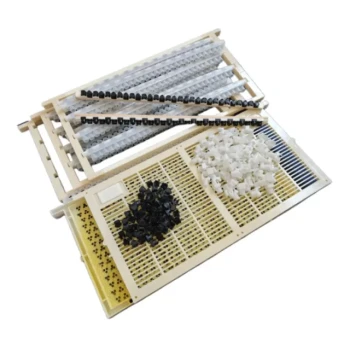
The application of high-nutrition supplements or royal jelly during the larval stage is a decisive factor in successful queen differentiation. By ensuring larvae receive immediate, adequate nutrition post-grafting, producers simulate optimal natural breeding conditions. This intervention directly enhances the adult queen's physical stature and maximizes her future egg-laying capacity.
Core Takeaway While genetic selection sets a colony's potential, nutritional supplementation during the critical larval stage unlocks it. Utilizing royal jelly not only protects fragile larvae from physical damage during the grafting process but also drives the physiological development necessary for a high-performing, prolific queen.
The Biological Impact on Queen Development
Driving Queen Differentiation
The transition from a general larva to a queen bee relies heavily on diet. Providing high-nutrition supplements or royal jelly during the larval development stage is critical for triggering queen differentiation.
Enhancing Physical Stature
Nutrition acts as the building block for the queen's anatomy. Adequate feeding immediately after grafting ensures the developing queen reaches a superior physical stature, which is a primary indicator of quality.
Maximizing Reproductive Potential
The long-term value of a queen is measured by her productivity. Early nutritional intervention directly correlates with an increased future egg-laying rate, ensuring the queen can sustain a populous colony.
Operational Benefits During Grafting
Preventing Dehydration
Larvae are extremely sensitive to environmental exposure. Royal jelly acts as a vital biological auxiliary consumable at the base of the artificial queen cell, serving as a lubricant that prevents fatal dehydration.
Reducing Mechanical Trauma
The grafting process involves physically moving fragile larvae. The presence of royal jelly cushions the larvae, significantly reducing mortality caused by physical damage during transfer.
Improving Acceptance Rates
By simulating the natural queen-rearing environment inside the artificial cell, you improve the success rate of subsequent colony nursing. This leads to fewer rejected grafts and higher overall production efficiency.
Broader Implications for the Apiary
Elevating Colony Performance
High-quality queens produced through this method possess superior genetic traits. This directly influences the colony’s foraging capacity and overall honey production efficiency.
Strengthening Resilience
A well-developed queen contributes to better colony health. This includes improved disease resistance and environmental adaptability, which are essential for maintaining stable apiaries.
Understanding the Operational Requirements
The Necessity of Precision
Timing is non-negotiable. To be effective, the nutrition must be available immediately after grafting. Delays can break the simulation of natural breeding conditions, negating the benefits.
Resource Allocation
Royal jelly is a "consumable" in this process. Producers must account for the cost and availability of fresh royal jelly to maintain this standard of production, rather than viewing it as an optional additive.
Optimizing Your Production Strategy
To maximize the output of your queen rearing operation, align your use of supplements with your specific production goals:
- If your primary focus is Grafting Success Rates: Utilize royal jelly primarily as a lubricant at the cell base to prevent dehydration and reduce physical damage during transfer.
- If your primary focus is Queen Longevity and Productivity: Prioritize the nutrient density of the supplements to maximize physical stature and future egg-laying rates.
- If your primary focus is Colony Expansion: Focus on the genetic enhancement aspects, using nutrition to ensure the queen fully expresses traits related to foraging capacity and disease resistance.
Investing in larval nutrition is the single most effective way to bridge the gap between a standard queen and a high-performance genetic asset.
Summary Table:
| Nutritional Impact Factor | Benefit for Queen Production | Operational Advantage |
|---|---|---|
| Royal Jelly Supplementation | Triggers queen differentiation & superior stature | Prevents larval dehydration & mechanical trauma |
| Immediate Post-Grafting Feed | Maximizes future egg-laying capacity | Increases acceptance rates by nurse bees |
| High-Density Nutrients | Enhances colony foraging & disease resistance | Ensures stable, long-term colony expansion |
Maximize Your Apiary's Productivity with HONESTBEE
At HONESTBEE, we understand that high-quality queen rearing is the backbone of any successful commercial apiary or distribution business. As your dedicated wholesale partner, we provide the full spectrum of beekeeping tools, machinery, and essential consumables—including the specialized equipment needed to optimize larval nutrition and queen production.
Whether you need precision hive-making machinery, honey-filling solutions, or high-performance hardware, we offer comprehensive wholesale solutions tailored to your scale. Contact us today to discover how our industry-leading equipment and expertise can help you produce more resilient queens and elevate your honey production efficiency.
References
- Elizabeth M. Walsh, Juliana Rangel. Local Honey Bee Queen Production and Quality. DOI: 10.1080/0005772x.2016.1211501
This article is also based on technical information from HonestBee Knowledge Base .
Related Products
- No Grafting Queen Rearing Kit: System for Royal Jelly Production and Queen Rearing
- Plastic Chinese Queen Grafting Tool for Bee Queen Rearing
- Professional Plastic Honey Dipper for Easy Honey Drizzling
People Also Ask
- What is the primary function of a queen rearing kit? Eliminate Manual Grafting for Superior Bee Breeding
- How do specialized queen rearing kits and queen management tools improve the success rate of bee colony expansion?
- What are some alternative methods to grafting for queen cell production? Discover Graft-Free Queen Rearing Systems
- Are queen rearing systems generally suitable for all honeybee species? Master Efficient Breeding Methods
- Are queen rearing systems suitable for all beekeepers? Modern Tools for Every Experience Level