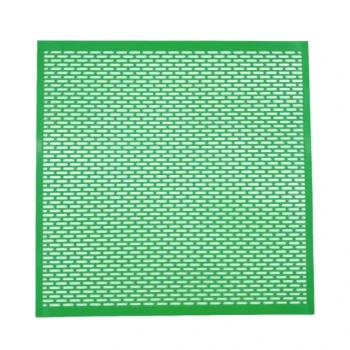
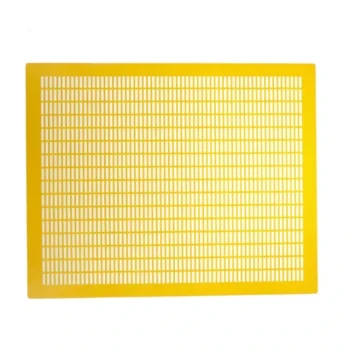
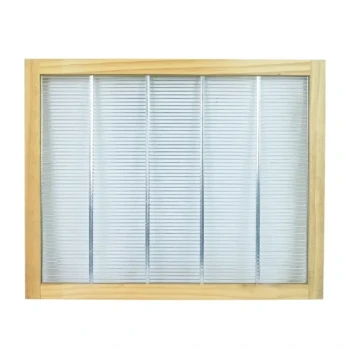
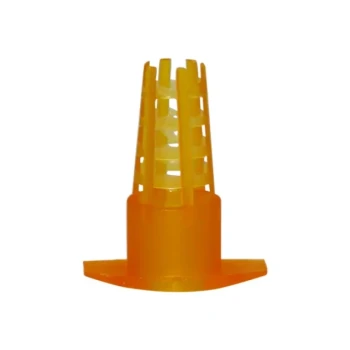
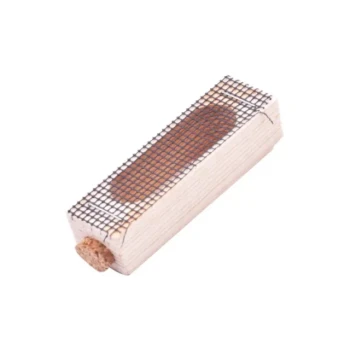
The hemispherical queen excluder mesh cover functions as a precise biological filter. It utilizes strictly calibrated wire apertures that allow smaller nurse bees to freely enter the enclosure to feed larvae and secrete royal jelly, while simultaneously using size exclusion to physically block larger queen bees from entering. This mechanical separation prevents the colony's reigning queen from destroying developing royal cells, enabling safe queen cultivation within an active hive.
The core function of this device is selective permeability: it admits the workforce required to nurture the larvae while physically barring the aggressor who would instinctively destroy them.
The Mechanics of Selective Access
Precision Engineering
The efficacy of the mesh cover relies entirely on strictly calibrated apertures. The spacing between wires is engineered to the millimeter to match the specific thoracic width of worker bees versus queen bees.
Enabling Nurse Bee Access
For queen rearing to be successful, developing larvae require constant attention. The mesh openings allow smaller nurse bees to pass through the barrier effortlessly.
Once inside the hemisphere, these workers can feed the larvae and secrete royal jelly directly into the artificial queen cells. This ensures the developing queens receive the intense nutrition required for their biological development.
The Principle of Size Exclusion
The primary protective mechanism is physical blocking. A mature queen bee has a significantly larger thorax and abdomen than a worker bee.
When the queen attempts to enter the hemispherical cover to eliminate potential rivals, her body size prevents her from passing through the mesh. This creates an impassable shield around the developing cell.
The Biological Purpose
Preventing Instinctive Regicide
Queens are naturally intolerant of rivals. Without a physical barrier, a reigning queen will instinctively attack and destroy any developing queen cells she finds to maintain her dominance.
The hemispherical cover neutralizes this instinct by rendering the queen cells physically inaccessible to her, even if she can smell them.
Facilitating "Queenright" Rearing
Historically, beekeepers often had to remove a queen (making the hive "queenless") to raise new ones. This device allows for queenright rearing, where the original queen remains in the colony.
By isolating only the specific queen cells rather than the queen herself, the colony continues to function normally with a laying queen while simultaneously raising new royalty.
Inducing the Nurse Instinct
While the mesh excludes the queen, it helps maintain a localized environment that encourages cell building. By restricting the queen's pheromones slightly in that specific zone, it can help create a physiological illusion of queenlessness for the workers inside, stimulating their instinct to nurse the new cells aggressively.
Understanding the Trade-offs
Risk of Mechanical Failure
The system relies on the rigidity and precision of the mesh. If the wires become bent or distorted during handling, the apertures may widen.
Even a slight widening can allow a smaller or determined queen to squeeze through, resulting in the immediate destruction of the developing batch.
Virgin Queen Containment
While the mesh blocks a laying queen, newly hatched "virgin" queens are sometimes smaller. There is a risk that a virgin queen hatched elsewhere in the hive could breach a mesh designed for a fully gravid queen.
Impact on Maintenance
The mesh adds a layer of complexity for the beekeeper. It can accumulate burr comb or propolis if not checked regularly, which may eventually restrict the movement of nurse bees and starve the developing larvae.
Making the Right Choice for Your Goal
To utilize the hemispherical mesh cover effectively, align its use with your specific rearing objectives:
- If your primary focus is Colony Continuity: Use the mesh cover to raise new queens without dequeening the hive, ensuring egg laying continues uninterrupted during the process.
- If your primary focus is Success Rate: Ensure the mesh is regularly inspected for distortion; a compromised wire renders the entire protection system useless against a hostile queen.
Success in queen rearing lies not just in stimulating cell production, but in mechanically guaranteeing the safety of the larvae until emergence.
Summary Table:
| Feature | Mechanism | Benefit |
|---|---|---|
| Aperture Calibration | Precise millimeter spacing | Allows workers through; blocks larger queens |
| Selective Permeability | Physical size exclusion | Enables constant feeding of larvae via nurse bees |
| Structural Design | Hemispherical mesh shield | Prevents instinctive destruction of royal cells |
| Rearing Method | Queenright isolation | Maintains colony continuity without dequeening |
Maximize Your Apiary’s Potential with HONESTBEE
Successful queen rearing requires precision tools that guarantee the safety of your larvae. At HONESTBEE, we specialize in providing commercial apiaries and distributors with high-quality, strictly calibrated beekeeping equipment designed for professional success.
From specialized queen-rearing hardware to industrial honey-filling machines and essential consumables, our comprehensive wholesale offering ensures your operation runs at peak efficiency.
Ready to elevate your beekeeping production? Contact us today to discover how our expert-grade tools and machines can streamline your workflow and protect your hive's future.
References
- Ahmed Abouelnaga, A. Zohairy. A NEW DEVICE (HALF-BALL-CAGE WITH QUEEN EXCLUDER ) AND HONEYBEE QUEEN REARING METHOD WITH QUEENRIGHT.. DOI: 10.21608/jppp.2007.219410
This article is also based on technical information from HonestBee Knowledge Base .
Related Products
- High Performance Plastic Queen Excluder for Beekeeping and Apiary Management
- Wooden Queen Bee Excluder for Beekeeping
- Professional Plastic Queen Excluder for Modern Beekeeping
- Premium Wood Framed Metal Wire Queen Bee Excluder
- Plastic Queen Bee Excluder for Bee Hive Wholesale
People Also Ask
- What are the characteristics of a plastic queen excluder? Key Benefits for Cost-Effective Beekeeping
- What are the operational and cost advantages of using plastic queen excluders over metal or wire excluders in commercial hive management? Discover how they reduce labor, prevent wing damage, and lower total costs.
- What types of queen excluders are available for beekeepers? Choose the Right Tool for Your Hive
- Why are standardized hive frames and queen excluders essential for maintaining honey purity and quality? Scale Your Purity
- Do plastic queen excluders work? A Cost-Effective Solution for Modern Apiaries