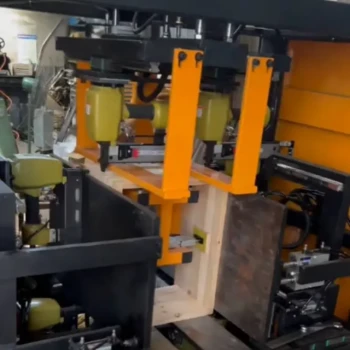
Standardized bee boxes are the architectural foundation of industrial apiculture, directly driving productivity through mechanized compatibility and biological optimization. Implementation transforms honey production from a labor-intensive craft into a scalable commercial enterprise by increasing average yields from 24kg to approximately 33kg per hive. This transition relies on uniform specifications that streamline colony management, facilitate rapid expansion, and ensure consistent output quality across thousands of units.
Standardizing hive equipment is not merely a logistical convenience; it is a critical technical requirement for scaling honey operations. By enabling component interchangeability and mechanized harvesting, standardized boxes provide the structural stability and management efficiency necessary for high-volume commercial success.
Enhancing Operational Efficiency and Scalability
Standardized equipment removes the logistical bottlenecks inherent in traditional beekeeping, allowing for the rapid expansion required by large-scale distributors and commercial operators.
The Power of Component Interchangeability
Standardized frames and supers allow for seamless swapping between hives, which is essential during peak nectar flows. This flexibility simplifies colony inspections and allows beekeepers to replace damaged parts without disrupting the entire biological unit.
Facilitating Mechanized Handling
Uniformity is a prerequisite for modern mechanized harvesting and transportation. Standardized dimensions ensure that hives fit perfectly on pallets, loading equipment, and centrifugal honey extractors, drastically reducing manual labor costs and time.
Streamlining Pest and Disease Management
When every hive is built to the same specification, sanitization and treatment protocols become highly predictable. Standardized designs facilitate more effective monitoring and application of treatments, protecting the producer's long-term biological capital.
Maximizing Biological Yield and Production Cycles
Beyond logistics, standardized boxes create a controlled environment that optimizes the natural productivity of high-yield bee species.
Precision Control of "Bee Space"
Standardized frames maintain a precise "bee space" (approximately 6-9mm), which prevents bees from building bridge combs or filling gaps with propolis. This precision allows for non-destructive harvesting, ensuring the hive structure remains intact for immediate reuse.
Thermal Regulation and Survival Rates
High-quality, standardized hives provide a stable micro-climate, protecting colonies from extreme weather and moisture. This controlled environment improves overwintering survival rates and supports faster colony build-up in the spring.
Accelerated Production through Comb Reuse
Centrifugal extraction, enabled by standardized frames, allows honey to be removed while keeping the wax comb intact. Because bees do not have to expend energy and resources rebuilding wax, they can focus entirely on nectar collection, significantly shortening the production cycle.
Understanding the Trade-offs
While standardization is essential for scale, professional distributors must recognize the specific requirements and potential risks associated with these systems.
High Initial Capital Requirement
Transitioning to a fully standardized system requires a significant upfront investment in uniform hardware and compatible harvesting machinery. For large-scale operations, this cost is offset by long-term labor savings and increased yield, but it necessitates a robust supply chain partner.
Risk of Pathogen Uniformity
While standardized boxes make treatment easier, the high density of uniform hives in a commercial apiary can facilitate the rapid spread of diseases if monitoring is neglected. Maintaining a rigorous, standardized inspection schedule is the only way to mitigate this systemic risk.
Maintenance and Material Quality
Standardized designs are only effective if the manufacturing tolerances are strictly maintained. Low-quality materials or slight deviations in dimensions can render components incompatible, negating the primary benefits of the standardized system.
Choosing the Right Sourcing Strategy for Your Scale
To maximize the benefits of standardized equipment, wholesalers and distributors should align their sourcing with their specific operational goals and fulfillment needs.
- If your primary focus is rapid market expansion: Prioritize suppliers offering a comprehensive full-spectrum product portfolio to ensure all auxiliary equipment—from frames to extractors—is perfectly compatible from day one.
- If your primary focus is operational reliability: Seek partners who provide deep professional industry expertise and rigorous quality control to ensure that every unit meets the exact tolerances required for mechanized handling.
- If your primary focus is minimizing downtime during peak flow: Partner with distributors known for ultra-fast delivery and efficient order fulfillment to ensure that additional supers and frames are available exactly when the nectar flow begins.
Standardization represents the shift from unpredictable wild harvesting to a precise, technology-driven production model that ensures the long-term profitability of the honey supply chain.
Summary Table:
| Key Impact Area | Impact on Productivity | Commercial Advantage |
|---|---|---|
| Yield Optimization | Increases average yield from 24kg to 33kg per hive. | Higher ROI per colony for large-scale operations. |
| Mechanization | Enables use of pallets, forklifts, and auto-extractors. | Drastically reduces manual labor costs and time. |
| Component Interchangeability | Allows seamless swapping of frames and supers. | Facilitates rapid expansion and easier maintenance. |
| Biological Precision | Maintains exact 6-9mm "bee space." | Prevents bridge comb; allows non-destructive harvesting. |
| Comb Reuse | Enables centrifugal extraction without comb damage. | Bees focus on nectar collection instead of wax building. |
Scale Your Apiary Business with HONESTBEE’s One-Stop Solutions
As a leading partner for commercial apiaries and B2B distributors, HONESTBEE understands that precision and reliability are the cornerstones of profitable honey production. We provide a comprehensive full-spectrum product portfolio designed to integrate seamlessly into your standardized operations.
Why partner with HONESTBEE?
- Complete Equipment Range: From specialized hive-making and honey-filling machines to essential industry consumables and cultural merchandise.
- Deep Industry Expertise: Our products are engineered to meet strict manufacturing tolerances, ensuring perfect compatibility for mechanized handling.
- Rapid Fulfillment: Benefit from our ultra-fast delivery and rapid response times, ensuring you have the hardware needed before the peak nectar flow begins.
- Premium Trading Services: We support wholesalers with dedicated customer service and high-volume supply reliability to protect your profit margins.
Ready to enhance your operational efficiency and secure your supply chain? Contact HONESTBEE today to discuss our wholesale offerings and professional sourcing capabilities.
References
- José Padilla-Vega, Domingo Sánchez Hernández. Geospatial analysis of apiaries and use of flora for honey purposes in Tacotalpa, Tabasco, Mexico. DOI: 10.22533/at.ed.813452413068
This article is also based on technical information from HonestBee Knowledge Base .
Related Products
- Plastic Transporting Bee Packages and Nuc Boxes for Beekeeping
- JZBZ Style Professional Battery Box with 20 Shipping Cages
- Metal Bee Hive Stand Bee Box Stand for Beekeeping
- Portable Bee Mating Hive Boxes Mini Mating Nucs 8 Frames for Queen Rearing
- 5 Frame Wooden Nuc Box for Beekeeping
People Also Ask
- What role do bee package boxes play in the commercial transport and expansion of honeybee colonies? - Logistic Essentials
- What are beekeeping boxes called? A Guide to Hive Bodies and Box Types
- How do standardized bee packages serve as a recovery mechanism for commercial beekeeping? Ensure Business Continuity
- What is the commercial value of using standardized bee packages? Drive Scalability in Large-Scale Apiaries
- Why is the timely introduction of high-quality bee packages critical? Save Your Apiary from Asian Hornet Invasions