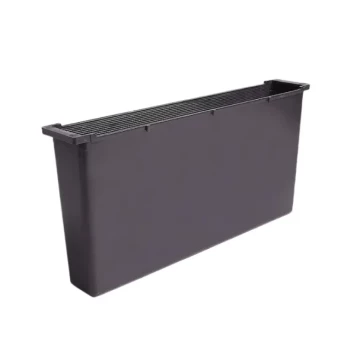
Placing protein feed between hive frames significantly outperforms top-of-frame placement when the primary goal is maximizing brood production. By positioning the protein source directly within the center of the brood-rearing area, you reduce the travel distance for young nurse bees, which leads to a substantial increase in the total brood area. While placing feed on top of the frames offers greater convenience for the beekeeper, it is generally less effective for brood stimulation, though it may offer specific advantages for bee bread storage.
The location of your protein source dictates the efficiency of nutrient conversion. Placing feed between frames optimizes biological efficiency by minimizing nurse bee travel, whereas top-feeding prioritizes beekeeper accessibility over maximum brood expansion.
The Mechanics of Nutrient Conversion
Proximity to the Brood Nest
The efficiency of a colony relies heavily on the behavior of young nurse bees. When protein feed is placed between the frames, it sits directly at the center of the colony's activity.
This proximity ensures that the bees responsible for feeding larvae have immediate access to nutrients. It drastically reduces the distance they must travel to retrieve food, conserving energy for vital hive tasks.
Impact on Total Brood Area
The direct result of this efficiency is a measurable increase in productivity. Because the nurse bees can access protein with minimal effort, the total brood area expands significantly.
The "between-frame" method essentially removes logistical bottlenecks within the hive, allowing the colony to convert protein into new bees at a faster rate compared to other methods.
Analyzing the Top-Feeding Method
The Convenience Factor
Placing protein patties or feed on top of the frames is a common practice primarily due to ease of management. It allows the beekeeper to apply feed without removing frames or disrupting the cluster significantly.
However, this convenience comes at a cost to biological performance. Because the feed is located away from the immediate brood center, the conversion of nutrients into new brood is typically less efficient.
Promoting Storage
While less effective for immediate brood rearing, top-feeding does influence hive dynamics differently. This placement may be advantageous if your specific goal is promoting the storage of bee bread.
If the colony's immediate need is not rapid population expansion but rather the accumulation of stores, top-feeding remains a viable, albeit different, strategy.
Measuring Hive Performance
Quantifying the Difference
To truly understand these differences, one cannot rely on guesswork. Performance is best evaluated using measurement frames equipped with standard grids, typically consisting of 25-square-centimeter cells.
Objective Data Collection
These tools allow for the precise quantification of hive dynamics. By translating irregular biological patterns into standardized units, beekeepers can measure the exact area occupied by sealed brood, pollen (bee bread), and honey.
This objective data confirms that equipment configuration and resource placement—such as the location of protein feed—have tangible, measurable effects on hive productivity.
Understanding the Trade-offs
Biological Efficiency vs. Operational Ease
The choice between these two methods represents a classic trade-off between the needs of the bee and the needs of the keeper.
Between-frame feeding prioritizes the bee. It requires more invasive management to insert the feed, but it maximizes the biological output of the colony.
Top-frame feeding prioritizes the keeper. It is faster and less intrusive to apply, but it sacrifices the maximal brood growth potential offered by the between-frame method.
Making the Right Choice for Your Goal
To select the correct feeding strategy, you must define the current objective for your colony.
- If your primary focus is rapid population growth: Place protein between the frames to minimize nurse bee travel and significantly increase the total brood area.
- If your primary focus is beekeeper efficiency or storage: Place protein on top of the frames to save labor time and potentially encourage the accumulation of bee bread.
By aligning your feeding placement with the colony's developmental phase, you turn routine feeding into a strategic tool for hive management.
Summary Table:
| Placement Method | Brood Production | Bee Bread Storage | Beekeeper Effort | Best Use Case |
|---|---|---|---|---|
| Between Frames | High / Maximized | Moderate | Higher (Invasive) | Rapid population growth & colony buildup |
| Top of Frames | Moderate | Increased | Low (Convenient) | Laborsaving maintenance & storage build-up |
Maximize Your Colony Potential with HONESTBEE
At HONESTBEE, we understand that every millimeter of efficiency counts in commercial beekeeping. Whether you are scaling up brood production or optimizing hive logistics, our comprehensive range of specialized machinery—including hive-making machines, honey-filling lines, and professional-grade tools—is designed to support the growth of commercial apiaries and distributors.
Ready to elevate your beekeeping operations with industry-leading equipment and consumables? Contact us today to discover how our wholesale solutions can streamline your productivity and enhance your biological yields.
References
- Hatem Sharaf El-Din, M. A. Abd Al-Fattah. The type of protein supplement or substitute and its location from brood affect honeybee colony performance. DOI: 10.21608/sjas.2022.114530.1179
This article is also based on technical information from HonestBee Knowledge Base .
Related Products
- In-Hive Dual Compartment Frame Bee Feeder for Targeted Colony Nutrition
- 3.5L Plastic Beehive Frame Feeder Deep Frame Water Feeder for In Hive Use
- Professional In-Hive Frame Bee Feeder by HONESTBEE
- Professional In-Hive Bee Feeder HONESTBEE Frame for Beekeeping
- Rapid Bee Feeder White Plastic 2L Round Top Feeder for 8 or 10-Frame Bee Hives
People Also Ask
- What are the advantages of using a frame feeder for bee colonies? Boost Growth and Prevent Robbing Efficiently
- Why should sugar syrup or dry sugar not be left out in the open when feeding bees? Avoid a Dangerous Feeding Frenzy
- What precautions should be taken when feeding bees inside the hive? Safeguard Your Colony from Robbing and Leaks
- How do in-hive feeders support honey bee colonies during autumn? Ensure Overwintering Success for Your Apiary
- How do high-quality in-hive feeders assist in managing bee colonies during pesticide contamination? Protect Your Apiary