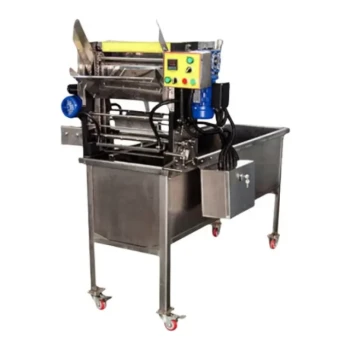
The shift from manual to automated honey filling is the defining factor in scaling a honey business for global distribution. Automated systems deliver unparalleled precision in metering, eliminate contamination risks through closed-loop environments, and drastically increase production throughput. By replacing variable manual labor with mechanical consistency, distributors ensure that every unit meets the stringent quality and safety standards required for premium retail markets and high-volume commercial sales.
Automated honey-filling machinery transforms processing from a labor-intensive craft into a high-efficiency industrial operation, ensuring total product consistency and food safety. This technology is foundational for any distributor looking to maintain brand integrity while lowering per-unit costs in a competitive global market.
Precision and Resource Optimization
Eliminating Metering Errors
Automated machines utilize high-precision volumetric control and liquid level sensing to ensure every bottle contains the exact net weight. This mechanical consistency protects brand integrity and prevents the legal and financial risks associated with under-filled products in commercial trade.
Maximizing Raw Material Yield
Precise metering systems significantly reduce raw material loss caused by overfilling or spills common in manual operations. For high-value honey varieties, these small savings per unit aggregate into substantial increases in overall profit margins.
Preserving Product Quality
Specialized automated equipment often features integrated temperature control, which minimizes the risk of honey crystallization during the packaging process. This ensures the honey maintains its natural flavor profile and liquid clarity, which are essential for consumer appeal.
Hygiene and Global Compliance
Closed-Loop Contamination Control
Honey is highly sensitive to environmental factors; automated systems use enclosed production environments to shield the product from secondary contamination. By drastically reducing direct human contact, these machines ensure the final product meets the highest food-grade packaging standards.
Meeting Global Export Standards
The high level of hygiene and specification standardization provided by automation is a prerequisite for entering premium international markets. These systems facilitate the aseptic transfer of honey, making it easier for distributors to pass rigorous customs and safety inspections.
Enhancing Traceability
Modern automated lines are designed for large-scale commercial circulation, often integrating with labeling systems that track batch data. This level of technical sophistication is vital for wholesalers who must provide deep professional expertise and transparency to their retail partners.
Operational Scalability and Efficiency
Managing Seasonal Surges
Automated filling machines allow processing facilities to handle seasonal production surges without the need to rapidly hire and train temporary manual labor. This creates a more resilient supply chain capable of meeting sudden spikes in demand from large-scale buyers.
Reducing Per-Unit Marketing Costs
By increasing throughput and reducing the reliance on manual labor, automation lowers the production cost per kilogram. This efficiency is a critical competitive advantage in global markets where price fluctuations are common and margins can be tight.
Rapid Order Fulfillment
The speed of automated lines ensures ultra-fast delivery times, allowing distributors to respond quickly to wholesaler needs. High-speed packaging turns bulk inventory into retail-ready products in a fraction of the time required for manual filling.
Understanding the Trade-offs
Initial Capital Investment
The primary barrier to automation is the higher upfront cost compared to manual equipment. However, for distributors focused on growth, this is generally viewed as a necessary investment for long-term scalability.
Technical Maintenance Requirements
Automated systems require specialized technical knowledge for setup, calibration, and routine maintenance. Distributors must ensure they have access to technical support to prevent production downtime.
Cleaning and Batch Flexibility
While automated lines are fast, changeover and cleaning between different types of honey (e.g., switching from clover to manuka) can take longer than manual setups. This makes automation better suited for medium-to-large batch runs rather than extremely small, artisanal quantities.
Scaling Your Honey Distribution Strategy
Choosing the right level of automation is essential for aligning your production capabilities with your business goals.
- If your primary focus is global market expansion: Prioritize automated machines with vacuum sealing and aseptic enclosures to satisfy the strictest international safety regulations.
- If your primary focus is maximizing profit margins on high-volume orders: Invest in high-speed volumetric filling lines to minimize labor costs and eliminate product giveaway through overfilling.
- If your primary focus is maintaining a premium brand image: Look for systems with advanced temperature and viscosity controls to ensure the honey’s texture and flavor remain consistent across every batch.
Embracing automated filling technology is a strategic commitment to providing the reliability, safety, and efficiency that modern B2B honey distribution demands.
Summary Table:
| Feature | Manual Filling | Automated Filling |
|---|---|---|
| Precision | Variable; risk of overfilling | High-precision volumetric control |
| Hygiene | Higher risk (human contact) | Closed-loop; aseptic environment |
| Throughput | Limited by manual labor speed | High-speed; consistent output |
| Operational Cost | High per-unit labor costs | Low per-unit; higher long-term ROI |
| Market Reach | Local/Artisanal focus | Ready for global export & retail |
Scale Your Honey Distribution with HONESTBEE
Elevate your commercial apiary or wholesale business with HONESTBEE’s one-stop sourcing solutions. We provide a full spectrum of beekeeping machinery, including high-precision honey-filling machines, hive-making equipment, and essential industry consumables.
By partnering with us, distributors and B2B resellers gain access to:
- Superior Profit Margins: High-efficiency equipment that reduces waste and labor costs.
- Rapid Fulfillment: Ultra-fast delivery and reliable supply chains to meet seasonal surges.
- Deep Industry Expertise: Professional guidance and OEM/ODM support to ensure your products meet global export standards.
Ready to transform your production capacity? Contact our expert team today to discuss your wholesale needs!
References
- Priyanka Yadav, Manju Lata. A Comprehensive Insight into Propolis Knowledge and Perception in Beekeeping. DOI: 10.55446/hexa.2025.622
This article is also based on technical information from HonestBee Knowledge Base .
Related Products
- Fully Automatic Honey Filling Packaging Machine for Processing Line
- Automatic Honey Filling and Filtering Machine for Beekeeping Bottle Filling
- Precision Durable Efficient HONESTBEE Rotary Honey Filling Machine
- Precision Automated Packaging Turntable Honey Spoon Filling Sealing Packing Machine
- Semi Automatic Small Honey Bottle Filling Machine Honey Filler
People Also Ask
- Why are fully automatic honey filling and packaging lines essential? Boost Your Honey's Market Value and Quality
- What is a fully-automatic honey filler? Streamline Your Production with High-Precision Automation
- How do automated honey filling and packaging machines affect profitability? Boost Margins with HONESTBEE Technology
- How do automated honey filling and packaging machines contribute to the market value of honey products? Maximize Your ROI
- How do industrial-grade automated honey filling and packaging machines mitigate the risk of physical contamination?