The primary advantages of high-precision laboratory-grade binocular stereomicroscopes are superior optical resolution, three-dimensional visualization, and the ability to integrate with digital measurement tools. Unlike standard magnifiers, these instruments provide the depth of field necessary to accurately define complex biological structures. Furthermore, when paired with specialized software, they enable electronic calibration that drastically reduces the margin of error inherent in manual visual readings.
The core value of a laboratory-grade stereomicroscope lies in its ability to transform morphological assessment from a subjective visual estimate into a precise, quantifiable dataset. By combining 3D optical clarity with digital calibration, you ensure that measurements of critical features—such as the proboscis and leg segments—are consistent and scientifically valid.
Superior Visualization for Complex Structures
The Importance of Depth of Field
Honeybees are three-dimensional organisms, not flat surfaces. Standard magnifiers often lack the depth of field required to keep the entire relevant anatomical structure in focus.
A binocular stereomicroscope provides a clear three-dimensional view. This depth allows the operator to distinguish between overlapping structures and accurately identify measurement endpoints on curved surfaces.
Optical Resolution and Clarity
High-precision optics deliver superior resolution, ensuring that the edges of anatomical features are sharp rather than blurred.
This clarity is vital for defining the exact boundaries of macro characteristics. Without high resolution, measurement start and stop points become ambiguous, compromising data integrity.
Targeting Specific Morphological Parameters
Measuring Appendages Accurately
The primary reference highlights the necessity of these tools for measuring specific, segmented body parts.
For the hind legs, you must accurately distinguish between the femur, tibia, and tarsus. High-grade optics allow you to isolate these segments clearly to obtain valid morphometric data.
Proboscis and Body Length Analysis
Measuring total body length and proboscis length requires a wide field of view without edge distortion.
Stereomicroscopes maintain optical flatness across the field, ensuring that long linear measurements remain accurate from one end of the specimen to the other.
Reducing Error Through Digital Integration
Electronic Calibration
One of the most significant advantages over standard magnifiers is the capability for electronic calibration.
When paired with specialized software, the microscope’s measurements are calibrated against a digital standard. This removes the variability of relying on physical rulers or non-calibrated reticles.
Minimizing Manual Reading Errors
Manual visual readings are susceptible to operator fatigue and parallax error (viewing the scale from an angle).
Software integration standardizes the reading process. This significantly reduces human error, ensuring that the data collected is repeatable regardless of the operator.
Understanding the Trade-offs
Equipment Complexity vs. Simplicity
While stereomicroscopes offer precision, they introduce operational complexity.
Standard magnifiers are immediate and require no setup. Stereomicroscopes require proper lighting alignment, focus adjustment, and software configuration to achieve their full potential.
The Cost of Precision
The superior optics and digital capabilities of laboratory-grade equipment represent a significant investment compared to standard lenses.
This investment is justified only when high data fidelity is required. For basic field identification where exact metrics are unnecessary, this level of precision may be overkill.
Making the Right Choice for Your Goal
To select the correct tool, you must define the level of rigor required for your data.
- If your primary focus is scientific research or taxonomy: You must use a laboratory-grade binocular stereomicroscope to ensure accurate, calibrated measurements of leg segments and proboscis length.
- If your primary focus is quick field identification: A standard magnifier may suffice, as it prioritizes portability and speed over the ability to gather quantifiable morphometric data.
True accuracy in morphology is not just about seeing the subject; it is about measuring it with repeatable precision.
Summary Table:
| Feature | Standard Magnifiers | Laboratory-Grade Stereomicroscopes |
|---|---|---|
| Visualization | 2D / Limited Depth | 3D Stereoscopic / High Depth of Field |
| Resolution | Basic / Potential Edge Blur | High-Precision / Sharp Boundaries |
| Measurement | Manual / Subjective | Digital Calibration / Quantifiable |
| Error Risk | High (Parallax & Fatigue) | Low (Software-Standardized) |
| Best For | Quick Field Identification | Scientific Research & Taxonomy |
Precision Tools for Professional Apiaries
High-fidelity morphological data is the backbone of successful honeybee breeding and research. At HONESTBEE, we empower commercial apiaries and distributors with the professional-grade tools needed to maintain the highest industry standards.
From laboratory-grade stereomicroscopes for precise taxonomy to honey-filling machines and specialized hive-making hardware, our comprehensive wholesale portfolio covers your entire operational spectrum. Whether you are scaling a commercial apiary or supplying the next generation of beekeepers, we provide the machinery, tools, and consumables to drive your success.
Ready to elevate your beekeeping precision? Contact us today to explore our wholesale equipment solutions!
References
- Brou Aubin Assielou, Iritie Bruno Marcel. Caractérisation Morphométrique des Abeilles Mellifères Elevées dans le Centre de la Côte d’Ivoire. DOI: 10.19044/esj.2019.v15n6p155
This article is also based on technical information from HonestBee Knowledge Base .
Related Products
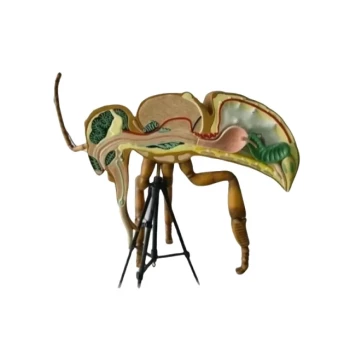
- HONESTBEE Anatomy Bee Model Detailed Anatomical Display for Education and Study
- HONESTBEE Professional Mini J-Hook Hive Tool for Beekeeping
- HONESTBEE Professional Telescopic Pole Bee Swarm Catcher
- Digital Honey Refractometer for Precision Measurement of Optimal Honey Quality
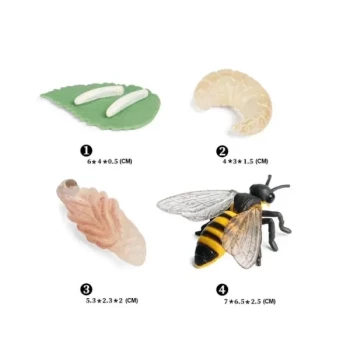
- Honey Bee Lifecycle Model: A Detailed Honeycomb Display of Bee Development
People Also Ask
- How do honey bees utilize water to regulate the internal temperature of the hive? Master Evaporative Cooling Methods
- Is it good to have honey bees in your yard? A Guide to Boosting Your Garden's Health
- What criteria should be considered in the selection process for honey bee breeding? Top Traits for Sustainable Apiaries
- What should be considered when learning the behavior of honey bees and their queens? Master Colony Management
- Why is maintaining specific relative humidity levels critical in caged honey bee experiments? Ensure Research Validity