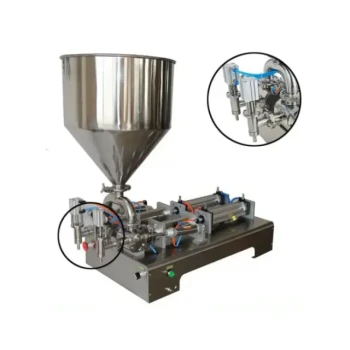
Industrial-grade honey filling equipment eliminates the variability of manual processes by providing absolute volumetric precision and hermetic sealing. These systems ensure that sensory test samples are identical in weight, appearance, and chemical integrity, removing external biases and contamination that compromise research data. By automating the transition from bulk storage to retail-ready samples, distributors can offer their clients products that meet the most rigorous scientific and commercial standards.
Industrial-grade equipment ensures sensory sample integrity through high-precision volumetric control and a closed-loop environment. This eliminates visual bias and environmental contamination, providing a standardized product that manual filling cannot replicate.
Standardizing Physical Appearance to Eliminate Bias
Precision Volumetric and Headspace Control
Industrial machines use high-precision metering pumps to ensure every bottle has the exact same net weight and liquid level. This uniformity is vital for sensory testing to prevent visual cues, like uneven headspace, from influencing a participant's perception of the product source.
Maintaining Visual Uniformity
By standardizing the filling height, distributors ensure that every sample appears identical to the next. This level of consistency is impossible to achieve through manual pouring and is essential for maintaining the integrity of blind tests.
Eliminating Physical Product Loss
High-precision systems and vacuum anti-drip nozzles significantly reduce honey loss during the bottling process. For wholesalers, this means more efficient use of high-value inventory and cleaner, more professional sample presentation.
Preserving the Sensory and Biological Matrix
Eliminating Odor and Microbial Contamination
The closed environment of an automated system isolates the honey from external pollutants, airborne particles, and human-borne odors. This guarantees that the delicate aroma profile of the honey remains untainted by the surrounding environment during the critical filling phase.
Temperature and Flow Rate Management
Industrial systems utilize sophisticated temperature controls to prevent the degradation of heat-sensitive enzymes and bioactive compounds. Unlike manual handling, which may involve inconsistent heating or mechanical friction, automation preserves the natural therapeutic properties and "active" state of the honey.
Extending Shelf-Life Stability
By reducing exposure to air and impurities, industrial-grade equipment improves the shelf-life stability of the final product. This ensures that samples sent to distributors or lab facilities remain representative of the original batch for longer durations.
Scaling Sample Production for Wholesale Success
Rapid Fulfillment and Operational Efficiency
Automated workflows significantly accelerate the transition from large storage tanks to retail packaging, enabling rapid response times to market demands. This efficiency lowers labor costs and allows distributors to fulfill large-scale sample orders with minimal lead time.
Meeting Modern Retail Standards
Industrial filling equipment is designed to meet the strict hygiene and packaging standards required by modern retail channels. This ensures that the samples provided are not just for testing, but are representative of high-quality, commercialized end-user goods.
Full-Spectrum Product Consistency
For businesses managing diverse honey varieties, automated systems provide a repeatable process across the entire product portfolio. This professional consistency builds trust with B2B clients who demand "market-ready" samples for their own distribution networks.
Understanding the Trade-offs
Capital Investment and Maintenance
The primary limitation of industrial-grade equipment is the higher initial capital investment compared to manual setups. These systems also require specialized maintenance and a consistent power supply to operate effectively within a production facility.
Setup and Changeover Time
While automation is highly efficient for high volumes, it may require significant cleaning and recalibration time when switching between very small batches of different honey varieties. This makes it slightly less flexible than manual filling for extremely low-volume, artisanal experimentation.
Selecting Equipment for Professional Sample Preparation
Choosing the right equipment depends on your specific volume requirements and the level of scientific rigor demanded by your clients.
- If your primary focus is scientific research and sensory accuracy: Prioritize machines with high-precision volumetric pumps and hermetic sealing to eliminate visual and olfactory bias.
- If your primary focus is rapid market entry and B2B distribution: Invest in high-speed, closed-loop systems that maximize throughput while maintaining strict hygiene standards for retail readiness.
- If your primary focus is preserving therapeutic value: Select equipment with advanced temperature and flow control sensors to protect delicate enzymes and active biological components.
Investing in industrial-grade automation transforms your honey from a simple commodity into a professionally standardized asset, ready for the most demanding global markets.
Summary Table:
| Feature | Manual Filling | Industrial-Grade Equipment | Business Impact (B2B) |
|---|---|---|---|
| Volumetric Precision | High variability; prone to human error | High-precision metering pumps | Ensures uniform weight & visual consistency |
| Contamination Risk | High (exposure to air/human contact) | Closed-loop environment | Guarantees microbial safety & aroma integrity |
| Bioactive Preservation | Inconsistent heat/friction damage | Advanced temperature & flow control | Maintains therapeutic value & enzymes |
| Production Speed | Slow; labor-intensive | High-speed automated workflows | Rapid order fulfillment & lower labor costs |
| Sample Presentation | Potential drips & uneven levels | Vacuum anti-drip; retail-ready look | Builds professional trust with clients |
Scale Your B2B Honey Business with HONESTBEE
As a premier one-stop sourcing partner for commercial apiaries and wholesalers, HONESTBEE provides a comprehensive full-spectrum product portfolio—from high-precision honey-filling machines and hive-making hardware to essential beekeeping consumables.
We understand the unique needs of distributors and resellers, offering:
- Deep Industry Expertise: Specialized equipment tailored for sensory accuracy and retail standards.
- Ultra-Fast Delivery: Efficient order fulfillment to keep your supply chain moving.
- Reliable OEM/ODM Support: Customized solutions to boost your brand's profit margins.
- Exceptional Customer Service: Rapid response times from dedicated professionals.
Ready to upgrade your production and ensure market-ready quality? Contact us today to explore our wholesale offerings!
References
- Marija CERJAK, Damir KOVAČIĆ. Do quality labels change how much we like a product? Evidence from honey consumers. DOI: 10.5513/jcea01/26.4.4874
This article is also based on technical information from HonestBee Knowledge Base .
Related Products
- Commercial Rotary Honey Filling Machine for Production
- Precision Durable Efficient HONESTBEE Rotary Honey Filling Machine
- Fully Automatic Honey Filling Packaging Machine for Processing Line
- Precision Automated Packaging Turntable Honey Spoon Filling Sealing Packing Machine
- Automatic Honey Filling and Filtering Machine for Beekeeping Bottle Filling
People Also Ask
- What role do commercial honey filling machines play in honey distribution? Scaling Efficiency and Quality Control
- What technical support do commercial-grade filling machines provide? Convert Honey NTFPs into Marketable Commodities
- What is the significance of specialized honey filling equipment? Scaling from Beekeeping to Commercial Success
- Why is professional honey filling machinery critical for honey production? Scale Your Apiary's Profit & Efficiency
- Why is high-capacity honey filling machinery necessary for Giant Honey Bees? Solve the Apis dorsata Volume Crisis