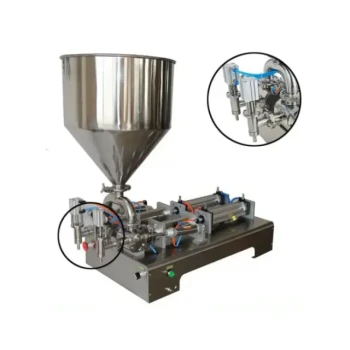
Industrial-grade honey filling machines deliver a transformative advantage over manual methods by providing high-precision quantitative control, enclosed-system hygiene, and unmatched production speed. These systems ensure that every bottle meets exact weight requirements while protecting the honey’s biological integrity through advanced temperature and flow management.
Moving from manual to industrial filling transitions a honey operation from a labor-intensive craft to a scalable, high-efficiency commercial enterprise. This shift is essential for distributors and wholesalers who require consistent product quality, strict regulatory compliance, and the ability to fulfill high-volume orders rapidly.
Maximizing Commercial Value Through Precision and Efficiency
Eliminating Product Waste with Volumetric Control
Industrial machines utilize high-precision metering pumps and flow control systems to ensure that the net content of every bottle remains consistent. Manual filling often leads to overfilling to avoid compliance issues, which results in significant cumulative raw material loss over time.
Overcoming High Viscosity Challenges
Honey’s natural viscosity and tendency to "string" make manual pouring slow and messy. Industrial-grade equipment features vacuum anti-drip systems that cut off the flow cleanly, ensuring fast, accurate cycles without environmental contamination or sticky packaging.
Rapid Order Fulfillment and Scalability
For wholesalers managing high yields, manual labor is a bottleneck that prevents growth. Automated filling lines significantly increase production efficiency, allowing businesses to transform raw beehive products into commercialized goods at the speed required by modern retail channels.
Protecting Product Integrity and Market Competitiveness
Maintaining Biological and Therapeutic Activity
Honey contains delicate enzymes and active components that can be damaged by improper handling. Specialized filling machines use precise temperature controls to avoid excessive heating and mechanical friction, preserving the natural healing properties and "active" state of premium honey.
Ensuring Superior Hygiene Standards
Manual filling exposes honey to air and external impurities, increasing the risk of microbial contamination. Industrial machines operate within an enclosed filling environment, isolating the product from pollutants and ensuring it meets the stringent food safety standards required for international export.
Extending Shelf-Life and Stability
By reducing exposure to oxygen and external contaminants during the bottling process, industrial systems improve the shelf-life stability of the final product. This consistency is a critical selling point for distributors who need to guarantee quality to their downstream retail partners.
Understanding the Trade-offs
Initial Capital Expenditure vs. Long-Term ROI
The primary hurdle for industrial automation is the initial investment cost compared to the low entry price of manual tools. However, the reduction in labor costs, material waste, and packaging errors typically allows for a rapid return on investment in high-volume environments.
Maintenance and Technical Requirements
Unlike manual setups, industrial machines require regular calibration and technical maintenance to ensure peak performance. While this adds a layer of operational complexity, it is a necessary step for maintaining the consistent quality standards that professional B2B buyers demand.
Selecting the Right Solution for Your Distribution Network
Choosing the right equipment is a strategic decision that impacts your entire supply chain and fulfillment capability.
- If your primary focus is High-Volume Retail Distribution: Invest in fully automated lines with high-precision volumetric control to maximize throughput and ensure every bottle meets strict weight regulations.
- If your primary focus is Premium or Medical-Grade Honey: Prioritize machines with advanced temperature-controlled paths and enclosed systems to preserve the honey’s biological enzymes and purity.
- If your primary focus is Rapid Market Expansion: Look for versatile, modular filling systems that can be easily scaled as your production needs grow, supported by a partner offering one-stop sourcing and fast delivery.
By integrating industrial automation, distributors can provide the reliability and professional packaging consistency that modern global markets require.
Summary Table:
| Feature | Manual Filling Methods | Industrial-Grade Machines |
|---|---|---|
| Accuracy | High variance; risk of overfilling | Precise volumetric control (mg level) |
| Hygiene | Open air; higher contamination risk | Enclosed systems; food-grade safety |
| Speed | Slow; labor-intensive | Rapid fulfillment; high-volume output |
| Product Waste | Frequent spills and drips | Vacuum anti-drip systems; minimal loss |
| Scalability | Limited by manual labor | Modular & easy to scale for growth |
Scale Your Honey Distribution with HONESTBEE Professional Equipment
At HONESTBEE, we specialize in empowering distributors, wholesalers, and B2B resellers with one-stop sourcing for the entire honey production lifecycle. From precision honey-filling machines and honey-themed cultural merchandise to specialized hive-making hardware, our full-spectrum portfolio is designed to maximize your profit margins and operational efficiency.
Why Partner with HONESTBEE?
- Comprehensive Portfolio: Access everything from industrial machinery to essential industry consumables in one place.
- Rapid Fulfillment: Benefit from ultra-fast delivery and efficient order processing to keep your supply chain reliable.
- Deep Industry Expertise: Leverage our professional knowledge for OEM/ODM support and technical guidance.
- Exceptional Service: Enjoy dedicated support and rapid response times tailored to the needs of large-scale commercial apiaries.
Ready to transition from labor-intensive processes to high-efficiency commercial operations? Contact us today to optimize your production and receive a custom wholesale quote!
References
- Niswatin Hasanah, Ery Setiyawan Jullev Atmaji. Agribusiness Supply Chain Management of “Rainbee”: Apis cerana in Forests of Bondowoso, Indonesia. DOI: 10.25047/ijossh.v2i2.6708
This article is also based on technical information from HonestBee Knowledge Base .
Related Products
- Commercial Rotary Honey Filling Machine for Production
- Precision Durable Efficient HONESTBEE Rotary Honey Filling Machine
- Fully Automatic Honey Filling Packaging Machine for Processing Line
- Economy Small Honey Filling Machine Honey Bottle Filler Packaging Machine
- Precision Automated Packaging Turntable Honey Spoon Filling Sealing Packing Machine
People Also Ask
- What role do commercial honey filling machines play in honey distribution? Scaling Efficiency and Quality Control
- What technical support do commercial-grade filling machines provide? Convert Honey NTFPs into Marketable Commodities
- What is the significance of specialized honey filling equipment? Scaling from Beekeeping to Commercial Success
- Why is professional honey filling machinery critical for honey production? Scale Your Apiary's Profit & Efficiency
- Why is high-capacity honey filling machinery necessary for Giant Honey Bees? Solve the Apis dorsata Volume Crisis