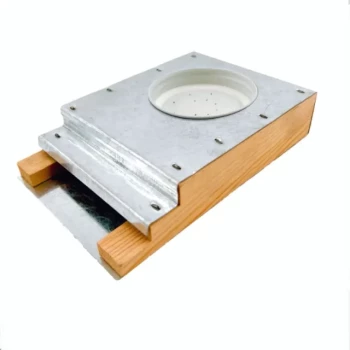
Using a bee feeder internally offers crucial advantages regarding temperature regulation and hive security. Placing the feeder inside the hive utilizes the colony's ambient heat to keep the syrup warm, making it easier for the bees to consume. Furthermore, housing the food source within the hive structure significantly mitigates the risk of robbing by shielding the scent of syrup from opportunistic intruders.
Core Takeaway Internal feeding is not just about convenience; it is a strategic choice for hive defense and resource management. By internalizing the food source, you stabilize the syrup's temperature and prevent external pests from detecting and raiding the colony's supplies.
Enhancing Hive Security and Environment
The Critical Defense Against Robbing
Robbing is a primary concern when feeding bees, particularly during a nectar dearth.
External feeders release the scent of sugar syrup into the open air, attracting wasps, yellow jackets, and bees from other colonies.
Placing the feeder internally contains the scent within the hive, significantly reducing the likelihood of inciting a robbing frenzy.
Optimizing Syrup Temperature
Bees consume syrup more efficiently when it is close to the temperature of the hive.
Internal placement allows the feeder to absorb the colony's warmth, keeping the liquid slightly warmer than the outside air.
This is vital because cold syrup can lower the bees' body temperature, stressing the colony during consumption.
Protection from Environmental Factors
Internal feeders, specifically top feeders, shield the food source from direct sunlight.
Sun exposure can degrade syrup or cause it to spoil more quickly.
By keeping the syrup in the dark, enclosed space of the hive, you maintain the quality of the feed for longer periods.
Operational Efficiency and Workflow
Minimizing Colony Disturbance
One of the distinct benefits of internal top feeders is the reduction of invasive inspections.
Refilling these feeders generally requires only lifting the outer hive lid and inner cover.
This allows you to replenish supplies without disrupting the brood nest or removing frames, keeping the bees calmer.
Speed and Cleanliness
Internal top feeders often feature a wide, open design.
This structure makes pouring syrup significantly faster compared to filling narrow frame or gravity feeders.
The wide opening also reduces the risk of spills, which keeps the apiary clean and further discourages pests.
Avoiding Common Equipment Pitfalls
Eliminating Temperature-Induced Leaks
A major trade-off with external gravity feeders is their susceptibility to physics.
Temperature fluctuations can cause air inside gravity feeders to expand or contract, breaking the vacuum seal and dumping syrup on the bees or the ground.
Internal top feeders do not rely on a vacuum seal, making them immune to these temperature-induced leaks.
Maintenance and Storage
Simplicity in design often translates to longevity in equipment.
Internal feeders are generally easy to rinse out after the feeding season concludes.
Their design allows for stackable, compact storage, protecting the equipment until it is needed again.
Making the Right Choice for Your Goal
While internal feeders are superior for temperature and security, your specific management style dictates how you benefit most.
- If your primary focus is Hive Defense: Internal placement is essential to mask the scent of syrup and prevent robbing by stronger colonies or pests.
- If your primary focus is Workflow Efficiency: Using a top-style internal feeder will speed up refills and eliminate the mess associated with gravity feeders.
- If your primary focus is Colony Health: The internal heat retention ensures bees do not expend unnecessary energy consuming cold syrup.
Internal feeding provides a secure, thermally stable environment that protects your resources while simplifying the beekeeper's daily tasks.
Summary Table:
| Benefit Category | Internal Feeder Advantage | Impact on Colony |
|---|---|---|
| Hive Security | Contains syrup scent inside the hive | Prevents robbing from wasps and other colonies |
| Thermal Control | Utilizes colony heat to warm syrup | Ensures easier consumption and reduces bee stress |
| Feed Quality | Protects syrup from direct sunlight | Prevents rapid spoilage and degradation of feed |
| Maintenance | No vacuum seal required | Eliminates temperature-induced leaks and spills |
| Efficiency | Refill via top lid access | Minimizes brood nest disturbance and saves time |
Scale Your Apiary Success with HONESTBEE
At HONESTBEE, we understand that professional beekeeping requires equipment that balances colony health with operational efficiency. As a leading partner for commercial apiaries and distributors, we provide a comprehensive wholesale range of high-performance internal feeders, hive-making machinery, and honey-processing equipment.
Whether you are looking to secure your hives against robbing or optimize your workflow with durable, specialized hardware, our portfolio is designed to support your growth. Contact us today to discuss our wholesale offerings and discover how our industry-leading tools and honey-themed merchandise can add value to your business.
Related Products
- Professional In-Hive Bee Feeder HONESTBEE Frame for Beekeeping
- HONESTBEE Entrance Bee Feeder Professional Hive Nutrition Solution for Beekeeping
- HONESTBEE Professional Entrance Bee Feeder Hive Nutrition Solution
- In-Hive Dual Compartment Frame Bee Feeder for Targeted Colony Nutrition
- White Plastic 0.5L Beekeeping Entrance Feeder for Bees
People Also Ask
- When should beekeepers stop feeding their bees? Let Your Bees Tell You
- Why is the use of a beekeeping feeder for syrup supplementation important? Boost Colony Growth and Survival
- What are the common types of internal and external feeders used in beekeeping? Choose the Right Feeder for Your Hive
- What is a feeder in the context of beekeeping? Optimize Your Hive Nutrition and Growth
- How do specialized feeders contribute to effective artificial feeding? Scientific Apiary Management & Colony Health