The primary disadvantages of volumetric filling machines center on high initial capital costs and potential discrepancies in visual fill levels. While these machines offer precise dosage control, they prioritize the volume of the product over the aesthetic uniformity of the fill line.
Volumetric fillers prioritize quantitative accuracy over visual consistency. While they ensure every customer receives the exact same amount of product, variations in container manufacturing can cause fill lines to appear uneven, particularly in transparent packaging.
The Aesthetic Challenge: Visual Fill Levels
The Issue with Container Variation
Volumetric filling machines dispense a precise, pre-determined volume of liquid into every container. However, glass and plastic containers are rarely manufactured with perfect internal uniformity.
Small manufacturing inconsistencies mean that two bottles with the same external dimensions may have slightly different internal volumes.
The "Shelf Appeal" Problem
Because the machine dispenses a fixed volume regardless of the container's internal shape, the liquid level will sit at different heights in different bottles.
If you place these bottles side-by-side on a retail shelf, the fill lines will appear uneven. Customers often perceive lower fill lines as "underfilled," even if the volume of liquid is accurate.
The Limitation of Transparent Packaging
This visual inconsistency is most problematic when using transparent containers.
Glass or clear plastic exposes the uneven fill lines to the consumer. Consequently, volumetric filling is often better suited for opaque containers (such as aluminum cans or dark plastics) where these visual differences are hidden from view.
The Financial Barrier
High Initial Investment
Volumetric technology requires a significant upfront financial commitment. The precision engineering required to deliver consistent volumes commands a higher price point.
Impact on Small Operations
For small businesses or startups with limited capital, the initial purchase cost can be prohibitive. While the automation reduces labor costs over time, the barrier to entry is substantially higher than manual or semi-automatic alternatives.
Understanding the Trade-offs: Precision vs. Perception
Accuracy at the Expense of Uniformity
It is vital to understand that the "disadvantage" of uneven fill lines is actually a side effect of accuracy.
Volumetric machines ensure regulatory compliance regarding net weight or volume. In contrast, "liquid-level" fillers fill every bottle to the same cosmetic height, but this results in varying amounts of actual product in each bottle.
You must decide which is more critical for your product: the strict accuracy of the dose (Volumetric) or the visual uniformity of the bottle on the shelf (Liquid-level).
Making the Right Choice for Your Goal
To determine if the disadvantages of volumetric filling outweigh the benefits for your specific operation, consider your packaging and budget priorities:
- If your primary focus is Visual Appeal: Avoid volumetric fillers for clear containers; uneven fill lines may negatively impact consumer perception on the shelf.
- If your primary focus is Regulatory Compliance: Accept the visual inconsistency to ensure every unit contains the exact declared volume of product.
- If your primary focus is Budget: Be aware that the high initial purchase price may require a longer period to achieve a return on investment compared to manual methods.
Choose volumetric filling when the accuracy of the content matters more than the uniformity of the container.
Summary Table:
| Feature | Volumetric Filling Limitation | Impact on Operation |
|---|---|---|
| Visual Consistency | Fill lines appear uneven in transparent bottles | Negative consumer perception of "underfilling" |
| Container Tolerance | Internal volume variations affect liquid height | Not ideal for clear glass or plastic packaging |
| Initial Investment | High upfront capital expenditure | Significant barrier to entry for small businesses |
| Primary Focus | Prioritizes volume accuracy over aesthetics | Requires opaque containers for best shelf appeal |
| ROI Period | Longer time to recoup costs due to high price | Requires high-volume production to justify cost |
Scale Your Honey Production with Precision
At HONESTBEE, we understand the delicate balance between filling accuracy and cost-efficiency. Whether you are a commercial apiary or a global distributor, our comprehensive wholesale range includes specialized honey-filling machines, hive-making hardware, and a full spectrum of beekeeping tools designed to optimize your workflow.
Don't let equipment hurdles slow your growth. Let our experts help you select the right machinery and industry consumables to ensure both regulatory compliance and shelf appeal. Contact HONESTBEE today to discover how our end-to-end beekeeping solutions can drive your business success!
Related Products
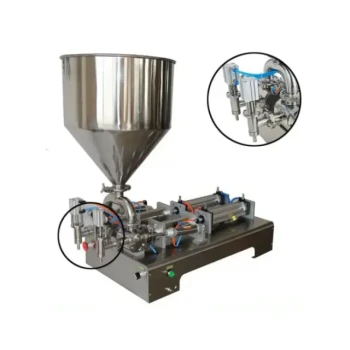
- Pneumatic Paste Filling Machine Bottling Packaging Machine Single Nozzle
- Pneumatic Double Nozzle Honey Filling Bottling Packaging Machine
- Precision Durable Efficient HONESTBEE Rotary Honey Filling Machine
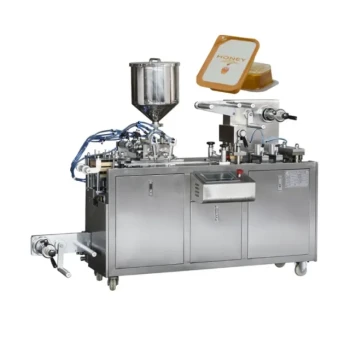
- Precision Automated Packaging Turntable Honey Spoon Filling Sealing Packing Machine
- Double Nozzle Small Honey Filling Machine Honey Sachet Packing Packaging Equipment
People Also Ask
- Why is the motor an important factor when selecting a filling machine? Boost Efficiency and Simplify Production
- What are the calibration requirements for the filling machine? Expert Tips for Liquid Consistency
- How are filling machines calibrated to ensure accurate filling? Optimize Your Production Line for Maximum Profitability
- How does scalability differ between automatic and manual filling machines? Scale Your Production Efficiently
- What is the main goal of the filling machine process? Ensure Precision & Integrity for Your Products