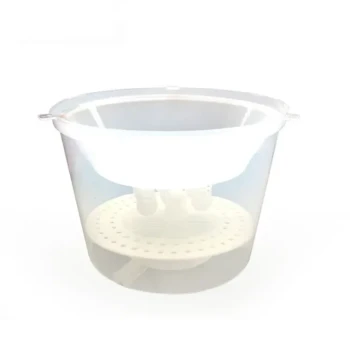
Front porch style pollen traps are entry-level collection units designed to mount directly over your existing hive entrance. While they offer an affordable introduction to pollen harvesting, they are characterized by their small storage capacity and significant maintenance requirements. You must empty them frequently to prevent spoilage and ensure the hardware remains functional against environmental wear.
Front porch traps represent a low-cost barrier to entry for beekeepers interested in pollen collection. However, this affordability introduces a specific operational burden: they require vigilant, almost daily management to maintain hardware integrity and pollen quality.
Anatomy and Functionality
The Collection Mechanism
These devices function as professional-grade tools on a smaller scale. They utilize a physical grid placed in the path of returning foragers.
Non-Destructive Harvesting
As worker bees pass through this grid to enter the hive, the mesh mechanically scrapes pollen pellets from their hind legs. The pollen falls into a collection drawer below, allowing for the systematic harvesting of fresh bee pollen without harming the bees.
Affordability and Accessibility
The primary advantage of this style is its low cost. Because they mount externally to the normal entrance, they are an excellent option for hobbyists looking to experiment with pollen collection without investing in expensive, integrated hive modifications.
The Operational Challenges
Limited Storage Capacity
The most immediate constraint of a front porch trap is its volume. These units have a small capacity for storing collected pollen.
The Necessity of Frequent Emptying
Due to the limited size, the traps can overfill quickly during a heavy flow. You must empty the collection drawer frequently to prevent the container from becoming clogged, which disrupts the bees' entry and exit.
Susceptibility to Spoilage
Pollen is a biological product that degrades rapidly. If the trap is not emptied regularly, the collected pollen is highly prone to molding, rendering the harvest useless.
Hardware and Maintenance Issues
Vulnerability to Warping
Exposure to the elements can degrade the physical structure of the trap. These units are susceptible to warping over time, which can compromise the fit and function of the device.
Mechanical Failures
As the unit warps or weathers, the moving parts often suffer. You may find that the doors or collection drawers become difficult to operate, requiring regular adjustments or cleaning to ensure smooth movement.
Ensuring a Proper Seal
Bees are opportunistic and will find the path of least resistance. A critical maintenance challenge is ensuring the trap seals tightly against the hive body. If gaps exist, bees will find alternative entrances to bypass the collection grid entirely.
Understanding the Trade-offs
Low Upfront Cost vs. High Labor
The core trade-off with front porch traps is economic versus temporal. You save money on the initial purchase, but you "pay" for the device with the time required to service it.
Durability Concerns
Unlike integrated systems that are protected within the hive stack, these traps hang externally. This exposure accelerates wear and tear, meaning they may have a shorter service life than more robust, internal alternatives.
Making the Right Choice for Your Apiary
If you are deciding whether to deploy front porch style traps, consider your availability and goals:
- If your primary focus is experimentation: These are the ideal choice for testing pollen markets or personal use without a significant financial commitment.
- If your primary focus is low-maintenance beekeeping: You should approach these with caution, as they require daily or near-daily visits to prevent mold and hardware issues.
Success with front porch traps ultimately depends on your willingness to perform the vigilant maintenance required to keep the system sealed, functional, and clean.
Summary Table:
| Feature/Challenge | Description |
|---|---|
| Design Type | External mount on hive entrance |
| Mechanism | Physical grid for mechanical pollen scraping |
| Primary Advantage | Low upfront cost and easy installation |
| Storage Capacity | Small; requires frequent emptying |
| Maintenance Needs | High; vulnerable to warping and hardware jams |
| Risk Factor | Susceptible to molding if not harvested daily |
Scale Your Pollen Production with HONESTBEE
Whether you are a commercial apiary or a distributor, high-quality hardware is the backbone of your success. HONESTBEE specializes in providing a comprehensive wholesale range of beekeeping tools, from entry-level pollen traps to industrial hive-making and honey-filling machinery.
We help you overcome operational challenges by supplying durable, professional-grade equipment and essential consumables designed for the rigors of the industry. Let us help you optimize your harvest and grow your business with our specialized hardware and cultural merchandise.
Contact us today to explore our wholesale catalog and bulk pricing!
Related Products
- 30 cm Plastic Entrance Hole Bee Pollen Trap and Collector
- Removable Plastic Pollen Trap With Ventilated Tray for Bees Pollen Collector
- Plastic Bee Pollen Trap Strips Comb Catcher Collector
- Professional Bucket Style Wasp and Moth Pheromone Trap
- High-Efficiency Diamond Maze Bee Escape for Clearing Supers
People Also Ask
- What are the design principles and advantages of pollen traps in the collection of bee pollen? Boost Your Apiary Yield
- Why is frequent harvesting of bee pollen from traps necessary for quality control? Ensure Freshness and Prevent Mold.
- How often should bee pollen be harvested from a trap and why? Master Freshness and Prevent Spoilage
- What function do pollen traps serve in quantitative collection? Boost Your Apiary's Data & Production Efficiency
- What is the primary function of bee pollen traps? Optimize Your Pollen Harvest with Advanced Extraction Efficiency