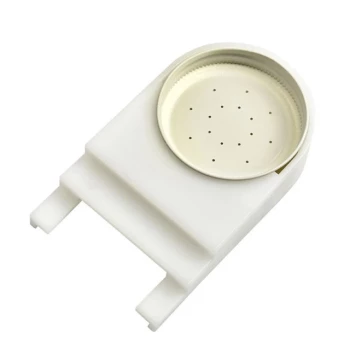
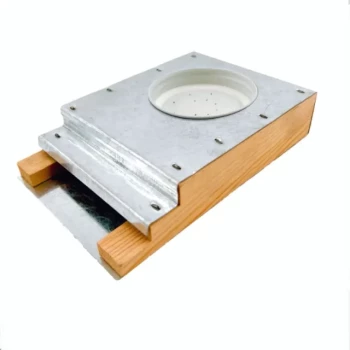
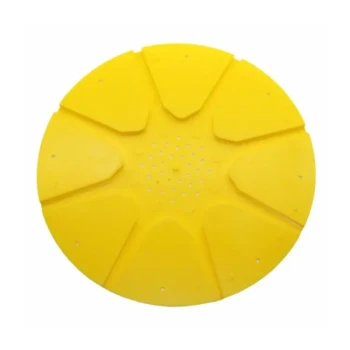
Entrance feeders provide a strategic balance between accessibility and colony security, placing the food source at the hive's threshold rather than deep inside or completely in the open. The primary functional advantages are the ability to visually monitor syrup levels from the exterior, the elimination of hive disturbance during refills, and specific design architectures intended to minimize resource theft by competing colonies.
The core value of an entrance feeder lies in non-intrusive maintenance; it allows the apiarist to manage nutrition levels instantly without disrupting the colony’s internal temperature or propolis seals.
Operational Efficiency and Hive Health
Non-Intrusive Maintenance
The most significant advantage of an entrance feeder is the preservation of the hive's internal environment. Because the feeder is external, there is no need to open the hive body to replenish supplies.
This prevents the loss of hive warmth and humidity, which is critical for brood rearing. It also eliminates the need to use smoke or disrupt the bees' workflow, significantly reducing colony stress.
Rapid Visual Monitoring
Entrance feeders offer immediate visual feedback regarding consumption rates. You can determine if a colony requires more feed simply by glancing at the external container.
This capability is distinct from internal frame feeders, which require opening the hive to gauge levels. It allows for faster apiary inspections and ensures that a colony never runs dry unnoticed.
Security and Protection
Robbing Deterrence Mechanisms
While open feeding can trigger aggressive competition, entrance feeders are equipped with built-in features designed to deter robbing.
By locating the feed at the entrance—where guard bees are naturally stationed—and utilizing specific baffles or restricted access points, these feeders aim to limit access strictly to the resident colony.
Understanding the Trade-offs
Temperature Limitations
While entrance feeders are excellent for mild weather, they lack the thermal protection of Internal Hive Feeders.
Supplementary data indicates that internal feeders are superior for winterizing, as they prevent syrup from freezing and keep the food source close to the bee cluster. Entrance feeders expose the syrup to ambient outdoor temperatures, making them less suitable for freezing conditions.
Volume vs. Convenience
Entrance feeders generally hold less volume than centralized open feeding systems.
While they offer more control than open feeding, they may require more frequent refilling labor compared to the bulk methods used in large commercial operations.
Selecting the Right Feeder for Your Objective
When deciding if an entrance feeder is the correct tool for your apiary, consider your immediate goals regarding climate and colony disturbance.
- If your primary focus is minimal disturbance: Choose an entrance feeder to replenish supplies without breaking the propolis seal or releasing hive heat.
- If your primary focus is winter survival: Opt for an internal hive feeder to prevent freezing and ensure the cluster can access food without breaking formation.
- If your primary focus is rapid inspection: Rely on entrance feeders to monitor consumption rates across multiple hives without the need for protective gear or tools.
Entrance feeders are the optimal choice when the priority is maintaining a strict isolation of the hive environment while ensuring continuous, easily monitored nutrition.
Summary Table:
| Feature | Entrance Feeder Advantage | Impact on Colony |
|---|---|---|
| Maintenance | Non-intrusive refills without opening the hive | Preserves internal heat and reduces stress |
| Monitoring | Instant external visual feedback | Ensures continuous nutrition with rapid inspections |
| Security | Built-in baffles at the guard station | Deter robbing and resource theft from competitors |
| Operational | No smoke or protective gear needed for checks | Increases labor efficiency and speed |
Elevate Your Commercial Apiary with HONESTBEE Solutions
Maximize your operation's efficiency and colony health with professional-grade beekeeping equipment. As a premier partner for commercial apiaries and distributors, HONESTBEE provides the full spectrum of tools you need to succeed—from precision entrance feeders and specialized hive-making machinery to industrial honey-filling systems and essential consumables.
Whether you are scaling your honey production or stocking high-quality merchandise for retail, we deliver the hardware and expertise to drive your growth. Contact HONESTBEE today to discuss our wholesale offerings and let us help you build a more productive apiary.
Related Products
- HONESTBEE Entrance Bee Feeder Efficient Hive Front Liquid Feeding Solution for Beekeeping
- HONESTBEE Entrance Bee Feeder Professional Hive Nutrition Solution for Beekeeping
- HONESTBEE Professional Entrance Bee Feeder Hive Nutrition Solution
- Professional Hive Front Entrance Bee Feeder
- White Plastic 0.5L Beekeeping Entrance Feeder for Bees
People Also Ask
- What types of bee feeders are available for beginners? Start with the Simple Entrance Feeder
- What are the advantages and disadvantages of using an entrance feeder for bees? Balance Convenience and Hive Security.
- What is a bee entrance feeder and what are its drawbacks? Essential Guide to Hive Security and Feeding Efficiency
- How does a bee entrance feeder work? A Simple Guide to Convenient Hive Feeding
- How to make an entrance feeder for bees? A DIY Guide for Safe & Effective Feeding