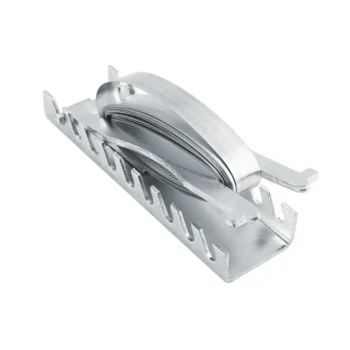
Galvanized mesh acts as a critical dual-purpose shield for beehive sensor brackets. It provides a robust physical barrier that prevents bees from directly damaging delicate electronic components or blocking sensor openings with propolis, all while maintaining the necessary airflow for accurate environmental monitoring.
The primary value of galvanized mesh lies in its ability to separate biological activity from electronic sensitivity. It prevents hive occupants from sealing off sensors with propolis without creating a sealed environment that would distort microclimate data.
The Mechanics of Hive Sensor Protection
Prevention of Biological Interference
The primary physical function of the mesh is to serve as a rigid exclusion zone.
Bees interact physically with objects inside the hive; without a barrier, they may directly contact precision electronic components. This contact can damage delicate sensors or alter their readings through body heat and vibration.
Mitigating Propolis Accumulation
A specific threat to sensor accuracy is the bees' instinct to seal gaps with propolis (bee glue).
Galvanized mesh creates a standoff distance between the bees and the sensor aperture. This prevents the bees from plastering propolis directly over the sensor intake, which would render the device unable to "breathe" and effectively blind it to hive conditions.
Ensuring Environmental Permeability
While the mesh blocks physical bodies, its structure is designed to allow free passage of air.
For a sensor to detect microclimate changes—such as humidity and temperature spikes—it requires adequate airflow. The open structure of the mesh ensures that the air surrounding the sensor is representative of the actual hive environment, not a stagnant pocket of air trapped inside the bracket.
Material Suitability for Hive Environments
Resistance to Humidity and Corrosion
The internal environment of a beehive is consistently warm and humid, conditions that rapidly degrade standard metals.
The galvanized coating on the mesh provides essential corrosion resistance. This ensures the physical barrier remains intact and does not rust, which could otherwise introduce contaminants into the hive or weaken the structural integrity of the bracket over time.
Efficient Thermal Transfer
Beyond simple airflow, the material properties of galvanized wire support thermal accuracy.
Galvanized mesh possesses high thermal conductivity. This ensures that the barrier itself does not act as an insulator; instead, it facilitates effective heat exchange, allowing the sensor to react quickly to temperature changes within the colony.
Understanding the Trade-offs
Maintenance Requirements
While galvanized mesh is durable and rust-resistant, it is not impervious to buildup over long periods.
Proprietors must occasionally clean the mesh, as a buildup of wax or debris on the grid itself can eventually restrict airflow. The material is generally easy to clean, but neglect can lead to reduced sensor sensitivity.
Mesh Density Balance
Selecting the correct mesh size is a critical balancing act.
A mesh that is too fine may clog easily with dust or particulate matter, suffocating the sensor. Conversely, a mesh with openings that are too large may fail to prevent smaller insects or debris from entering the sensor housing.
Making the Right Choice for Your Goal
When selecting or designing sensor brackets for beehive monitoring, consider how the mesh functions align with your specific objectives:
- If your primary focus is Data Accuracy: Prioritize a mesh with a specific open-hole rate that maximizes airflow without allowing bee entry, ensuring real-time response to microclimate changes.
- If your primary focus is Equipment Longevity: Ensure the galvanization quality is high to withstand the corrosive, humid hive atmosphere and prevent the bees from physically accessing the electronics.
The ideal protection strategy uses the mesh to make the sensor invisible to the bees, but fully exposed to the hive's atmosphere.
Summary Table:
| Function | Protection Mechanism | Key Benefit |
|---|---|---|
| Biological Exclusion | Creates a rigid physical standoff distance | Prevents bees from damaging sensors or adding body heat |
| Propolis Mitigation | Prevents direct sealing of sensor apertures | Ensures sensors remain unblocked and fully functional |
| Environmental Flow | High open-hole rate design | Guarantees accurate temperature and humidity monitoring |
| Corrosion Resistance | Zinc-coated galvanized layer | Extends equipment life in warm, humid hive climates |
| Thermal Conductivity | Efficient heat exchange properties | Prevents the barrier from acting as a thermal insulator |
Maximize Your Colony Insights with HONESTBEE
At HONESTBEE, we understand that precision beekeeping requires durable, high-performance equipment. As a leading partner for commercial apiaries and global distributors, we supply the full spectrum of beekeeping tools—from specialized hive-making and honey-filling machinery to essential hardware like galvanized protective components.
Whether you are scaling your commercial operations or looking for high-quality wholesale consumables and honey-themed cultural merchandise, our portfolio is designed to enhance your efficiency and yield. Contact us today to discover how our comprehensive wholesale offerings can support your business growth and technical needs.
References
- Buitrago Lopez Diana Carolina, Ruge Ruge Ilber Adonayt. Development of A Data Acquisition System for Remote Monitoring of Environmental Variables in The Apis Mellifera Bee Hive. DOI: 10.1109/ropec50909.2020.9258695
This article is also based on technical information from HonestBee Knowledge Base .
Related Products
- Professional Galvanized Steel Frame Rest for Beehives
- Professional Galvanized Hive Strap with Secure Locking Buckle for Beekeeping
- Heavy-Duty Galvanized Steel W-Style Pallet Clip
- Stainless Steel Bee Hive Frame Wire for Beekeeping
- Durable Plastic Interlocking Hive Connector for Beekeeping
People Also Ask
- What are the standard dimensions for frame rests in a beehive? Essential Guide for Perfect Bee Space
- How does balancing the number of frames impact hive productivity? Optimize Your Apiary's Biological Output
- What are the main considerations when choosing between wooden and plastic bee hive frames? Optimize Your Apiary's Efficiency
- How do wooden and plastic hive frames compare in terms of durability? Wood vs. Plastic Longevity & Repairability
- What are the main types of beehive frames used in modern beekeeping? Find the Perfect Fit for Your Apiary