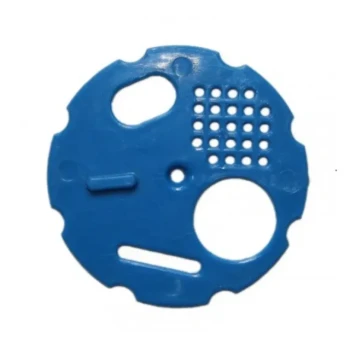
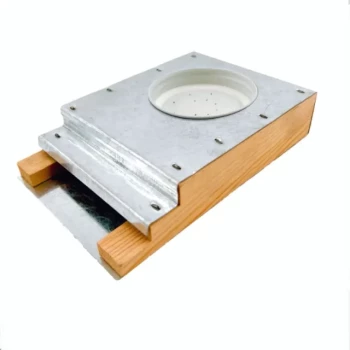
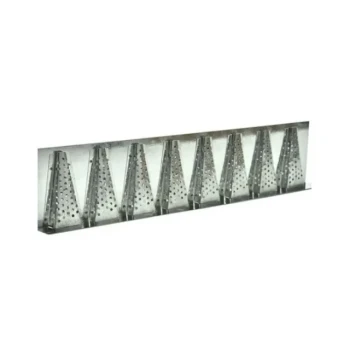
The primary engineering objectives of a narrow beehive entrance are to optimize the colony's thermodynamic efficiency and to fortify physical security. By restricting the size of the opening, the design creates a controllable interface that minimizes heat loss during cold periods while establishing a defensible "choke point" that guard bees can effectively manage against intruders.
The narrow entrance functions as a critical regulator for the hive's internal environment. It acts as a thermal damper to preserve colony warmth and creates a strategic bottleneck that allows a small number of guard bees to repel a much larger number of threats.
Engineering for Climate Regulation
The hive acts as a controlled artificial habitat. The entrance is the primary breach in this isolation, making its size the deciding factor in how well the colony withstands environmental stress.
Minimizing Heat Loss
The most immediate function of a narrow entrance is the conservation of internal thermal energy. During cold periods, the colony generates heat to survive; a large opening would allow this heat to escape rapidly via convection. By narrowing the aperture, the design significantly reduces the rate of thermal exchange between the brood nest and the outside air.
Blocking Wind Intrusion
Beyond passive heat loss, the entrance design actively prevents the intrusion of cold wind. A narrow profile acts as a physical baffle, disrupting direct air currents that could chill the hive interior. This stabilization allows the colony to maintain a consistent temperature with less energy expenditure.
Strategic Defense Design
In daily operations, the entrance serves as the colony's perimeter wall. Engineering a narrow opening converts a potential vulnerability into a defensive asset.
Creating a Defensible Choke Point
A wide entrance exposes the colony to attack across a broad front, requiring many resources to defend. A narrow entrance creates a "choke point," forcing any intruder to pass through a small, focused area. This allows a small group of guard bees to effectively monitor traffic and neutralize threats without overwhelming the colony's workforce.
Exclusion of Specific Predators
The dimensions of the entrance are often calibrated to deter specific classes of predators. By restricting the size of the pass-through, the design aids in blocking larger aggressors such as hornets. It also helps guard bees secure the hive against smaller, opportunistic infiltrators like wax moths and robber bees, ensuring the colony's ecological security.
Understanding the Trade-offs
While a narrow entrance is superior for insulation and defense, it represents a restriction on flow.
Balancing Isolation and Access
The engineering challenge lies in balancing the need for isolation with the need for operation. The hive must be isolated to protect against harsh weather and predators, as noted in professional hive standards. However, the opening must remain sufficient for daily foraging operations and standardized management access. An entrance that is too restrictive could theoretically impede high-traffic foraging, though the priority in this specific design context is protection and climate control.
Assessment for Hive Management
When evaluating hive architecture, consider how the entrance design aligns with your local environmental pressures.
- If your primary focus is Overwintering Survival: Prioritize a narrow entrance design that minimizes air exchange to retain the heat generated by the cluster.
- If your primary focus is Predator Deterrence: Ensure the entrance is restricted enough to serve as a bottleneck, allowing guard bees to easily intercept hornets or robber bees.
Ultimately, a well-engineered narrow entrance is the fundamental hardware component that allows a colony to maintain ecological security and thermal stability efficiently.
Summary Table:
| Engineering Objective | Functional Mechanism | Key Benefit |
|---|---|---|
| Climate Regulation | Reduces convection and acts as a wind baffle | Minimizes heat loss and stabilizes internal temperatures |
| Physical Security | Creates a strategic choke point | Allows fewer guard bees to repel hornets and robber bees |
| Energy Conservation | Limits thermal exchange with outside air | Reduces the caloric energy bees must spend on heating |
| Predator Exclusion | Physical dimension restriction | Blocks larger aggressors from entering the brood chamber |
Upgrade Your Apiary with HONESTBEE Engineering Solutions
Maximize your colony survival rates and operational efficiency with professional-grade hardware from HONESTBEE. As a dedicated partner to commercial apiaries and distributors, we provide more than just tools—we provide the competitive edge needed for large-scale success.
Our comprehensive wholesale portfolio includes:
- Precision Machinery: Advanced hive-making and honey-filling machines to scale your production.
- Protective Hardware: Optimized hive components designed for superior insulation and defense.
- Specialized Equipment: A full spectrum of beekeeping tools and essential industry consumables.
- Cultural Merchandise: Unique honey-themed retail products to diversify your brand.
Whether you are stocking a distribution network or optimizing thousands of hives, HONESTBEE delivers the quality and scale you require. Contact us today to discuss your wholesale needs and see how our expertise can grow your beekeeping business.
References
- Nikolina Domović Belec. Pčelarstvo u antici. DOI: 10.47054/ziva23731-2193db
This article is also based on technical information from HonestBee Knowledge Base .
Related Products
- Professional Reversible Beehive Hive Entrance
- Beehive Entrance Discs Plastic Bee Entrance Disc for Bee Hives
- Multi-Functional Sliding Hive Entrance for Beekeeping
- Beehive Entrance Reducer Guardian Metal Hive Entrance for Bees
- Steel Round Disc Entrance Reducer for Flexzion Bee Hive Nuc Box Gate
People Also Ask
- Where is the hive entrance typically located? Optimize Your Hive's Health and Honey Production
- What role does the size of the entrance play in hive ventilation? Master Beehive Climate Control
- What roles does the hive entrance (piquera) play in beehive management and colony health? Essential Guide for Pro Apiaries
- What are the primary advantages of providing a smaller entrance for a beehive? Boost Defense and Winter Survival
- Why adjust beehive entrance size for humidity? Boost Honey Ripening and Varroa Control in Commercial Apiaries