To properly use and maintain a honey refractometer, you must prioritize consistency in temperature and cleanliness.
Start by ensuring the device is calibrated with the correct reference solution and that the prism is thoroughly cleaned with lukewarm water and a soft cloth. When measuring, always ensure the honey and the device are at the same ambient temperature to prevent skewed readings caused by thermal fluctuations.
Core Takeaway The reliability of your honey refractometer depends less on the device itself and more on your process. Accurate moisture readings are the only defense against fermentation (spoiling), making strict adherence to temperature equilibrium and prism care essential for saving your harvest.
Preparation and Calibration
Temperature Equilibrium
Before you even open the device, ensure both the refractometer and the honey sample are at the same ambient room temperature.
Significant temperature fluctuations are the most common cause of inaccurate readings. If the honey is warm from the hive and the device is cold, the refractive index changes, leading to false moisture data.
Sample Preparation
Honey density varies within a container. If testing from a jar or bucket, stir the honey thoroughly before taking a sample.
This ensures the drop you test represents the entire batch, rather than just the surface layer which may have absorbed ambient moisture.
Calibration Protocols
Regularly calibrate the device to ensure the scale has not drifted.
While some wide-range devices use distilled water, most specific honey refractometers require a reference solution (often a specific oil or high-Brix fluid). Always follow the manufacturer's specific instructions for the correct calibration fluid.
Taking the Measurement
Application
Apply a small amount of honey to the optical glass plate (prism). You need just enough to cover it thinly.
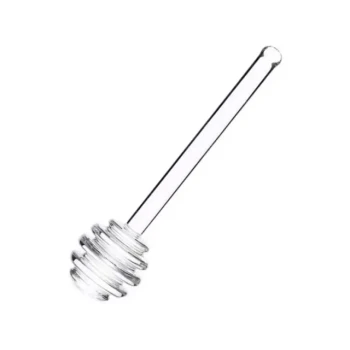
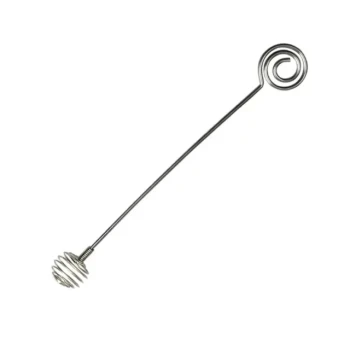
Never use a metal object to apply the honey. Metal spoons or knives can easily scratch the soft optical glass, permanently damaging the instrument's accuracy. Use plastic or wood instead.
Eliminating Interference
Close the daylight plate gently. Once closed, inspect the sample for air bubbles.
If bubbles are present, gently wiggle the panel to release them. Air bubbles disrupt the light path and will result in a fuzzy or incorrect reading.
Reading the Scale
Hold the device up to a bright light source and look through the eyepiece. Rotate the focus adjustment until the scale is sharp.
Record the water percentage immediately. This metric determines if your honey is safe to bottle or liable to ferment.
Critical Maintenance and Cleaning
The Cleaning Routine
You must clean the prism before and after each use.
Use lukewarm water and a soft, damp cloth. Failing to clean the device between samples can lead to cross-contamination, where residue from a previous batch skews the reading of the new one.
Avoiding Chemical Damage
Never use organic solvents to clean the device.
Substances like gasoline, paint thinner, or benzene will degrade the casing and damage the seals. Water and a mild cloth are sufficient for removal of sugary residue.
Common Pitfalls to Avoid
The "Baker's Honey" Risk
The primary trade-off of rushing this process is the risk of missing high moisture content.
If honey exceeds specific moisture limits (typically above 21% or 17-18% for high-quality storage), it may ferment. This results in "baker's honey"—a product with a sharp, yeasty acetic acid taste that cannot be sold as table honey.
Calibration Confusion
Do not assume distilled water is the universal calibration fluid.
Many honey refractometers read a specific range (e.g., 12-30% water). Distilled water (100% water) is often "off the scale" for these specialized tools. Using the wrong fluid will lead to improper calibration and ruined batches.
Making the Right Choice for Your Goal
To ensure your honey remains stable and marketable, apply these practices based on your production stage:
- If your primary focus is Legal Compliance: Ensure your readings consistently show less than 21g of moisture per 100g (21%) to meet standard sales requirements.
- If your primary focus is Long-Term Storage: Test honey during the initial harvest and again before jarring, as moisture levels can shift during storage in buckets.
- If your primary focus is Quality Control: Use the refractometer as a quick field test, but acknowledge it is a screening tool compared to complex lab methods like isotope ratio mass spectrometry.
Treat your refractometer as a precision optical instrument, not a simple kitchen tool, and your readings will remain true.
Summary Table:
| Step | Critical Action | Why It Matters |
|---|---|---|
| Preparation | Achieve temperature equilibrium | Prevents false readings from thermal fluctuations. |
| Calibration | Use specific reference solution | Ensures the scale is accurate and hasn't drifted. |
| Application | Use plastic/wood; remove bubbles | Protects the prism from scratches and ensures a clear reading. |
| Cleaning | Use lukewarm water and soft cloth | Prevents cross-contamination without damaging optical seals. |
| Storage | Avoid organic solvents/chemicals | Protects the casing and integrity of the precision instrument. |
Maximize Your Honey Quality with HONESTBEE
Consistency is the hallmark of a professional apiary. At HONESTBEE, we empower commercial beekeepers and distributors by providing professional-grade beekeeping tools, from precision testing equipment to industrial honey-filling machinery and hive-making systems.
Whether you are scaling your production or supplying the next generation of beekeepers, our comprehensive wholesale inventory ensures you have the reliable hardware and consumables needed to protect every harvest.
Ready to elevate your honey production? Contact us today to explore our full spectrum of equipment and cultural merchandise.
Related Products
- Digital Honey Refractometer for Precision Measurement of Optimal Honey Quality
- Precision Honey Refractometer Instrument for Quality Assessment
- Premium Heat-Resistant Glass Honey Dipper
- Modern Stainless Steel Honey Dipper Stirrer
- Heavy Duty 304 Stainless Steel Honey Dipper
People Also Ask
- What role do high-precision refractometers play in determining the maturity and quality of honey? Ensure Honey Purity.
- Do the color and viscosity of honey affect its refractometer reading? Mastering Moisture Measurement Accuracy
- What is a honey refractometer? The Essential Tool for Perfect Honey Quality
- How is the reading taken from a honey refractometer? A Guide to Accurate Moisture Measurement
- Why is a honey refractometer considered essential for commercial beekeepers? Ensure Honey Quality and Profitability