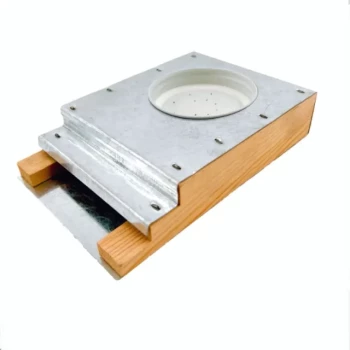
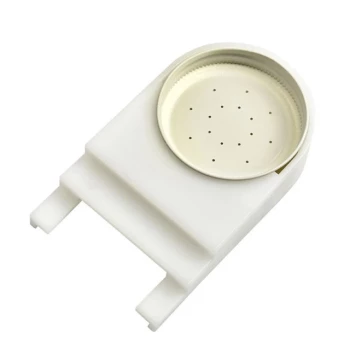
Entrance feeders offer significant convenience regarding workflow, but they introduce a critical vulnerability to your hive's security. While they allow for effortless monitoring and refilling without disturbing the colony, their positioning at the hive entrance creates a substantial risk of robbing, particularly for weaker colonies or during periods of resource scarcity.
Core Takeaway While entrance feeders simplify hive management by allowing external monitoring, they essentially place a "free food" sign at the hive's defensive perimeter. Consequently, they should be used exclusively when the risk of robbing is lowest, and never during a nectar dearth or with a weak colony.
The Mechanics of the Risk
The "Open Invitation" Effect
The primary danger of an entrance feeder is that it positions the food source effectively outside the hive's internal defenses.
This acts as an open invitation for robbing, broadcasting the scent of syrup to foreign bees, wasps, and ants.
Vulnerability During Dearth
This risk is amplified during a nectar dearth, when natural food sources are scarce.
During these times, other insects are desperate for resources; a feeder at the entrance becomes an easily accessible target that can incite a frenzy.
Threat to Weaker Colonies
Weaker colonies are particularly susceptible to this setup.
They often lack the population numbers required to defend the entrance against aggressive robbers attracted by the feeder.
Operational Advantages
Zero-Disturbance Monitoring
The distinct advantage of this equipment is the ability to monitor feed levels instantly.
A beekeeper can visually check the syrup level without smoking the bees, opening the hive, or breaking the propolis seal.
Simplified Refilling
Replenishing the food supply is equally non-intrusive.
Because the feeder is accessible from the outside, you can refill the jar or container without wearing full protective gear or disrupting the colony's internal temperature.
Understanding the Trade-offs
Convenience vs. Security
Using an entrance feeder requires balancing the beekeeper's time against the colony's safety.
While internal feeders (like top or frame feeders) require more effort to fill, they keep the syrup scent contained within the hive, offering superior protection against pests.
The Cost of Exposure
Although entrance feeders are technically "closed" systems, their location mimics the downsides of open feeding.
By keeping the food at the threshold, you risk attracting pests that carry diseases, which can infect and ultimately destroy the hive.
Making the Right Choice for Your Goal
To ensure colony health, you must align your feeding method with the current environmental conditions and colony strength.
- If your primary focus is Ease of Access: Use entrance feeders only during strong nectar flows when robbing pressure is naturally low and the colony is strong.
- If your primary focus is Hive Security: Avoid entrance feeders entirely during nectar dearths; opt for internal feeders (top or frame feeders) to keep the food scent contained.
- If your primary focus is Colony Rehabilitation: Never use entrance feeders for weak hives, as they cannot adequately defend the resource from invaders.
Ultimately, you should prioritize the colony's defensive capability over your own convenience to prevent a feeding attempt from turning into a robbing event.
Summary Table:
| Feature | Entrance Feeder | Internal Feeder (Top/Frame) |
|---|---|---|
| Ease of Monitoring | High (Visual from outside) | Low (Must open hive) |
| Refill Effort | Minimal (No suit required) | Moderate (Requires opening hive) |
| Robbing Risk | High (Scent at perimeter) | Low (Scent contained inside) |
| Best Use Case | Strong colonies during nectar flow | Weak colonies or nectar dearth |
| Temperature Impact | None | Low (Breaks propolis seal) |
Scale Your Apiary Operations with HONESTBEE
Managing large-scale apiaries requires the right balance of efficiency and colony protection. At HONESTBEE, we specialize in supporting commercial apiaries and distributors with a robust selection of high-quality beekeeping tools, specialized machinery, and essential consumables.
Whether you need reliable feeding solutions to prevent robbing or advanced honey-filling machines to streamline your production, our comprehensive wholesale portfolio is designed to enhance your operational success. Partner with a supplier that understands the complexities of the beekeeping industry.
Ready to elevate your beekeeping business? Contact us today to discuss our wholesale offerings and how we can support your growth.
Related Products
- White Plastic 0.5L Beekeeping Entrance Feeder for Bees
- HONESTBEE Entrance Bee Feeder Professional Hive Nutrition Solution for Beekeeping
- HONESTBEE Entrance Bee Feeder Efficient Hive Front Liquid Feeding Solution for Beekeeping
- HONESTBEE Professional Entrance Bee Feeder Hive Nutrition Solution
- Boardman Entrance Bee Feeder Durable Galvanized Steel and Wood Construction for Beekeeping
People Also Ask
- How do you make an entrance feeder for bees? A Guide to Safe & Effective Hive Feeding
- How to make an entrance feeder for bees? A DIY Guide for Safe & Effective Feeding
- How does a bee entrance feeder work? A Simple Guide to Convenient Hive Feeding
- What is a bee entrance feeder and what are its drawbacks? Essential Guide to Hive Security and Feeding Efficiency
- What are the advantages and disadvantages of using an entrance feeder for bees? Balance Convenience and Hive Security.