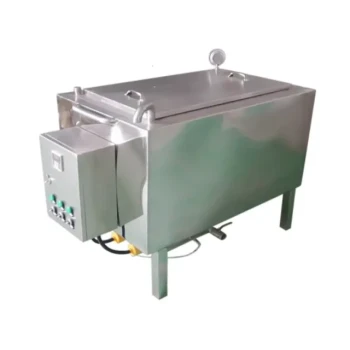
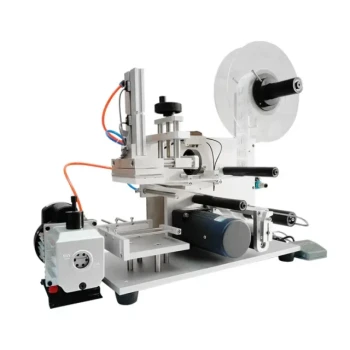
The operational sequence of a beeswax flatting and embossing machine transforms raw wax into usable sheets through five distinct stages. The process begins with melting the wax and feeding it onto a flat surface, followed immediately by mechanical flattening to ensure uniformity. Once the sheet is formed, the machine imprints a specific pattern before the wax cools and solidifies for removal.
Success in beeswax processing relies on precise temperature control during the melting phase and consistent pressure during the flattening stage. This combination ensures a uniform sheet thickness that is receptive to accurate embossing before the wax solidifies.
The Five Critical Stages of Operation
The following sequential workflow ensures that raw beeswax is converted into consistent, high-quality foundation sheets.
1. Liquefaction and Preparation
The process begins with raw material preparation. Beeswax blocks or pellets are placed into a separate heating device.
The goal here is to convert the solid wax into a fully liquid state. This ensures the material is pliable enough to flow through the machine without clogging.
2. Feeding and Distribution
Once the wax is liquefied, the molten beeswax is fed into the machine's intake system.
The machine distributes this liquid evenly onto a flat surface. Proper distribution at this stage is critical to preventing air bubbles or gaps in the final sheet.
3. Mechanical Flattening
The machine engages its primary shaping components, typically using rollers or a press mechanism.
These components apply pressure to the wax to create a sheet with uniform thickness. This stage transforms the amorphous liquid into a consistent, flat structure.
4. Surface Embossing
While the wax is still malleable, embossing tools engage the surface of the sheet.
These tools press intricate patterns—often hexagonal cell imprints—onto the wax. This texturizing is the defining feature that makes the sheet useful for specific beekeeping applications.
5. Solidification and Removal
The final stage involves thermal stabilization. The sheet is allowed to cool and solidify completely.
Once the wax has hardened sufficiently to hold its shape, the finished sheet is removed from the machine for storage or immediate use.
Understanding Operational Trade-offs
While the process is linear, operators must balance conflicting variables to achieve the best results.
Temperature vs. Pattern Definition
The wax must be hot enough to flatten easily, but cool enough to hold the embossed pattern.
If the wax is too hot during embossing, the pattern may "slump" or lose definition before it cools. If it is too cold, the embossing tools may not penetrate deeply enough, resulting in a faint or useless pattern.
Speed vs. Uniformity
Increasing the feed rate can boost production speed, but it often compromises the uniformity of the sheet.
Rushing the flattening stage can lead to variances in thickness. This creates weak spots in the wax sheet that may break during handling or inside the hive.
Making the Right Choice for Your Goal
Understanding where to focus your attention during these stages depends on your specific production requirements.
- If your primary focus is structural integrity: Prioritize the mechanical flattening stage, ensuring your rollers or press apply even, consistent pressure to avoid thin spots.
- If your primary focus is high-definition patterns: Closely monitor the cooling transition between flattening and embossing, ensuring the wax is at the optimal semi-solid temperature to retain complex details.
By strictly adhering to this sequential process and managing thermal variables, you ensure the production of durable, high-quality beeswax sheets.
Summary Table:
| Stage | Action | Key Component | Primary Goal |
|---|---|---|---|
| 1. Preparation | Liquefaction | Heating Device | Solid wax to liquid state |
| 2. Feeding | Distribution | Intake System | Uniform liquid distribution |
| 3. Flattening | Compression | Rollers / Press | Consistent sheet thickness |
| 4. Embossing | Patterning | Embossing Tools | Precise hexagonal imprinting |
| 5. Finalizing | Solidification | Cooling Zone | Shape retention and removal |
Scale Your Beekeeping Business with HONESTBEE
Maximize your apiary’s efficiency with professional-grade foundation production. HONESTBEE specializes in serving commercial apiaries and distributors with a robust selection of beekeeping machinery—from advanced beeswax flatting and embossing machines to honey-filling systems and specialized hive-making hardware.
We provide high-performance tools and essential consumables designed to withstand the demands of industrial use. Whether you are looking to upgrade your production line or source wholesale supplies, our experts are ready to help you optimize your workflow.
Ready to elevate your honey production? Contact HONESTBEE Today for a Wholesale Quote
Related Products
- Electric Flatting and Embossing Machine with Tray for Beekeeping
- Fully Automatic Beeswax Embossing Machine Foundation Mill
- Manual Beeswax Flat Sheet Machine for Beeswax Processing
- Electric Beeswax Flat Sheet Machine with Operating Tray for Wax Processing
- Economy Manual Beeswax Embossing Mill Wax Foundation Machine Roller
People Also Ask
- What are the advantages of implementing a pulley and belt drive system in beeswax foundation machinery? Master Quality.
- What are the primary technical challenges faced by beeswax foundation production machinery? Tackling Lipophilic Residues
- How does the beeswax flatting and embossing machine prepare the wax for processing? Achieve Perfectly Uniform Wax Sheets
- What is the purpose of the beeswax flatting and embossing machine? Boost Hive Efficiency & Honey Production
- What is the primary function of a beeswax flatting and embossing machine? Optimize Your Foundation Production