The defining requirement for baker's honey is a mandatory, explicit usage warning. unlike standard table honey, baker's honey must carry a clear statement such as "for cooking only" placed prominently near the product name. This specific labeling ensures the product is identified for industrial or culinary processing rather than direct consumption.
Core Takeaway: The distinction is strictly functional. Baker's honey requires regulatory warnings to limit its use to cooking, whereas table honey packaging prioritizes high-quality sealing, origin traceability, and visual appeal to drive consumer value.
Regulatory Labeling Requirements
The Mandatory Warning for Baker's Honey
The primary rule for baker's honey is the inclusion of a specific warning label.
You must clearly mark the product with a phrase indicating it is "for cooking only."
Placement and Visibility
This warning cannot be hidden in the fine print on the back of the package.
To comply with processing requirements, the text must be placed prominently near the product name. This ensures immediate differentiation from high-quality honey intended for table use.
Packaging and Preservation Standards
Sealing for Table Honey
While baker's honey focuses on usage warnings, table honey packaging prioritizes physical preservation.
Professional containers for table honey must provide an effective seal to exclude air and moisture.
This prevents the honey from absorbing humidity from the environment, which is critical to stopping fermentation and maintaining physical stability during retail display.
Traceability and Origin
Table honey relies heavily on labeling to convey quality and safety to the consumer.
Automated labeling systems are often used to mark geographical indications, production dates, and nutritional facts.
This data provides product traceability and anti-counterfeiting security, which are essential for building brand trust in the retail market.
Commercial Presentation and Design
Visual Identity for Retail
For table honey, the packaging itself is a marketing tool.
High-quality labeling materials and professional designs are used to convey brand identity and justify higher price premiums.
Proper dimensions and visual appeal are specifically optimized for shelf presence and online sales channels, factors that are less critical for industrial baker's honey.
Understanding the Trade-offs
Utility vs. Premium Positioning
Choosing between marketing baker's honey and table honey involves a trade-off between volume utility and brand value.
Baker's honey is a functional ingredient. The "cooking only" label acknowledges that the product may not meet the strict sensory or chemical standards of table honey, positioning it for utilitarian use.
Table honey commands a higher price but requires significant investment in protective packaging and aesthetic design to prevent spoilage and attract consumers.
Making the Right Choice for Your Product Line
Whether you are packing for industrial clients or retail shelves, your labeling strategy must match the intended end-use of the honey.
- If your primary focus is Baker's Honey: Ensure your label includes a prominent "for cooking only" warning near the product name to strictly define its culinary context.
- If your primary focus is Table Honey: Prioritize air-tight sealing and detailed labels that highlight geographical origin and traceability to maximize brand value.
Correct labeling not only ensures compliance but also protects your brand integrity by managing consumer expectations.
Summary Table:
| Feature | Baker's Honey (Industrial/Culinary) | Table Honey (Retail/Direct) |
|---|---|---|
| Primary Labeling | Mandatory "Intended for cooking only" warning | Brand name, origin, and nutritional facts |
| Label Placement | Prominently near the product name | Designed for shelf appeal and traceability |
| Packaging Goal | Functional containment for processing | Hermetic sealing to prevent fermentation |
| Marketing Focus | Utilitarian use and compliance | Premium branding and consumer trust |
| Quality Focus | Suitable for heat/industrial use | Sensory profile and physical stability |
Elevate Your Honey Production with HONESTBEE Professional Solutions
Whether you are supplying commercial bakeries or building a premium retail brand, HONESTBEE provides the end-to-end equipment you need to succeed. We cater specifically to commercial apiaries and distributors, offering a comprehensive wholesale range including:
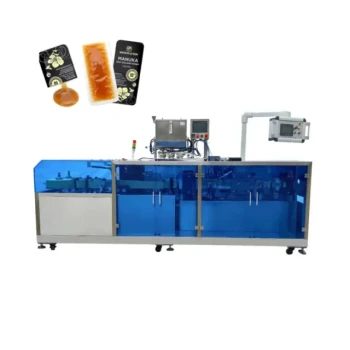
- Automated Labeling & Filling: High-precision honey-filling machines and automated labeling systems to ensure regulatory compliance and brand consistency.
- Beekeeping Machinery: Durable hive-making equipment and professional-grade extraction tools.
- Industry Consumables: A full spectrum of essential hardware and beekeeping tools designed for scale.
- Cultural Merchandise: Unique honey-themed items to diversify your product portfolio.
Ready to scale your operations and improve your packaging efficiency? Contact us today to discover how our wholesale machinery and tools can drive your business value!
References
- Suzana Vidaković Knežević, Milica Živkov Baloš. LABEL ANALYSIS OF SERBIAN HONEY: WHAT DOES (NOT) THE LABEL TELL US?. DOI: 10.46784/e-avm.v10i2.70
This article is also based on technical information from HonestBee Knowledge Base .
Related Products
- Double Nozzle Small Honey Filling Machine Honey Sachet Packing Packaging Equipment
- Hexagonal Glass Honey Jars with Metal Lug Caps Elegant Versatile Packaging
- Small Honey Filling Machine Sachet Packing Equipment Single Nozzle
- Automatic Single-Dose Snap & Squeeze Honey Sachets Packing Machine
- Honey Stick Filler Vertical Paste Sachet Packing Machine for Honey Sachets
People Also Ask
- How does industrial honey-filling machinery support Robinia pseudoacacia stands? Maximize Your Acacia Honey Yield
- What value do retail packaging equipment and filling technologies provide in the honey distribution process? Maximize ROI
- What is honey filling equipment used for? Optimize Your Bottling with Precision Automation
- Why is high-precision honey filling equipment necessary? Secure the medicinal value and ROI of stingless bee honey.
- How does specialized honey filling equipment contribute to honey distribution? Scale Your Wholesale Efficiency Today