To harvest honey using a clearer board on a Langstroth hive, you must install the board between the honey supers and the brood chamber to act as a one-way valve. By leveraging the colony’s natural movement, bees exit the honey frames to join the cluster below but cannot return, leaving the supers bee-free for harvesting the following day.
Core Takeaway Using a clearer board is a passive, low-stress harvesting method that trades speed for calmness. Instead of physically brushing bees off every frame, you use a mechanical "check valve" to clear the supers overnight, significantly reducing disruption to the colony and the risk of stings.
The Setup Process
Evaluating the Hive
Before installing the board, you must verify the state of your frames. Open the hive cover and remove the honey-loaded super.
Inspect the frames to ensure the honey is capped and ready for harvest. Crucially, ensure there is no brood (eggs or larvae) in the honey super, as nurse bees will refuse to abandon brood, rendering the clearer board ineffective.
Preparing the Expansion Space
Unlike direct harvesting, this method often involves adding space for the colony to move into.
Place an empty super directly on top of the brood chamber, separated by a queen excluder. This provides a space for the bees to occupy once they vacate the honey super, preventing overcrowding in the brood box.
Installing the Clearer Board
Place the clearer board on top of the newly added empty super.
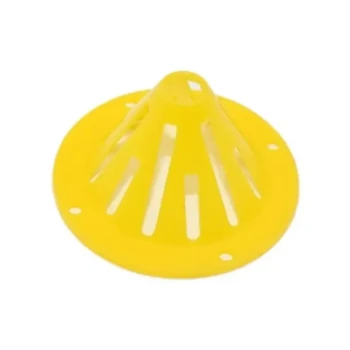
Pay close attention to the orientation. The opening (entrance hole) must face upwards, while the escape mechanism (often a screened triangle or cone) must face downwards. This orientation allows bees to walk down through the hole but prevents them from figuring out how to navigate back up.
Restacking the Hive
Place the honey-loaded super on top of the clearer board. Replace the hive cover immediately.
This setup isolates the honey stores from the rest of the colony, connected only by the one-way passage of the clearer board.
The Clearing Phase
The Waiting Period
Once the board is installed, leave the hive undisturbed. This step is best initiated in the morning to allow a full cycle of activity.
As night falls and the temperature drops, bees naturally migrate downward through the escape to cluster with the brood in the lower boxes.
Timing the Removal
Return to the hive the next day, approximately 24 hours later.
At this point, the top super should be nearly devoid of bees. If you wait significantly longer (e.g., 48+ hours), you risk bees figuring out how to bypass the mechanism or robbers finding gaps in the equipment.
Final Extraction
Remove the now bee-free honey super and the clearer board.
Check the empty super you placed earlier; if you are returning the wet frames immediately after extraction, you can leave it. If not, reconfigure the hive to its standard setup and replace the top cover.
Understanding the Trade-offs
Two Trips Required
The primary disadvantage of this method is logistics. It requires two separate visits to the apiary: one to install the board and another to remove the supers. If your hives are located far away, the travel time may outweigh the benefits.
Temperature Dependency
Clearer boards rely on bee movement. If the weather is too cold, bees may cluster in the super and refuse to move down. Conversely, in very hot weather, they may not feel the need to cluster below, delaying the clearing process.
Equipment Requirements
You need specific equipment—the clearer board itself and an extra empty super—to perform this correctly. This adds to the storage requirements and initial cost compared to simple brushing or shaking methods.
Making the Right Choice for Your Goal
This method is precise, but it is not always the right tool for every situation. Choose your approach based on your priorities.
- If your primary focus is minimal disturbance: Use the clearer board method to keep the colony calm and reduce airborne bees during harvest.
- If your primary focus is speed and efficiency: Use a bee brush or blower to harvest immediately in a single trip, accepting the increased agitation of the colony.
Success with a clearer board relies on the principle of patience over force, allowing the hive's natural behavior to do the heavy lifting for you.
Summary Table:
| Step | Action | Key Consideration |
|---|---|---|
| 1. Inspection | Check honey supers for capped honey | Ensure no brood is present in supers |
| 2. Expansion | Add an empty super above the brood box | Provides space for bees to migrate into |
| 3. Installation | Place clearer board (opening facing UP) | Ensure the one-way valve faces downward |
| 4. Waiting | Wait approximately 24 hours | Do not exceed 48h to prevent robbing |
| 5. Removal | Lift off bee-free supers | Best done during calm weather |
Maximize Your Harvest Efficiency with HONESTBEE
Transitioning to professional-scale beekeeping requires tools that save time and protect your colony. At HONESTBEE, we specialize in supporting commercial apiaries and distributors with a robust wholesale inventory. From high-precision honey-filling machines to durable hive-making machinery and essential consumables, we provide everything you need to scale your operations.
Ready to upgrade your equipment or restock your inventory?
Contact HONESTBEE Today for Wholesale Pricing
Related Products
- Slatted Porter Style Bee Escape for Rapid Hive Clearing
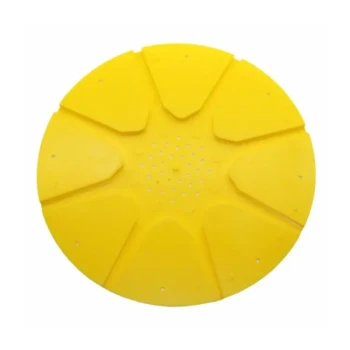
- Efficient Hive Clearing: HONESTBEE 8-Way Plastic Bee Escape
- High-Efficiency Diamond Maze Bee Escape for Clearing Supers
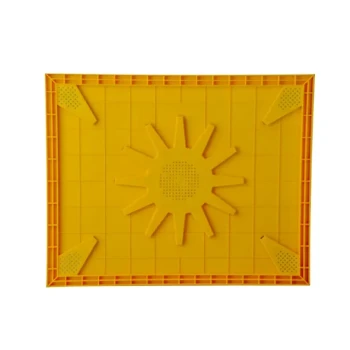
- HONESTBEE Multi Exit Plastic Bee Escape Board for Efficient Honey Harvesting
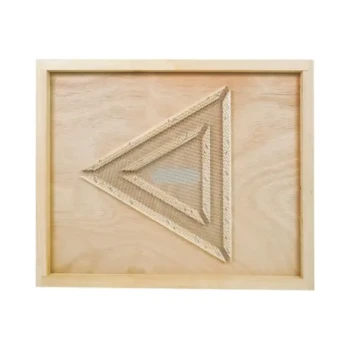
- HONESTBEE Wooden Bee Escape Board with Triangle Mesh Design for Beekeeping
People Also Ask
- How do bee escape boards compare with solar fume boards when clearing bees from honey supers? Speed vs. Simplicity for Commercial Apiaries
- How do bee escape boards and fume boards assist in honey harvesting? Optimize Your Harvest with Low-Stress Tools
- How is a bee escape, or clearer board, used to harvest honey from a Langstroth hive? The Stress-Free Harvesting Guide
- What are the advantages of using a bee escape board? Ensure a Chemical-Free and Sting-Free Honey Harvest
- What happens to the bees when a bee escape board is used? A Gentle, Chemical-Free Harvest Method