Shallower honey supers offer a practical balance of modular hive design and safer handling. Their reduced depth limits the amount of honey carried in each box: a full shallow super weighs approximately 13–16 kg (29–35 lb), compared with about 27–32 kg (60–70 lb) for a full deep brood chamber. This makes honey removal, transport, and routine hive management substantially easier.
The core advantage is unit weight. Shallow supers separate honey storage from brood production while keeping each loaded box manageable, reducing lifting strain and allowing beekeepers to scale storage incrementally during nectar flows.
Why Shallower Supers Improve Hive Structure
They separate honey storage from brood rearing
Dedicated honey supers sit above the brood area and provide a distinct space for surplus honey. This modular arrangement allows beekeepers to harvest honey without unnecessarily disturbing the colony’s reproductive core.
The separation also supports cleaner harvesting because the collected honey is stored away from the primary brood-rearing area.
They create manageable storage modules
A shallow super adds storage capacity in a smaller vertical unit than a full-depth brood chamber. Beekeepers can add or remove individual supers as nectar production changes instead of handling one very heavy deep box.
This incremental approach is particularly useful for commercial apiaries managing many colonies with varying honey-flow conditions.
They support operational standardization
Shallow supers can be part of a broader modular equipment strategy involving standardized boxes, frames, and foundations. Where an apiary uses medium-depth equipment for both brood chambers and honey supers, frame and box interchangeability can be maximized across operations.
However, shallow equipment is not automatically interchangeable with deep equipment. Interchangeability depends on adopting compatible dimensions and maintaining that standard consistently.
How Shallower Supers Improve Ergonomics
They reduce manual lifting weight
The most important ergonomic benefit is the lower weight of a full unit. A shallow super weighing roughly 13–16 kg is far easier to lift manually than a full deep chamber weighing approximately 27–32 kg.
Actual weights vary with frame count, honey density, moisture content, bees, and equipment construction. Nevertheless, the difference between a shallow and deep box is operationally significant.
They reduce strain during harvesting
Harvesting often requires repeated lifting, carrying, stacking, and loading. Smaller, lighter supers reduce the physical demand placed on apiary workers during these repetitive tasks.
The benefit is not limited to the final harvest. Super addition, removal, inspection, and repositioning also become less physically taxing.
They improve handling for field teams
Shallower units are easier for individual workers to control, especially when working in uneven apiary conditions or moving boxes between the hive, vehicle, and processing area. This can make work more manageable for a broader range of employees.
For distributors and commercial operators, the ergonomic advantage may also support safer standard operating procedures and more predictable labor requirements.
They allow capacity to be added incrementally
Beekeepers can increase honey-storage capacity by adding another shallow super rather than replacing or lifting an exceptionally heavy full-depth unit. This allows the workload to be distributed across several manageable boxes.
The trade-off is that more boxes and frames may need to be handled overall.
Structural and Operational Benefits for Apiaries
They protect the brood-management workflow
Deep brood chambers provide the space needed for queen laying and brood expansion. Shallow supers are instead dedicated primarily to surplus honey storage, helping maintain a clear functional distinction between colony development and harvest production.
This division simplifies hive organization and reduces unnecessary disruption during honey collection.
They support modular harvesting
A modular super system allows honey to be removed in sections as individual boxes reach the appropriate harvest stage. This can make harvesting workflows more adaptable than relying on fewer, heavier full-depth units.
For larger operations, the system also supports consistent box movement, staging, and transport procedures.
They fit broader equipment strategies
An apiary may choose shallow supers for light handling, medium boxes for a balance of capacity and weight, or deep equipment for maximum storage efficiency. The best configuration depends on labor practices, equipment standards, and harvesting volume.
Medium-depth equipment can be an operational compromise: it provides more capacity per box than shallow equipment while remaining easier to handle than a full deep chamber.
Understanding the Trade-offs
Shallow equipment requires more boxes
Because each shallow super holds less honey than a deep chamber, achieving the same total storage volume requires more boxes and frames. This increases the number of components that must be purchased, assembled, inspected, stored, and transported.
For high-volume operations, that additional handling can offset part of the ergonomic benefit.
Equipment costs can be higher
The supplementary reference indicates that equivalent nest volume may require approximately nine shallow bodies compared with five deep bodies, producing an estimated 35–40% higher equipment cost because of the additional frames and foundation.
The precise difference depends on local prices, box specifications, frame configuration, and purchasing terms, so distributors should treat this as an operational comparison rather than a universal quotation.
Lighter boxes do not eliminate lifting risk
A shallow super is easier to lift, but full boxes remain heavy and may be lifted repeatedly. Safe handling procedures, suitable transport equipment, team lifting, and sensible stacking practices remain important.
Weight reduction should be viewed as risk mitigation, not as a substitute for proper workplace controls.
Standardization must be deliberate
Mixing shallow, medium, and deep equipment without a clear system can create storage, frame-matching, and inventory problems. An apiary should define which box depths, frame sizes, and foundations it will support before expanding its equipment portfolio.
For suppliers, clearly specifying dimensions and compatibility is essential to preventing fulfillment errors.
Making the Right Choice for Your Goal
Choose the configuration according to the physical demands, storage requirements, and standardization priorities of the operation.
- If your primary focus is reducing lifting strain: Use shallow honey supers to keep each loaded unit substantially lighter during hive management and harvesting.
- If your primary focus is maximum storage economy: Consider deep supers, recognizing that full boxes are significantly heavier and more demanding to handle.
- If your primary focus is operational balance: Evaluate medium-depth equipment, which offers more storage per box than shallow supers while remaining more manageable than deep chambers.
- If your primary focus is equipment interchangeability: Standardize box and frame dimensions across brood and honey-storage applications before purchasing at scale.
- If your primary focus is commercial fulfillment: Source compatible supers, frames, and foundation as a coordinated product set to reduce delays, mismatched components, and handling inefficiencies.
The right super depth is the one that balances honey capacity, equipment cost, interchangeability, and the physical limits of the people who manage the apiary.
Summary Table:
| Aspect | Shallow Honey Super | Full-Depth Brood Chamber |
|---|---|---|
| Typical Weight (Full) | 13–16 kg (29–35 lb) | 27–32 kg (60–70 lb) |
| Primary Use | Honey storage | Brood rearing |
| Ergonomics | Easier to lift and handle | Heavier, more strain |
| Modularity | High – incremental capacity | Lower – larger units |
| Equipment Cost (per volume) | Higher (~35–40%) | Lower |
| Ideal For | Reducing physical strain, frequent harvesting | Maximum storage economy |
Ready to optimize your apiary's honey storage with ergonomic shallow supers? HONESTBEE offers a comprehensive range of beekeeping equipment, including shallow supers, frames, and foundations, tailored for commercial apiaries and distributors. Benefit from our one-stop sourcing, rapid response, and OEM/ODM support. Contact us today to discuss your needs and find the perfect solution for your operation!
Related Products
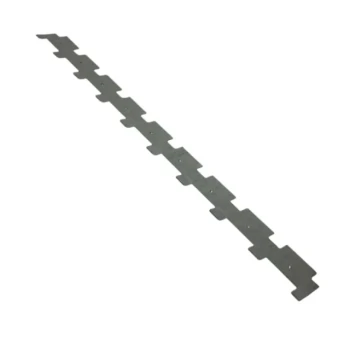
- Heavy Duty Castellated Iron Frame Spacer for Honey Supers
- Durable 16 Way Circular Bee Escape for Efficient Honey Harvesting
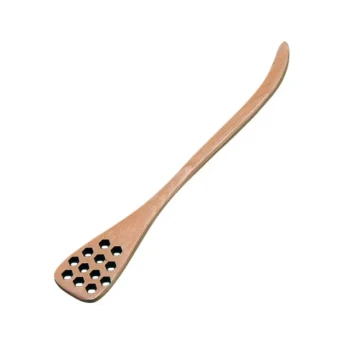
- Modern Honeycomb Pattern Wooden Honey Dipper for Stirring and Drizzling
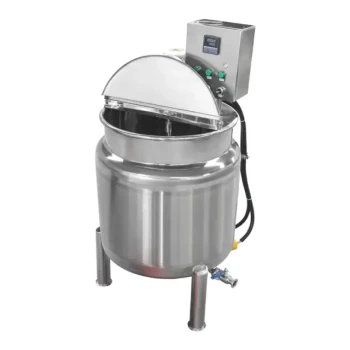
- Double Wall Honey Heating Stirring Homogenizer Mixing Machine with Various Capacity
- Professional Plastic Honey Dipper for Easy Honey Drizzling
People Also Ask
- What are honey super frames and what foundation options are available? Choose the Best Support for Your Bees
- What are the reasons and drawbacks of using nine frames in a ten-frame honey super? Boost Extraction Speed Today
- What are honey super frames and how many are needed per box? A Beekeeper's Essential Guide
- What are honey super frames and their foundation options? Choose the Best Support for Your Hive's Honey Production
- Why might a beekeeper use fewer than the standard number of frames in a honey super? Boost Extraction Efficiency