Beekeepers reduce the number of frames in a honey super to streamline the harvesting process. By placing fewer frames—such as 8 or 9 in a standard 10-frame box—they encourage bees to build deeper, "fatter" honeycombs. These widened combs significantly reduce the labor required to uncap and extract the honey while yielding a similar total volume.
By intentionally providing extra space between frames, you manipulate the bees' building instinct to create combs that extend beyond the wooden frame edges. This allows for a clean, single-pass cut during uncapping and reduces the total number of frames you must handle in the extraction room.
How Spacing Alters Comb Construction
Capitalizing on Bee Instincts
Bees naturally seek to fill the available void within a hive. When frames are spaced further apart than the standard "bee space," bees will elongate the cell walls of the honeycomb to bridge the gap.
The "Fat Comb" Result
Instead of stopping flush with the wooden edges of the frame, the bees draw the wax out further.
This results in a thick, bulging comb that protrudes well past the wood. While the number of frames is lower, the actual volume of storage capacity remains roughly the same because each individual frame holds more honey.
The Operational Advantages
Simplified Uncapping
This is the most immediate benefit for the beekeeper. Because the wax cappings extend beyond the wood, an uncapping knife can slice the entire face of the comb off in one smooth motion.
With standard spacing, the comb is often flush with the wood, requiring the beekeeper to carefully pick at low spots or maneuver the knife to avoid gouging the frame.
Reduced Handling Time
Using fewer frames creates a multiplier effect on efficiency. If you run 8 frames in a 10-frame box, you are handling 20% fewer frames per super.
In a large operation, this reduction implies significantly less lifting, brushing, and loading of the extractor. Some estimates suggest this can reduce handling time in the extracting room by over 10%.
Increased Wax Production
For beekeepers who value beeswax as a secondary crop, "fat combs" are advantageous. The process of slicing off the extended cappings yields a higher volume of clean beeswax compared to uncapping standard-width frames.
Understanding the Risks and Trade-offs
While efficient, this technique requires strict adherence to specific rules to avoid creating a mess in the hive.
The "Drawn Comb" Prerequisite
You must generally only use this technique with frames that already have fully drawn comb.
If you space bare foundation frames too far apart, bees will likely ignore the pattern and build "burr comb" or "bridge comb" between the frames. This creates a structural mess that connects frames together, making them impossible to remove without breaking the comb.
Stability and Transport Issues
Fewer frames mean more empty space if the comb isn't fully built out yet. In an 8-frame configuration, frames are more prone to sliding or falling out of the box during transport or handling compared to a tightly packed 10-frame box.
The Plastic Frame Limitation
Bees behave differently with plastic frames. Even with drawn comb, bees are less likely to draw plastic frames out into the desired "fat" shape. Using fewer than 9 frames with plastic components often results in irregular comb construction.
Strictly for Honey Supers
Never use reduced spacing in the brood nest. The brood chamber requires standard spacing to maintain proper "bee space" for the queen and nurse bees. Altering this will lead to difficult inspections and potentially rolled (killed) queens.
Making the Right Choice for Your Goal
Deciding between 8, 9, or 10 frames depends on the maturity of your equipment and your extraction setup.
- If your primary focus is establishing new frames: Stick to 10 frames. You need the bees to draw the foundation straight and true before you can experiment with spacing.
- If your primary focus is maximum efficiency with drawn comb: Switch to 9 frames. This offers a safe middle ground that provides easier uncapping and better automated extraction compatibility without the high risk of bridge comb associated with 8-frame spacing.
- If your primary focus is wax production: Consider 8 frames, provided you have perfectly drawn comb to start with. This yields the most "capping wax" but requires careful management to avoid messiness during slow honey flows.
Expert Tip: A 9-frame spacing is generally the "sweet spot" for most beekeepers, balancing the risk of cross-comb against the reward of easier uncapping.
Summary Table:
| Frame Count | Best Use Case | Key Advantage | Risk Level |
|---|---|---|---|
| 10 Frames | New foundation/Establishing frames | Straight, uniform comb construction | Low |
| 9 Frames | General extraction efficiency | Easier uncapping & automated compatibility | Low-Medium |
| 8 Frames | Maximum beeswax & manual harvesting | Thickest cappings; 20% less frame handling | High (Bridge comb risk) |
Maximize Your Honey Yield with HONESTBEE
Efficiency is the backbone of a profitable apiary. At HONESTBEE, we specialize in supporting commercial beekeepers and distributors by providing the high-capacity tools needed to scale. From precision-engineered honey-filling machines to heavy-duty hive-making equipment and essential industry consumables, we help you turn 'fat combs' into fast profits.
Ready to upgrade your extraction line? Contact us today to explore our wholesale machinery and comprehensive beekeeping toolsets designed for your success!
Related Products
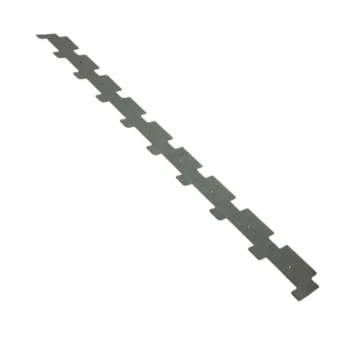
- Heavy Duty Castellated Iron Frame Spacer for Honey Supers
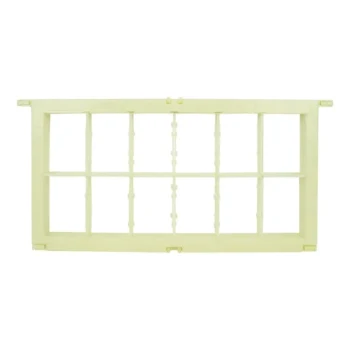
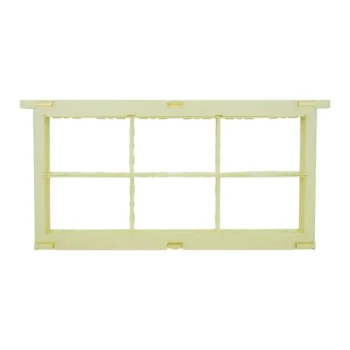
- Professional Sectional Comb Honey Frame with 250g Cassette System for Beekeeping
- Professional 500g Sectional Comb Honey Frame System for Beekeeping
- Heart-Shaped Comb Honey Frame and Honeycomb Cassette
- Plastic Honey Comb Frames Cassette Box for Honey
People Also Ask
- What are honey super frames and what foundation options are available? Choose the Best Support for Your Bees
- What are the reasons and drawbacks of using nine frames in a ten-frame honey super? Boost Extraction Speed Today
- What are honey super frames and how many are needed per box? A Beekeeper's Essential Guide
- What are honey super frames and their foundation options? Choose the Best Support for Your Hive's Honey Production
- What is the benefit of using fewer frames in a honey super? Streamline Harvesting with Fatter Honeycombs