Running nine frames in a ten-frame honey super is a strategic management technique designed to force bees to draw out honeycomb cells beyond the edges of the wooden frame. This "fat" comb is significantly easier to uncap with a knife or machine during harvest, streamlining the extraction process.
By sacrificing one frame of space, you encourage bees to deepen the remaining cells. This results in wider combs that simplify uncapping and extraction, though it requires strict attention to frame spacing to prevent structural issues.
Optimizing for Harvest Efficiency
Creating "Fat" Combs
The primary motivation for this spacing is to alter how bees build the honeycomb. When given extra space between frames, bees will naturally extend the cell walls, creating thicker, wider combs.
Simplifying Uncapping
Because the honeycomb protrudes past the wooden edges of the frame, uncapping becomes much faster and straighter. A hot knife or automated uncapper can slice the cappings off cleanly in a single pass without hitting the wood.
Enhancing Inspection Safety
The increased gap between frames creates more room for manipulation during hive inspections. This reduces the likelihood of rolling or crushing bees when lifting frames, preserving colony health.
Compatibility with Automation
Uniformly drawn, wide combs are highly compatible with automated extracting systems. These frames tend to run smoother through machinery, and fewer frames per box means less total handling time in the honey house.
Understanding the Trade-offs
The Requirement of Uniform Spacing
You cannot simply remove a frame and leave the rest loose; the remaining nine frames must be spaced evenly. If the spacing is irregular, bees will build combs of varying widths, negating the benefits of the technique.
The Risk of Cross-Comb
This technique is best reserved for frames that already have drawn comb. If you attempt this with bare foundation, bees may build "bridge comb" or cross-comb between the frames, creating a mess that is difficult to separate.
Issues with Plastic Frames
Bees behave differently with plastic frames compared to wax. Even with drawn comb, bees may not extend the cells on plastic frames as consistently, potentially leading to messy construction rather than the desired clean, wide block.
Uncertainty of Yield
While the combs are wider, it is technically uncertain if nine wide frames hold more total honey than ten standard frames. The advantage is strictly in operational efficiency, not necessarily in increased honey production volume.
Making the Right Choice for Your Goal
This technique is not a universal solution; it is a specific tool for specific contexts.
- If your primary focus is harvesting efficiency: Switch to nine-frame spacing only after your frames have fully drawn comb to speed up uncapping and reduce crushing bees.
- If your primary focus is drawing new foundation: Stick to the standard ten-frame spacing to ensure bees build straight, uniform comb without bridging.
- If your primary focus is using plastic equipment: Maintain ten frames per box, as bees are less likely to draw plastic out correctly when spaced widely.
Mastering frame spacing allows you to trade a small amount of hive management time for a significant gain in processing speed.
Summary Table:
| Feature | 9-Frame Spacing (in 10-Frame Super) | 10-Frame Standard Spacing |
|---|---|---|
| Comb Depth | Thicker "fat" combs for easier uncapping | Standard depth; harder to uncap manually |
| Extraction Efficiency | High; compatible with automated machinery | Standard; requires more handling time |
| Inspection Safety | More space reduces bee crushing | Tighter gaps increase risk of rolling bees |
| Foundation Use | High risk of cross-comb on new foundation | Best for drawing out new straight comb |
| Ideal For | Drawn comb in honey supers | New foundation and plastic frames |
Scaling Your Apiary Operations with HONESTBEE
Optimizing frame spacing is just the first step in maximizing your honey harvest efficiency. At HONESTBEE, we specialize in supporting commercial apiaries and distributors with high-performance solutions designed for scale.
Whether you need precision hive-making machinery, high-speed honey-filling machines, or a reliable wholesale supply of industrial-grade beekeeping tools and consumables, we provide the hardware you need to grow. Our comprehensive portfolio includes everything from specialized hardware to honey-themed cultural merchandise.
Ready to upgrade your honey processing workflow?
Contact HONESTBEE Today to discuss our wholesale offerings and discover how our specialized equipment can enhance your production yield and operational speed.
Related Products
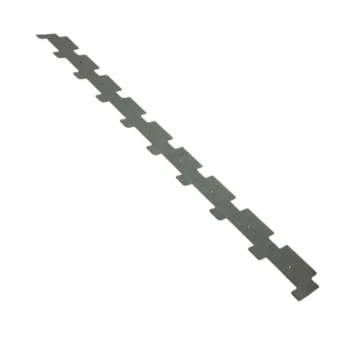
- Heavy Duty Castellated Iron Frame Spacer for Honey Supers
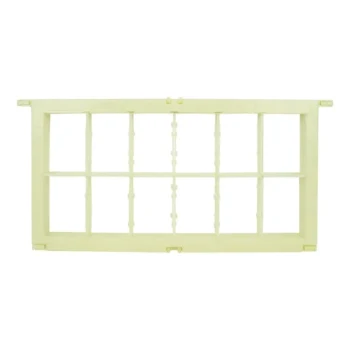
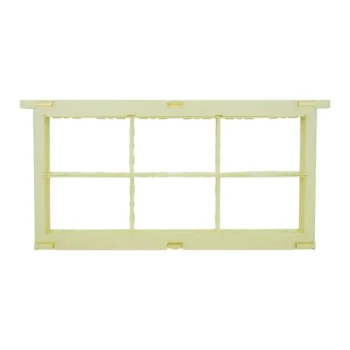
- Professional Sectional Comb Honey Frame with 250g Cassette System for Beekeeping
- Professional 500g Sectional Comb Honey Frame System for Beekeeping
- Heart-Shaped Comb Honey Frame and Honeycomb Cassette
- Plastic Honey Comb Frames Cassette Box for Honey
People Also Ask
- What are honey super frames and what foundation options are available? Choose the Best Support for Your Bees
- What are honey super frames and how many are needed per box? A Beekeeper's Essential Guide
- What are honey super frames and their foundation options? Choose the Best Support for Your Hive's Honey Production
- Why might a beekeeper use fewer than the standard number of frames in a honey super? Boost Extraction Efficiency
- What is the benefit of using fewer frames in a honey super? Streamline Harvesting with Fatter Honeycombs