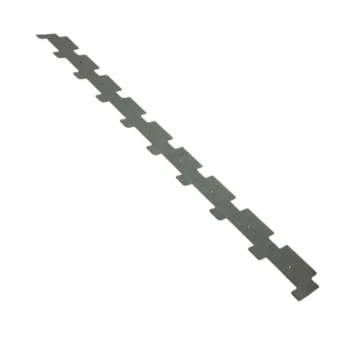
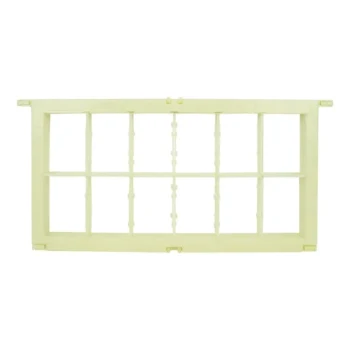
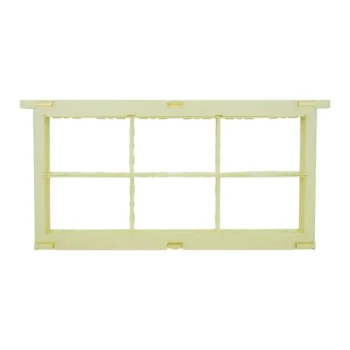
Honey super frames serve as the internal structural scaffolding for your hive’s upper boxes, providing a specific area for bees to build wax comb for honey storage. These removable rectangular borders are essential for managing the hive, with a standard 10-frame honey super requiring exactly 10 corresponding frames to function correctly.
Core Takeaway The choice of frame foundation represents a balance between biological preference and operational durability. While bees generally prefer building on wired wax, many beekeepers favor plastic foundation for its resilience against pests and damage during extraction.
The Role of the Honey Super Frame
Structural Integrity
The primary function of the frame is to support the wax comb. Without this frame, the comb would be fragile and difficult to move without breaking.
The frame allows for the non-destructive removal of honey stores. It enables you to inspect the hive or extract honey without destroying the colony's work.
Sizing and Quantity
Frame quantity is dictated by the box size. A 10-frame honey super requires a full set of 10 frames.
Proper spacing is critical. Using the correct number of frames ensures bees build straight, manageable comb rather than "burr comb" that bridges gaps and makes hive management difficult.
Evaluating Foundation Options
Wired Wax Foundation
This option consists of a sheet of beeswax embedded with vertical wires for support. It closely mimics the bees' natural environment.
Biological Preference: Bees generally show a preference for wired wax over synthetic alternatives. They are often quicker to draw out the comb on this natural surface.
Plastic Foundation
Plastic foundation is a rigid sheet molded with a honeycomb pattern, usually coated with a thin layer of wax to encourage acceptance.
Durability: This is the primary driver for its popularity. Plastic is robust and withstands the centrifugal force of honey extractors better than wax.
Pest Resistance: Plastic is highly resistant to damage from wax moths, a common pest that destroys wax comb. It offers a distinct advantage for long-term equipment preservation.
Foundationless Frames
While not a "foundation" material, some beekeepers opt to let bees build comb naturally within the empty frame.
Extraction Challenges: Honey can be extracted from these frames, but it requires precision. The comb must be fully attached to all four sides of the frame before attempting extraction.
Crush and Strain: For small-scale operations, foundationless frames are ideal for the "crush and strain" method. This destroys the comb to harvest honey but provides a significant beeswax harvest as a byproduct.
Understanding the Trade-offs
Extraction Risks
The choice of foundation dictates how you must handle the frames during harvest.
Plastic allows for high-speed extraction with minimal risk of "blowouts" (comb breaking apart).
Foundationless frames require a delicate touch. You must start the extractor at a slow speed to remove heavy honey first, lightening the load before increasing speed. Medium-depth frames are generally recommended here to reduce the stress on the comb.
Biological Considerations
While wiring frames adds necessary support for wax foundation, it is important to note potential chemical interactions.
One study suggests that the wire used for support could potentially increase iron levels in the brood, though this is generally considered a minor variable compared to structural benefits.
Making the Right Choice for Your Goal
Select your frame and foundation style based on your operational priorities.
- If your primary focus is durability and ease of management: Choose plastic foundation, as it resists pest damage and withstands high-speed extraction.
- If your primary focus is rapid bee acceptance: Choose wired wax foundation, as bees prefer the natural texture and will often build comb faster.
- If your primary focus is wax harvesting or low-cost setup: Choose foundationless frames and utilize the crush-and-strain harvest method to collect both honey and clean beeswax.
Your equipment should serve your specific beekeeping philosophy, whether that prioritizes efficiency or natural processes.
Summary Table:
| Foundation Type | Material | Durability | Bee Acceptance | Best Use Case |
|---|---|---|---|---|
| Plastic | Wax-coated plastic | High | Moderate | Commercial use & high-speed extraction |
| Wired Wax | Reinforced beeswax | Moderate | High | Rapid comb building & natural preference |
| Foundationless | Natural comb | Low | Variable | Beeswax harvesting & crush-and-strain method |
Scale Your Apiary with HONESTBEE Professional Equipment
Whether you are a commercial apiary or a global distributor, HONESTBEE provides the durable, high-quality infrastructure your business needs. We specialize in the full spectrum of beekeeping essentials, including:
- High-Performance Machinery: Automated honey-filling and hive-making machines for industrial efficiency.
- Premium Frames & Foundations: A complete range of wholesale beekeeping tools designed for longevity.
- Consumables & Merchandise: From essential hive components to honey-themed cultural goods.
Partner with a supplier that understands the demands of large-scale beekeeping. Contact HONESTBEE today to discuss your wholesale requirements and see how our comprehensive equipment portfolio can streamline your operations.
Related Products
- Heavy Duty Castellated Iron Frame Spacer for Honey Supers
- Professional Sectional Comb Honey Frame with 250g Cassette System for Beekeeping
- Professional 500g Sectional Comb Honey Frame System for Beekeeping
- Heart-Shaped Comb Honey Frame and Honeycomb Cassette
- Plastic Honey Comb Frames Cassette Box for Honey
People Also Ask
- What are honey super frames and what foundation options are available? Choose the Best Support for Your Bees
- What are the reasons and drawbacks of using nine frames in a ten-frame honey super? Boost Extraction Speed Today
- What are honey super frames and how many are needed per box? A Beekeeper's Essential Guide
- Why might a beekeeper use fewer than the standard number of frames in a honey super? Boost Extraction Efficiency
- What is the benefit of using fewer frames in a honey super? Streamline Harvesting with Fatter Honeycombs