Magnetic stirrers offer a distinct technical edge over traditional mechanical systems by utilizing non-contact power transmission. By driving an internal stir bar via an external rotating magnetic field, these systems eliminate the physical shaft, thereby solving critical issues related to container sealing and frictional energy loss while optimizing the mixing of viscous fluids like honey.
The core value of magnetic stirring lies in its elimination of physical intrusion. By removing the mechanical shaft, you remove the primary points of failure—seals and friction—while achieving superior diffusion rates for high-viscosity ingredients through stable fluid convection.
The Engineering of Non-Contact Transmission
Traditional mechanical stirring relies on a physical connection between the motor and the fluid. Magnetic stirrers fundamentally alter this dynamic through magnetic coupling.
Eliminating Sealing Challenges
In mechanical systems, the shaft must penetrate the mixing vessel. This creates a reliance on dynamic seals, which are prone to wear, leakage, and contamination.
Magnetic stirrers generally operate through a closed container wall. This non-contact design removes the need for shaft seals entirely, ensuring the integrity of the mixing environment and preventing leakage.
Reducing Energy Waste
Mechanical shafts experience friction at the seal and bearing points. This friction converts useful energy into waste heat and mechanical wear.
By utilizing an external magnetic field to drive the internal bar, magnetic stirrers eliminate these frictional energy losses. This allows for more efficient power transmission from the drive unit to the fluid.
Optimization for Viscous Mixtures
Mixing honey into tea presents a specific challenge due to the high viscosity of honey compared to the aqueous solution. Magnetic stirrers address this through fluid dynamics principles.
Generating Stable Vortices
Even under low-voltage conditions, magnetic stirrers are capable of generating stable vortices.
The magnetic coupling provides consistent torque that induces fluid rotation. This rotation creates a vortex structure essential for drawing the viscous material into the bulk liquid.
Enhancing Diffusion Rates
The primary mechanism for mixing in this context is fluid convection.
The stable vortices generated by the magnetic stirrer actively circulate the fluid. This convective motion significantly enhances the diffusion rate of high-viscosity honey, ensuring it disperses uniformly throughout the tea solution rather than settling or clumping.
Understanding the Operational Context
While magnetic stirrers offer significant advantages, it is important to understand the mechanics behind the performance.
Reliance on Magnetic Coupling
The system depends entirely on the strength of the magnetic coupling between the external field and the internal stir bar.
Unlike a mechanical shaft which creates a rigid physical link, this connection is invisible. For the system to function effectively—especially when generating vortices in viscous fluids—the magnetic force must be sufficient to maintain this coupling without "slipping" or decoupling.
Making the Right Choice for Your Goal
Selecting the correct mixing technology depends on your specific priorities regarding maintenance, efficiency, and fluid properties.
- If your primary focus is Equipment Longevity: Choose magnetic stirring to eliminate mechanical wear points associated with shaft seals and bearings.
- If your primary focus is Energy Efficiency: Leverage magnetic stirring to prevent energy loss due to friction in mechanical transmission components.
- If your primary focus is Product Consistency: Utilize the stable vortices of magnetic mixing to maximize the diffusion rate of viscous ingredients like honey.
Magnetic stirring transforms the mixing process from a mechanical brute-force operation into a highly efficient, non-intrusive fluid dynamic interaction.
Summary Table:
| Feature | Mechanical Stirring | Magnetic Stirring |
|---|---|---|
| Transmission Method | Physical Shaft & Motor | Non-Contact Magnetic Coupling |
| Sealing Requirements | Complex Dynamic Seals (Prone to Wear) | Zero-Seal/Closed Container Wall |
| Energy Efficiency | High Frictional Loss at Bearings | Minimal Loss; Direct Transmission |
| Maintenance | High (Seal & Bearing Replacement) | Very Low (No Moving Parts In-Fluid) |
| Mixing Dynamics | Brute-Force Rotation | Stable Vortices & Enhanced Convection |
| Viscosity Handling | Risk of Stall/Seal Damage | Consistent Diffusion for Honey/Syrups |
Elevate Your Honey Processing Efficiency with HONESTBEE
Are you looking to streamline your production with superior mixing technology? HONESTBEE specializes in serving commercial apiaries and distributors by providing high-performance beekeeping tools and advanced machinery.
Our extensive portfolio—ranging from specialized honey-filling and hive-making machines to essential industry consumables—is designed to help you maximize product consistency and minimize maintenance costs. By integrating magnetic stirring principles or utilizing our specialized hardware, you can achieve faster diffusion rates and better energy efficiency for your honey-based products.
Partner with HONESTBEE today and scale your operations with the industry's best equipment.
References
- Henrique Ferreira, Isabela S. Bijotti. Method to mix tea with honey and use of transient light attenuation as an indicator of homogeneity. DOI: 10.1051/emsci/2018001
This article is also based on technical information from HonestBee Knowledge Base .
Related Products
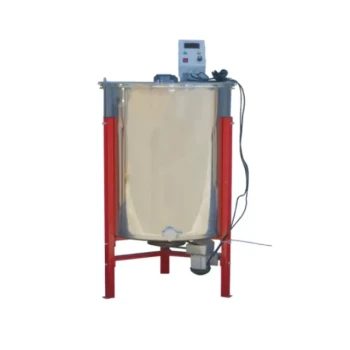
- Double Wall Honey Heating Stirring Homogenizer Mixing Machine with Various Capacity
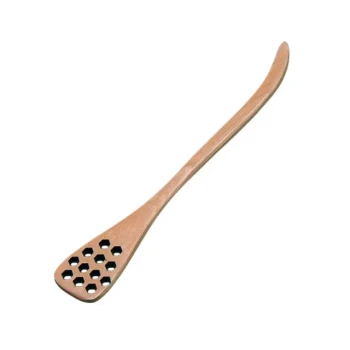
- Modern Honeycomb Pattern Wooden Honey Dipper for Stirring and Drizzling
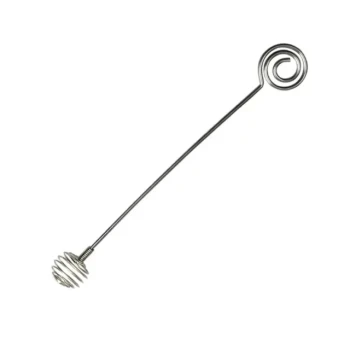
- Modern Stainless Steel Honey Dipper Stirrer
- Professional Plastic Honey Dipper for Easy Honey Drizzling
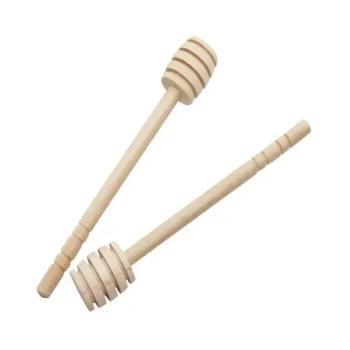
- Natural Wood Honey Dipper for Tea Coffee and Desserts
People Also Ask
- What impact do homogenizers or oscillating equipment have on honey microbial detection? Ensure Testing Accuracy
- Why is thorough mechanical stirring and homogenization emphasized in honey processing? Ensure Sample Accuracy
- How do heating equipment and homogenizers liquefy crystallized honey? Expert Guide to Professional Honey Processing
- How does the honey mixer handle different types of honey? Master Viscosity for Perfect Blends
- What are the main components of the honey mixer? Engineered for Gentle, Efficient Honey Processing