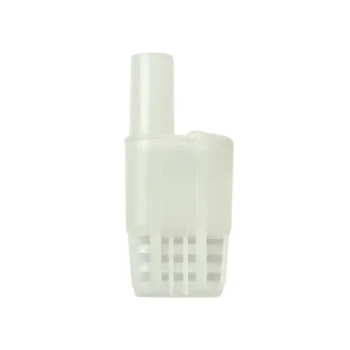
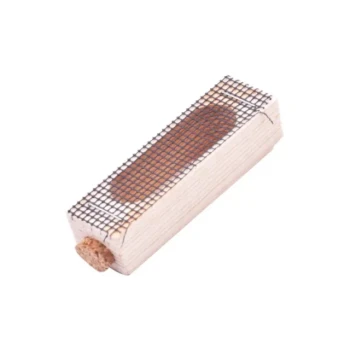
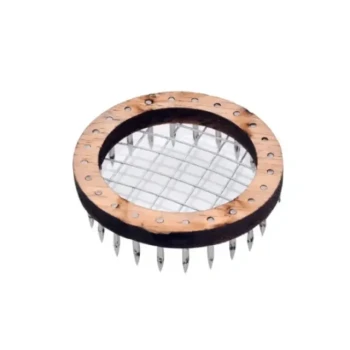
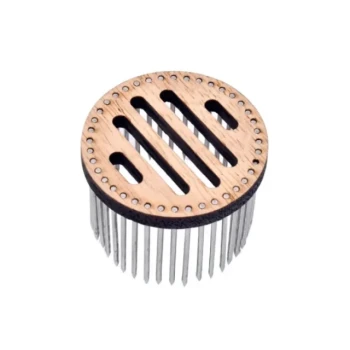
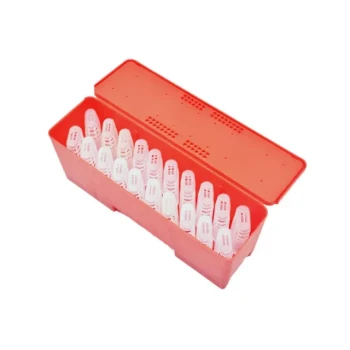
The primary technical advantage of specialized insect rearing cages is the ability to standardize the testing environment for reproducible toxicological data. By utilizing a specific metal wire mesh design and standardized dimensions, these cages facilitate precise quantitative feeding and accurate dosage calculations while maintaining essential environmental controls.
Core Takeaway The reliability of safety toxicology depends on eliminating external variables. Specialized cages ensure that environmental factors (like airflow) and physical constraints (dimensions) remain constant, ensuring that any observed effects on honey bees are attributable solely to the extract being tested.
Optimizing the Physical Environment
To conduct valid toxicology tests, the physical state of the test subjects must remain stable. Specialized cages address this through specific material and design choices.
Promoting Efficient Air Circulation
The integration of a metal wire mesh design is critical for maintaining a healthy micro-environment.
Proper airflow prevents the buildup of humidity and condensation, which can be detrimental to bee health independent of the toxin being tested. This ensures that mortality rates reflect the toxicity of the extract, not environmental stress.
Facilitating Continuous Observation
Toxicology is not just about mortality; it often requires monitoring behavioral changes over time.
The mesh structure allows researchers to observe the bees without opening the cage or disturbing the colony. This non-invasive monitoring prevents stress-induced variables from skewing the test results.
Ensuring Secure Containment
Handling bees during toxicology screenings presents a risk of specimen loss or researcher stinging.
Specialized cages are engineered to strictly prevent bee escape. This ensures the sample size remains constant throughout the experiment, which is vital for the statistical significance of the final data.
Achieving Quantitative Precision
The deeper value of these cages lies in their ability to turn biological observations into hard, quantitative data.
Standardization of Dimensions
Using cages with standardized dimensions creates a uniform testing volume for every trial.
When the physical space is identical across all test groups, researchers can rule out overcrowding or spatial stress as confounding factors. This standardization allows for direct comparison between different control and treatment groups.
Accurate Dosage Calculation
The specific design of these cages supports precise quantitative feeding experiments.
By controlling how food sources are presented, researchers can measure exactly how much extract-laden food is consumed. This measurement is the foundation for accurately calculating safe dosages and determining lethal dose thresholds (such as LD50).
Maintaining Controlled Conditions
Toxicology protocols often require specific environmental parameters, such as 28°C and 65 percent relative humidity.
These cages are designed to function within these controlled parameters without warping or degrading. They allow the external incubator environment to permeate the cage uniformly, ensuring the bees experience the exact intended conditions.
Understanding the Trade-offs
While specialized cages offer significant advantages, it is important to understand their operational context.
Dependency on External Systems
These cages facilitate airflow, but they do not generate heat or humidity themselves.
They must be used in conjunction with high-quality environmental chambers to maintain the required 28°C and 65% humidity. The precision of the cage is rendered useless if the external equipment fails to provide stable atmospheric conditions.
Making the Right Choice for Your Goal
When selecting equipment for toxicology screenings, align your choice with your specific data requirements.
- If your primary focus is determining specific lethal doses (LD50): Prioritize cages with standardized dimensions to ensure feeding rates can be mathematically correlated to dosage without spatial variables.
- If your primary focus is behavioral monitoring: Ensure the wire mesh design offers clear visibility to track sub-lethal effects without disturbing the test subjects.
Effective toxicology testing requires that the only variable changing is the extract concentration; specialized cages provide the static baseline necessary to make this possible.
Summary Table:
| Feature | Technical Advantage | Impact on Toxicology Data |
|---|---|---|
| Metal Wire Mesh | Promotes airflow & visibility | Eliminates environmental stress & allows behavioral monitoring |
| Standard Dimensions | Uniform testing volume | Ensures repeatability and removes spatial variables |
| Quantitative Design | Facilitates precise feeding | Enables accurate LD50 and dosage calculations |
| Material Durability | Stable at 28°C / 65% RH | Maintains integrity under strict incubator conditions |
| Containment Seal | Prevents specimen loss | Maintains constant sample size for statistical significance |
Elevate Your Research with HONESTBEE Precision Equipment
At HONESTBEE, we understand that the integrity of your toxicology data depends on the quality of your tools. We cater to commercial apiaries, researchers, and distributors by providing a comprehensive wholesale range of beekeeping machinery and specialized laboratory equipment.
Whether you need standardized rearing cages to determine accurate LD50 thresholds or advanced honey-filling machines for your production line, our portfolio covers the full spectrum of industry needs—from heavy-duty hardware to honey-themed cultural merchandise.
Ready to scale your operations or upgrade your research lab?
Contact us today to explore our wholesale solutions
References
- Waleed Kh. Elaidy, Dina Taksira. Role of Some Wild Herbal Extracts in Management of American Foulbrood in Honeybee Colonies. DOI: 10.21608/eajbsa.2017.12661
This article is also based on technical information from HonestBee Knowledge Base .
Related Products
- Langstroth Honey Bee Box Hive Boxes for Different Depths
- Professional Multi-Functional Queen Bee Cage
- Twin Queen Styrofoam Honey Bee Nucs Mating and Breeding Box
- Automatic Heat Preservation 6 Frame Pro Nuc Box for Honey Bee Queen Mating
- Professional Queen Bee Introduction and Transport Cage
People Also Ask
- What role do standardized Langstroth boxes play in commercial apiary management and honey bee research? | HONESTBEE Guide
- What are the differences between the three standard depths of Langstroth boxes? Choose the Best Size for Your Apiary
- What are the primary advantages of using standardized Langstroth boxes? Scale Your Commercial Beekeeping Operation
- What are the typical uses for the different box sizes in a Langstroth hive? Master Hive Management & Efficiency
- What features of Langstroth hive boxes contribute to expandability and honey yield? Maximize Your Apiary Production