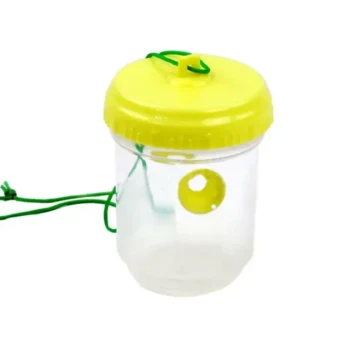
The primary technical advantage of a Plastic Trap over traditional liquid containers is its ability to facilitate selective trapping through a dry collection environment. Unlike liquid traps that kill indiscriminately via drowning, the Plastic Trap utilizes specific physical dimensions to retain large Asian hornets while providing smaller, non-target insects with a viable escape route.
Core Takeaway Traditional liquid traps create an ecological hazard by drowning every insect that enters. The Plastic Trap solves this by replacing liquid with a mechanical filtration system—using precise entrance and exit geometries to trap the target predator while allowing beneficial native species to survive and escape.
The Mechanics of Selective Trapping
The Dry Environment Advantage
Liquid-based traps rely on drowning as the primary retention mechanism. Once an insect touches the liquid, surface tension often prevents escape, leading to the death of all entrants regardless of species.
A Plastic Trap maintains a dry interior. This ensures that insects entering the trap remain mobile and alive, which is a prerequisite for the sorting mechanisms described below to function.
Controlled Entrance Geometry
The Plastic Trap features a specifically sized central entrance. This is engineered to guide and accumulate large hornets into the main chamber.
By optimizing the size of this entrance, the trap targets the specific physical profile of the Asian hornet, prioritizing the capture of this larger predator.
The Escape Mechanism
The most significant innovation of the Plastic Trap is the inclusion of optimized exit pores. Because the environment is dry, smaller insects that enter by mistake are not incapacitated.
These smaller species can locate the exit pores and leave the trap unharmed. This mechanical filtration is impossible in liquid traps, where the "catch" is permanent the moment contact is made with the fluid.
Ecological Impact and Efficiency
Survival of Non-Target Species
The defining metric for the Plastic Trap's success is the survival rate of bycatch. Beneficial insects, such as bees or small pollinators, are not targeted by the physical design.
Because they are not subjected to drowning, they retain the energy and ability to navigate out through the safety pores, significantly reducing the ecological footprint of the trapping effort.
Reducing Environmental Risks
By moving away from liquid drowning pools, the Plastic Trap aligns pest control with environmental stewardship. It transforms the process from a "kill-all" approach to a targeted intervention.
Understanding the Trade-offs
Handling Live Specimens
Because the Plastic Trap creates a dry environment, the trapped Asian hornets are likely to remain alive and aggressive inside the container.
This contrasts with liquid traps where the catch is usually dead upon inspection. Users must exercise extreme caution and use appropriate protocols when emptying or disposing of a full Plastic Trap.
Reliance on Physical Integrity
The selectivity of the trap depends entirely on the precision of the exit pore sizes.
If the trap is damaged or manufactured with poor tolerances, the distinction between "pest" and "beneficial insect" fails. A hole that is slightly too small will trap beneficial insects; a hole that is too large may allow the hornets to escape.
Making the Right Choice for Your Goal
To determine if the Plastic Trap is the correct technical solution for your needs, consider your environmental priorities:
- If your primary focus is ecological preservation: Use the Plastic Trap to ensure that native pollinators and small beneficial insects can escape unharmed.
- If your primary focus is targeted pest management: Rely on the Plastic Trap's physical entrance geometry to isolate large Asian hornets without the collateral damage typical of liquid traps.
The Plastic Trap represents a shift from indiscriminate eradication to precision mechanical management.
Summary Table:
| Feature | Plastic Trap (Dry) | Traditional Liquid Trap |
|---|---|---|
| Primary Mechanism | Mechanical Filtration (Size Selection) | Drowning (Surface Tension) |
| Collection Environment | Dry and Mobile | Wet and Lethal |
| Target Selection | Precision Geometry & Exit Pores | Indiscriminate Drowning |
| Bycatch Impact | High Survival Rate (Pollinators escape) | Total Fatality of all entrants |
| Eco-Friendliness | High - Protects local biodiversity | Low - High collateral damage |
| Specimen State | Live (Requires careful handling) | Dead |
Maximize Your Apiary’s Defense with HONESTBEE
Protect your hives and the local ecosystem by upgrading to professional-grade pest management solutions. HONESTBEE specializes in supporting commercial apiaries and distributors with high-performance beekeeping tools and industrial machinery. Whether you need precision-engineered traps to combat Asian hornets or large-scale hive-making and honey-filling equipment, our comprehensive wholesale portfolio is designed to enhance your operational efficiency and sustainability.
Ready to scale your beekeeping business with the industry's best equipment?
Contact HONESTBEE Today to explore our full range of essential consumables and cultural merchandise.
References
- Cristian Pérez‐Granados, Núria Roura‐Pascual. Testing the selectiveness of electric harps: a mitigation method for reducing Asian hornet impact at beehives. DOI: 10.1080/00218839.2023.2277988
This article is also based on technical information from HonestBee Knowledge Base .
Related Products
- Compact Multi-Funnel Hanging Wasp Trap
- Black Plastic Beetle Barn Hive Beetle Trap for Beehives
- Plastic Beetle Blaster Trap Beekeeping Tools and Supplies
- 30 cm Plastic Entrance Hole Bee Pollen Trap and Collector
- Plastic Bee Pollen Trap Strips Comb Catcher Collector
People Also Ask
- What are the practical advantages of using professional wasp traps and protective equipment in apiary management? Scale Up
- Why replace sugar syrup bait in wasp traps every three days? Ensure Maximum Attraction and Catch Rates
- What is the importance of deploying hornet traps around an apiary for maintaining colony stability? Protect Your Yields.
- What are the advantages of placing hornet traps on the tops of beehives? Maximize Hive Defense Against Predators
- What trapping methods and equipment setups protect commercial apiaries against seasonal hornet predation?