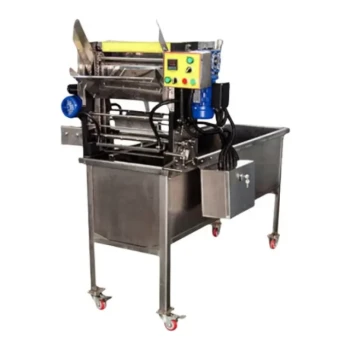
The technical transition from manual to automated honey filling replaces human variability with industrial precision, ensuring total product consistency and regulatory compliance. Automated machines utilize high-precision dosing systems and closed-circuit environments to eliminate waste, prevent contamination, and drastically increase throughput. For commercial distributors and wholesalers, this technology is the foundation for scaling operations and meeting the rigorous standards of global export markets.
Automation transforms honey packaging from a labor-intensive bottleneck into a streamlined, hygienic, and high-precision process. This shift ensures every unit meets strict metrological standards while maximizing profit margins through waste reduction and operational efficiency.
Precision Metering and Waste Mitigation
High-Precision Volumetric Control
Automated systems use advanced flow control and dosing pumps to ensure every container receives an identical volume of product. This eliminates the "overfilling" common in manual processes, where workers often add extra honey to ensure they don't fall short of the label weight.
Metrological Compliance for Export
Consistent filling is a non-negotiable requirement for international trade and large-scale retail distribution. These machines ensure every unit meets strict metrological standards, protecting your business from costly customs rejections, fines, or brand damage due to underweight products.
Minimizing Raw Material Loss
In large-scale production, a few grams of wasted honey per bottle can result in tons of lost product over a year. Automated filling lines are designed to minimize drip and spillages, ensuring that almost 100% of your bulk honey reaches the final retail packaging.
Superior Hygiene and Product Integrity
Closed-Environment Processing
Manual filling inevitably exposes honey to environmental contaminants, dust, and microbial risks. Automated lines operate within enclosed systems, shielding the honey from secondary contamination and preserving its natural physicochemical properties from the tank to the bottle.
Advanced Sealing and Temperature Management
Many industrial units integrate vacuum sealing and precise temperature controls during the filling process. This is critical for high-viscosity liquids like honey, as it prevents premature crystallization and ensures the product maintains a premium texture during long-distance shipping and storage.
Meeting Global Food Safety Standards
Automated equipment is built with food-grade materials (such as 316 stainless steel) and designed for easy cleaning. This level of hygiene control is essential for satisfying the entry requirements of premium markets and maintaining brand integrity in the competitive bee products sector.
Operational Scalability and Efficiency
Handling Seasonal Production Surges
Manual operations often struggle to keep pace with peak harvest seasons or sudden bulk orders, leading to shipping delays. Automated machinery allows for rapid response times, enabling your facility to handle massive volume spikes without the need for temporary labor.
Drastic Reduction in Labor Costs
By replacing repetitive manual tasks with high-speed mechanical operation, you significantly lower your cost-per-unit. This enhanced efficiency provides a vital competitive advantage in global markets where price fluctuations are common and margins can be tight.
Rapid Order Fulfillment
Automated lines are designed for speed and reliability, ensuring ultra-fast delivery for your B2B clients. The ability to fulfill large-scale orders with short lead times makes you a more reliable partner for international wholesalers and retail chains.
Understanding the Trade-offs
Initial Capital Expenditure
High-precision automated lines require a significant upfront investment compared to manual setups. However, for commercial operations, the return on investment (ROI) is typically realized quickly through reduced labor costs and material savings.
Maintenance and Technical Expertise
These machines require periodic calibration and specialized maintenance to ensure sensors and dosing pumps remain accurate. It is critical to work with a supplier that offers deep professional expertise and a comprehensive parts portfolio to prevent extended downtime.
Setup and Changeover Time
While automated machines are fast during a run, switching between different bottle shapes or sizes can take longer than a manual adjustment. Modern modular systems mitigate this, but it remains a factor for businesses with an extremely diverse product portfolio.
Selecting the Right Solution for Your Goal
- If your primary focus is premium market entry: Prioritize machines with fully enclosed hygienic designs and vacuum sealing to ensure maximum food safety compliance.
- If your primary focus is high-volume bulk fulfillment: Look for multi-head, high-speed dosing systems that prioritize units-per-hour and rapid response times.
- If your primary focus is minimizing operational overhead: Choose modular systems with rapid-changeover features that allow you to handle various packaging specifications with minimal technical intervention.
By integrating automated precision into your production line, you secure a foundation for scalable, high-quality, and highly profitable commercial honey distribution.
Summary Table:
| Feature | Manual Operations | Automated Filling Machines | B2B Business Impact |
|---|---|---|---|
| Precision | High variance; frequent overfilling | High-precision volumetric control | Minimizes product waste; ensures metrological compliance |
| Hygiene | High exposure to contaminants | Closed-circuit, food-grade systems | Meets strict global food safety/export standards |
| Throughput | Limited by labor; slow | High-speed, multi-head output | Handles seasonal surges and large-scale bulk orders |
| Cost Control | High labor costs per unit | Significant ROI through labor reduction | Maximizes profit margins and competitive pricing |
| Consistency | Human error & variability | Industrial-grade uniformity | Protects brand integrity and reduces shipping rejections |
Scale Your Honey Business with HONESTBEE Precision
Elevate your commercial honey production with HONESTBEE, your premier partner for one-stop beekeeping sourcing. We provide distributors, wholesalers, and B2B resellers with a comprehensive portfolio of high-performance honey-filling machines, hive-making hardware, and essential beekeeping consumables.
By partnering with us, you gain more than just equipment; you gain a competitive edge through:
- Full-Spectrum Sourcing: From specialized machinery to honey-themed merchandise.
- B2B Optimized Services: Dedicated OEM/ODM support and deep professional industry expertise.
- Operational Excellence: Ultra-fast delivery and rapid response times to ensure your supply reliability.
Ready to maximize your profit margins and meet global export standards? Contact our expert team today to discuss your wholesale needs!
References
- Ibrahim, S. A.,, Nazifi, B.. PROFITABILITY AND ITS DETERMINANTS OF MODERN HONEY PRODUCTION AMONG BENEFICIARIES OF KSAMBTT IN KANO STATE, NIGERIA. DOI: 10.56160/jaeess/2024/10/2/004
This article is also based on technical information from HonestBee Knowledge Base .
Related Products
- Fully Automatic Honey Filling Packaging Machine for Processing Line
- Automatic Honey Filling and Filtering Machine for Beekeeping Bottle Filling
- Precision Durable Efficient HONESTBEE Rotary Honey Filling Machine
- Precision Automated Packaging Turntable Honey Spoon Filling Sealing Packing Machine
- Semi Automatic Small Honey Bottle Filling Machine Honey Filler
People Also Ask
- Why are fully automatic honey filling and packaging lines essential? Boost Your Honey's Market Value and Quality
- What is a fully-automatic honey filler? Streamline Your Production with High-Precision Automation
- How do automated honey filling and packaging machines affect profitability? Boost Margins with HONESTBEE Technology
- How do automated honey filling and packaging machines contribute to the market value of honey products? Maximize Your ROI
- How do industrial-grade automated honey filling and packaging machines mitigate the risk of physical contamination?