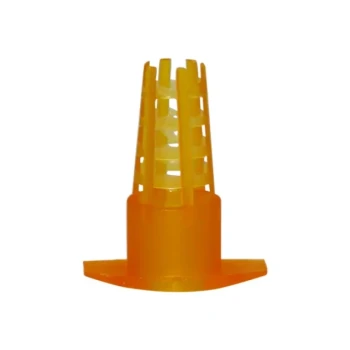
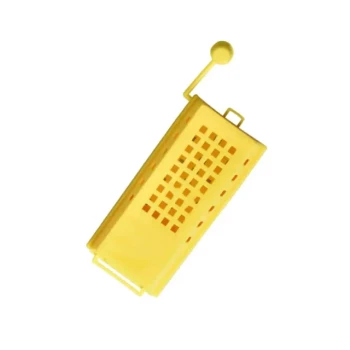
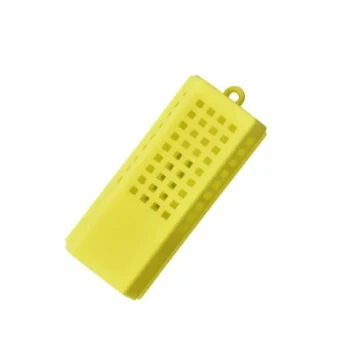
Dark plastic queen cell cups provide a level of structural integrity and measurement precision that traditional wax cups cannot match. By eliminating the deformation common in wax cups, plastic alternatives ensure every unit maintains consistent specifications. This standardization is the technical foundation for accurate tare calibration, enabling producers to measure royal jelly yield with scientific precision.
In large-scale operations, the shift from wax to plastic represents a move from artisanal variability to industrial control. The rigidity of plastic cups enables precise yield tracking and supports rigorous cleaning protocols, making them the superior choice for data-driven, high-volume production.
The Engineering of Standardization
Precision in Yield Measurement
The primary technical advantage of using plastic cups is the ability to perform accurate tare calibration. Because plastic cups are manufactured to identical specifications, they possess a consistent weight.
In contrast, wax cups vary slightly in mass and shape. This variability complicates the weighing process, making it difficult to isolate the exact weight of the royal jelly yield within individual cells.
Uniform Geometric Dimensions
Plastic cups typically feature highly standardized dimensions, often 8-9mm in diameter. This geometric consistency ensures that the environment for the larvae is identical across thousands of units in a large-scale operation.
This uniformity simplifies the grafting process and helps standardize the survival rates of the queen bees, a critical metric for commercial reliability.
Durability and Operational Efficiency
Resistance to Deformation
Traditional wax cups are fragile; they are prone to warping or collapsing during handling, transportation, and installation onto rearing frames.
Plastic cups provide superior physical strength. They retain their shape under mechanical stress, ensuring the cell structure remains intact throughout the grafting and harvesting workflow.
Sanitation and Reusability
Large-scale production requires strict hygiene to prevent contamination. High-quality plastic cups are significantly easier to clean and disinfect compared to wax.
Because they are often made of food-grade material, they resist contamination and can be reused across multiple cycles without degrading. This facilitates the efficient extraction of jelly and the subsequent cleaning of larvae residues.
Understanding the Trade-offs
While plastic offers superior engineering characteristics, it lacks the biological advantage of natural beeswax.
The Acceptance Rate Challenge
Beeswax has the highest biocompatibility and is naturally accepted by worker bees, often leading to maximum initial acceptance. Industrial plastic, despite its durability, typically suffers from lower acceptance rates by the nursing bees.
The Mitigation Strategy
To overcome this, plastic cups are often treated with a beeswax coating. This hybrid approach simulates the natural texture required for bee acceptance while retaining the mechanical strength and standardization of the plastic core.
Making the Right Choice for Your Goal
To select the optimal equipment for your production line, consider your primary operational metric:
- If your primary focus is precise data and yield measurement: Choose plastic cups, as their consistent weight allows for accurate tare calibration and individual cell analysis.
- If your primary focus is workflow efficiency and sanitation: Choose plastic cups for their durability during cleaning cycles and resistance to deformation during handling.
- If your primary focus is maximum biological acceptance: Prioritize wax cups or ensure your plastic cups are meticulously coated with beeswax to simulate a natural texture.
Success in large-scale royal jelly production lies in leveraging the durability of plastic while mimicking the biological affinity of wax.
Summary Table:
| Feature | Plastic Queen Cell Cups | Traditional Wax Cups |
|---|---|---|
| Structural Integrity | High; resists deformation | Low; prone to warping |
| Measurement Accuracy | Precise tare calibration due to uniform weight | Variable weight; difficult to calibrate |
| Sanitation | Easy to disinfect & reusable | Difficult to clean; single-use focus |
| Manufacturing | Standardized 8-9mm dimensions | Artisanal variability |
| Bee Acceptance | Requires beeswax coating for best results | Naturally high acceptance |
Elevate Your Commercial Apiary with HONESTBEE
Are you looking to transition from artisanal methods to high-precision industrial control? At HONESTBEE, we specialize in empowering commercial apiaries and distributors with the professional-grade tools needed for high-volume success.
From standardized queen cell cups that ensure accurate royal jelly yields to advanced honey-filling machines and specialized beekeeping hardware, our comprehensive wholesale portfolio covers every facet of your operation. We provide the mechanical strength and consistency your business demands without compromising on biological efficiency.
Ready to scale your production? Contact us today to explore our full spectrum of beekeeping machinery and essential industry consumables!
References
- Devrim Oskay, Gökhan BAYRAK. Investigation of Yield and Some Quality Features of Royal Jelly Harvested from Honeybee Colonies Fed with Food Substitutes. DOI: 10.29185/hayuretim.1185887
This article is also based on technical information from HonestBee Knowledge Base .
Related Products
- Clear Black Plain Polystyrene Queen Bee Grafting Cell Cups No Lug for Bee Queen Cup
- JZBZ Type Wide Base Plastic Queen Cell Cups for Base Mounting and Queen Rearing
- Brown Nicot Queen Cell Cups for Breeding Queen Bees Beekeeping
- 10-Cell Silicone Beeswax Bee Queen Cups Forming Mold
- JZBZ Push-In Queen Cell Cups for Beekeeping
People Also Ask
- What materials are used to make artificial queen cell cups for grafting? Beeswax vs. Plastic Guide
- What role do specialized queen rearing tools play in developing mite-resistant honeybee stock? Master Genetic Selection
- What roles do specialized queen cell cups play in royal jelly production? Optimize Your Hive's Secretion and Yield
- What types of cell cups are commonly used in grafting? Plastic vs. Wax for Queen Rearing Success
- Why is a diluted royal jelly solution applied to queen cell cups? Boost Acceptance in Artificial Grafting