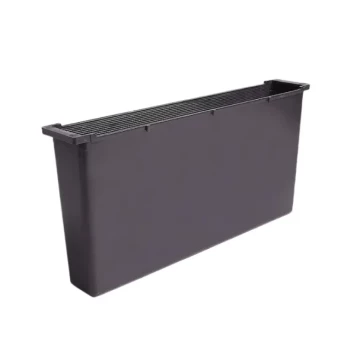
Hive-top feeders serve as a sophisticated mechanism for delivering liquid nutritional supplements to bee colonies with high precision and minimal intrusion. They allow beekeepers to accurately distribute inputs, such as inverted sugar syrup or algae supplements, without disrupting the colony's internal stability.
Core Takeaway The primary technical advantage of a hive-top feeder is the decoupling of nutritional support from hive inspection. By feeding from the top, you preserve the colony’s critical thermal regulation and ensure consistent dosage application without ever disturbing the sensitive brood nest.
Preserving the Colony Environment
Maintaining Thermal Integrity
The most significant advantage of hive-top feeders is their ability to function without disturbing the core area of the brood combs.
When using internal frame feeders, a beekeeper must often open the hive body, releasing heat. Hive-top feeders minimize this heat loss, which is critical for maintaining the brood's development temperature.
Minimizing Disruption
By placing the feeder above the colony, you avoid mechanical disturbance to the bees.
This allows for frequent nutritional intervention without triggering the stress response associated with opening the hive or removing frames.
Precision and Standardization
Consistency in Dosage
For beekeepers managing multiple hives or conducting experiments, uniformity is vital.
Hive-top feeders facilitate strict consistency in feeding frequency and dosage. This ensures that every management group or experimental unit receives the exact same volume of nutrients.
Controlled Delivery Path
These feeders provide a direct, controlled interface for liquid supplements.
This structural design ensures that the colony has immediate access to the feed, such as inverted sugar syrup, via a dedicated path that does not interfere with their natural comb building or brood rearing.
Safety and Hygiene Mechanisms
Preventing Contamination and Oxidation
High-quality feeders often feature sealed or semi-sealed designs.
This barrier protects the liquid feed—specifically susceptible supplements like algae syrup—from oxidation, ensuring the nutrients remain fresh and chemically stable. It also prevents contamination from external insects that might otherwise plunder the resources.
Eliminating Bee Mortality
A common risk with liquid feeding is bee drowning.
Professional hive-top feeders mitigate this through specific structural designs that provide a safe feeding interface. This allows bees to access the liquid without becoming submerged, effectively preventing drowning.
Strategic Implementation and Context
While hive-top feeders offer superior technical control, they are designed for specific intervention scenarios rather than passive use.
Situational Necessity
These feeders are most technically justified in two specific contexts: establishing new colonies and winter preparation.
For new colonies (packages or nucs), the feeder bridges the gap between arrival and resource establishment. In the fall, they are a critical tool for supplementing insufficient honey stores due to poor environmental flows.
Making the Right Choice for Your Goal
To maximize the efficacy of your nutritional intervention, align the tool with your specific objective.
- If your primary focus is Colony Health (Thermoregulation): Utilize hive-top feeders to deliver nutrients without breaking the propolis seal or releasing hive heat, especially during cooler months.
- If your primary focus is Experimental Accuracy: Rely on these feeders to guarantee that every test group receives an identical, unoxidized dosage of supplements like algae syrup.
- If your primary focus is Colony Establishment: Deploy feeders immediately for package bees or nucs to prevent resource failure before they can forage independently.
Ultimately, the hive-top feeder is not just a container, but a precision instrument for stabilizing colony nutrition while respecting the hive's internal climate.
Summary Table:
| Advantage | Technical Impact | Key Benefit |
|---|---|---|
| Thermal Regulation | No need to open the brood nest | Maintains optimal temperature for brood development |
| Minimal Disruption | Feeder placement above the colony | Reduces bee stress and prevents mechanical disturbance |
| Precision Dosage | Consistent liquid delivery path | Ensures uniform nutrient intake across all managed hives |
| Safety & Hygiene | Sealed design with safe access | Prevents feed oxidation and eliminates bee drowning risk |
Elevate Your Commercial Beekeeping Success with HONESTBEE
At HONESTBEE, we specialize in empowering commercial apiaries and distributors with the high-precision tools necessary for large-scale operations. Our comprehensive wholesale offering covers the full spectrum of beekeeping needs—from advanced hive-top feeders that ensure colony stability to industrial-grade hive-making and honey-filling machines.
Whether you need essential industry consumables or specialized hardware, we provide the quality and volume to support your business growth. Contact us today to discuss your wholesale needs and explore our full portfolio.
References
- Tsvetan Tsvetanov, Ralitsa Balkanska. How does invert sugar syrup affect sealed worker brood and colony strength in Roger-Delon hives?. DOI: 10.61308/cjms7188
This article is also based on technical information from HonestBee Knowledge Base .
Related Products
- HONESTBEE Professional Hive Top Bee Feeder Feeding Solution
- Professional Hive Top Bee Feeder for Beekeeping
- HONESTBEE Square Top Hive Bee Feeder Top Bee Feeder
- HONESTBEE Round Hive Top Bee Feeder for Syrup
- Rapid Bee Feeder White Plastic 2L Round Top Feeder for 8 or 10-Frame Bee Hives
People Also Ask
- How does a bee hive top feeder work? A Guide to Efficient, Protected Feeding
- What is a hive top feeder? A Guide to Efficient, Low-Stress Beekeeping
- Do I need an inner cover with a hive top feeder? Optimize Your Hive Setup for Healthy Bees
- What is a hive top feeder, and how does it work? A Complete Guide to Efficient In-Hive Feeding
- What are the characteristics, advantages, and disadvantages of hive top feeders? Optimize Your High-Volume Feeding