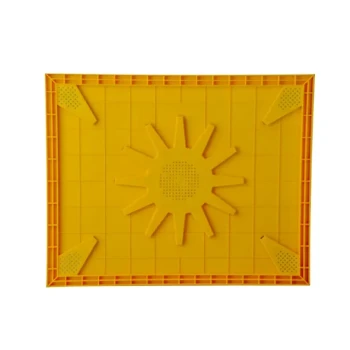
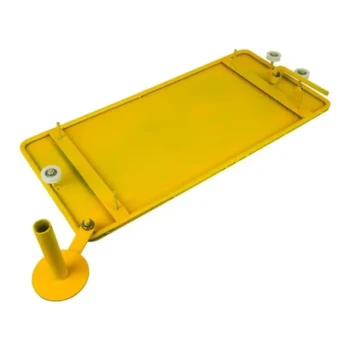
Separator boards act as a force multiplier for weak colonies by mechanically reducing the hive's internal volume to match the available workforce. By compressing the effective space, these boards force a higher concentration of bees onto fewer frames, ensuring that the remaining surface area is thoroughly patrolled and defended.
By eliminating "dead space" within the hive, separator boards deny Small Hive Beetles (SHB) the unpatrolled territory they require to lay eggs. This allows a biologically weak colony to maintain a defensively strong posture.
The Mechanics of Population Density
Concentrating Worker Resources
The primary vulnerability of a weak colony is a low bee-to-comb ratio. When bees are spread too thin, they cannot effectively monitor the entire hive.
Separator boards artificially correct this imbalance. By walling off unused sections, you force the entire population to inhabit a smaller footprint, instantly increasing the density of bees per square inch of comb.
Enhancing Defensive Coverage
Small Hive Beetles thrive in gaps where bee patrols are infrequent. In a spacious hive with a small colony, bees must prioritize the brood nest, leaving outer areas unguarded.
When you use a separator board, you eliminate the need for the colony to defend vast, empty spaces. This allows the workers to maintain a contiguous defensive front, making it difficult for beetles to move without being harassed or corralled.
Disrupting the Beetle Lifecycle
Limiting Hiding Areas
The Small Hive Beetle relies on "safe harbors"—areas within the hive that are dark, warm, and free of aggressive worker bees.
The "space-tightening strategy" created by the separator board removes these sanctuaries. By compressing the colony, you ensure that almost every accessible corner of the active hive area is occupied by a potential defender.
Preventing Peripheral Egg Laying
The most critical technical advantage is the protection of the comb surface. Beetles target unpatrolled peripheral combs to lay their eggs undisturbed.
If a weak colony is allowed access to frames they cannot cover, these frames become nurseries for beetle larvae. Separator boards physically block access to these peripheral combs, preventing the beetles from establishing a reproductive foothold outside the colony's defensive perimeter.
Understanding the Trade-offs
Necessity of Monitoring
While separator boards are excellent for defense, they restrict colony expansion. You must monitor the hive closely; as the population recovers and grows, the board must be moved or removed to prevent overcrowding and swarming.
Auxiliary Tool, Not a Chemical Cure
It is important to recognize that separator boards are a mechanical aid for self-defense, not a pesticide. They empower the bees to manage the pest, but they do not chemically eradicate an existing massive infestation.
Making the Right Choice for Your Goal
To effectively utilize separator boards in your management strategy, consider your immediate objective:
- If your primary focus is stabilizing a collapsing colony: Install the separator board immediately to condense the bees onto only the frames they can fully cover (often the brood nest plus one food frame).
- If your primary focus is proactive pest management: Apply separator boards early in the season or during dearths before the colony weakens significantly, preventing the beetles from ever finding undefined territory.
By matching the physical space of the hive to the biological reality of the colony, you turn a structural vulnerability into a defensive stronghold.
Summary Table:
| Technical Feature | Benefit for Weak Colonies | Impact on Small Hive Beetles (SHB) |
|---|---|---|
| Volume Compression | Increases bee density per square inch | Eliminates unpatrolled "dead space" |
| Resource Concentration | Focuses workers on fewer frames | Removes hiding spots and safe harbors |
| Physical Barrier | Shields peripheral combs | Prevents beetles from laying eggs in unguarded areas |
| Defensive Front | Maintains a contiguous bee patrol | Forces constant harassment and corralling of pests |
Secure Your Apiary with Professional-Grade Equipment
At HONESTBEE, we understand that protecting weak colonies requires more than just biological care—it demands the right structural tools. We provide commercial apiaries and distributors with a comprehensive range of high-quality beekeeping machinery and essential consumables designed for efficiency and hive health.
Whether you need specialized hive-making machinery, honey-filling equipment, or bulk beekeeping tools, our portfolio is built to support your growth. Let us help you empower your colonies and streamline your operations with our wholesale solutions.
Ready to scale your beekeeping business? Contact us today to discuss your wholesale needs!
References
- Ayşe Ebru BORUM. BIOSECURITY AND GOOD BEEKEEPING PRACTICES IN BEEKEEPING. DOI: 10.31467/uluaricilik.1175874
This article is also based on technical information from HonestBee Knowledge Base .
Related Products
- HONESTBEE Multi Exit Plastic Bee Escape Board for Efficient Honey Harvesting
- HONESTBEE Wooden Bee Escape Board with Triangle Mesh Design for Beekeeping
- HONESTBEE Durable Frame Wiring Board with Integrated Tensioner
- Australian Pine Wood Langstroth Screen Bottom Board for Wholesale
- Langstroth Screen Bottom Board for Beekeeping Wholesale
People Also Ask
- How do bee escape boards and fume boards assist in honey harvesting? Optimize Your Harvest with Low-Stress Tools
- How do bee escape boards compare with solar fume boards when clearing bees from honey supers? Speed vs. Simplicity for Commercial Apiaries
- What mechanical methods and tools are used to clear bees from honey supers? Efficient Tools for a Smooth Harvest
- How is a bee escape board used to clear a hive body for honey harvesting? Optimize Your Chemical-Free Harvest
- What is a bee escape board and what problem does it solve? Simplify Your Honey Harvest with Passive Clearing