High-yielding royal jelly bee lines are biologically specialized for intensive nurse-bee secretion, not simply better honey producers. Compared with standard honey-focused lines, they typically have larger and more numerous hypopharyngeal gland acini, longer glands, higher secretory activity, and greater mitochondrial density in nurse bees. Commercial producers must therefore pair these genetics with controlled queen rearing, precise grafting, high-frequency harvesting, yield measurement, and immediate cold-chain handling.
The key distinction is specialization: honey lines are selected for broad colony performance and nectar-to-honey conversion, while royal jelly lines are selected specifically for royal jelly output. Their genetic potential is realized only when the apiary provides the right nurse-bee management, queen-cell systems, harvesting tools, and quality-preservation infrastructure.
What Separates Royal Jelly Lines from Honey Lines?
Larger and more numerous hypopharyngeal gland acini
The hypopharyngeal glands of nurse bees are central to royal jelly production. High-yielding lines exhibit larger and more numerous gland acini, increasing the cellular capacity available for secretion.
Standard honey-producing lines may maintain healthy nurse bees, but their breeding objective is usually broader: honey yield, colony strength, docility, disease resistance, and wintering performance rather than maximum royal jelly secretion.
Longer glands and greater secretory activity
High-yielding royal jelly bees also show longer hypopharyngeal glands and increased secretory activity. This allows nurse bees to produce royal jelly at a higher rate during the short period when queen cells are being provisioned.
The advantage is therefore physiological as well as behavioral. These colonies can support intensive cell-cup production when the colony is properly conditioned and managed.
Higher mitochondrial density in nurse bees
Royal jelly synthesis requires substantial cellular energy. High-performing nurse bees have been associated with higher mitochondrial density, supporting the energy demand of sustained glandular activity.
This trait helps explain why a high-yielding line should not be evaluated only by visible colony population. The relevant question is whether the nurse-bee workforce has the biological capacity and nutritional support to maintain high secretion rates.
Up-regulated metabolic and protein-production pathways
Research links high royal jelly production with increased activity in pathways involving protein synthesis, amino acid metabolism, fatty acid and sugar metabolism, and oxidative processes.
Validated genes such as Dop2 and hex71 have been associated with this production phenotype. These markers are useful for understanding the biological basis of performance, but commercial selection should still rely on measured colony output and repeatable breeding records.
Why Breeding Strategy Matters
Royal jelly selection is narrower than honey selection
Honey-focused breeding generally balances several traits, including productivity, temperament, disease resistance, and overwintering ability. Royal jelly breeding applies more intense annual selection to royal jelly yield per colony.
This means a colony that performs well for honey may not be the best source of royal jelly genetics. Likewise, a high-yielding royal jelly colony must still be screened for acceptable management characteristics and colony health.
Measured yield is essential
Selective breeding can produce substantial differences between colonies. In one comparison, high-producing colonies averaged 145.75 grams over three collection cycles, while low-producing colonies averaged 66.75 grams.
Accurate digital scales and standardized collection procedures allow producers to distinguish genetic performance from management effects. Without consistent measurement, breeding decisions can be distorted by differences in colony strength, feeding, grafting load, or harvest timing.
Controlled queen breeding increases consistency
Instrumentally inseminated queens allow breeders to control parentage and develop high royal jelly-producing stocks more precisely. Queen mating nuclei and dedicated queen-rearing systems help maintain that breeding program at commercial scale.
For distributors and apiary suppliers, this creates a distinct equipment category: royal jelly producers need not only harvesting tools, but also the infrastructure to reproduce and preserve high-performing genetics.
How to Equip a Commercial Royal Jelly Apiary
Build a dedicated queen-rearing system
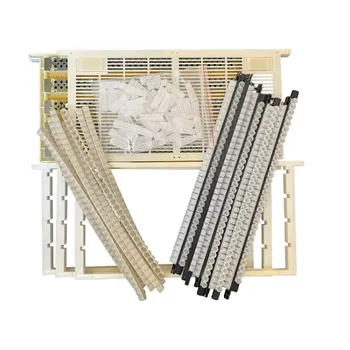
A commercial operation should equip its apiary with:
- Movable-comb hives
- Queen excluders
- Plastic cell inserts or wax queen-cell cups
- Cell bar frames
- Queen-rearing components
- Queen mating nuclei
- Artificial insemination instruments, where controlled breeding is required
Queen excluders help separate the queen chamber from the cell-rearing chamber. This gives producers better control over larval age, cell acceptance, and the timing of royal jelly collection.
Use precision grafting tools
Royal jelly production depends on placing young larvae into prepared queen-cell cups at scale. Grafting needles, transfer tools, and precision larvae-grafting equipment reduce handling errors and support consistent cell acceptance.
The tool must match the operator and production volume. In high-frequency operations, ergonomic and repeatable grafting equipment can have a greater practical impact than adding more cell cups than the finisher colony can support.
Match cell capacity to nurse-bee strength
Cell bar frames and queen-cell systems should be sized according to the number and condition of nurse bees available. Overloading a finisher colony can reduce acceptance and lower the amount of royal jelly deposited per cell.
As a practical performance reference, well-managed production methods may target at least 200 milligrams per individual queen cell. Lower results can indicate an underconditioned colony, excessive cell loading, poor timing, or inadequate feeding.
Provide controlled nutritional support
Royal jelly production places a high metabolic demand on nurse bees. Commercial management may use a 1:1 sugar-to-water syrup to improve cell acceptance and support production when conditions require it.
Feeding is not a substitute for strong genetics or a healthy colony. It should be integrated with nurse-bee management, appropriate cell numbers, and a consistent harvesting schedule.
Install efficient extraction equipment
Before queen cells are capped, producers need tools that remove royal jelly quickly and hygienically. Useful equipment includes:
- Specialized suction devices
- Royal jelly harvesting spoons
- Cell-opening and transfer tools
- Hygienic extraction systems
- Standardized collection containers
The extraction system should minimize contamination, reduce product loss, and allow operators to process many cells within a narrow time window.
Protect the cold chain immediately
Royal jelly should be transferred promptly into dark glass storage vials or suitable sealed containers and refrigerated or frozen immediately after extraction.
Cold storage is not an optional finishing step. It is part of the production system because delays can compromise biological activity and product quality.
Design the Apiary Around Short Harvesting Cycles
Timing is a production variable
Royal jelly must be harvested before larvae consume the available jelly or worker bees cap the cells. Delays can sharply reduce recoverable yield.
Commercial producers therefore need a clearly defined timetable covering grafting, cell placement, inspection, harvesting, weighing, packaging, and cold storage.
Use standardized operating procedures
A repeatable process should define:
- Larval selection and grafting time
- Cell-bar placement
- Colony feeding and conditioning
- Inspection and acceptance checks
- Harvest timing
- Extraction and weighing
- Refrigeration or freezing
- Colony and breeder performance recording
Standardization makes colony-to-colony comparisons more reliable and helps distributors or contract producers demonstrate consistent product quality.
Track performance by colony and genetic line
Digital scales should be used to record yield by colony, queen, collection cycle, and breeding line. This data helps separate the effects of genetics, colony strength, management, and seasonal conditions.
For commercial buyers, suppliers that can provide complete equipment packages and replacement consumables simplify procurement and reduce operational delays.
Understanding the Trade-offs
Specialized genetics do not eliminate management requirements
High-yielding lines have greater biological potential, but they still require adequate nurse bees, nutrition, colony health, correct larval handling, and timely harvesting.
A genetically superior colony can underperform if it is overloaded with cell cups or managed with unsuitable equipment.
Maximum royal jelly output may not equal maximum overall apiary value
A royal jelly line is optimized for a specialized product. It should not automatically be judged by the same criteria as a honey line, particularly where honey yield, overwintering, or other colony traits are the primary commercial objectives.
Producers should select according to the intended revenue model rather than assuming one genetic line can maximize every output.
Equipment must be matched to throughput
A small producer may manage harvesting with manual grafting tools, spoons, scales, and compact cold storage. A larger operation needs higher-throughput extraction, standardized cell-bar systems, controlled queen breeding, and dependable cold-chain capacity.
Buying isolated tools without planning the complete workflow can create bottlenecks between grafting, harvesting, weighing, and storage.
Yield claims require consistent measurement
Reported production figures can vary substantially depending on collection frequency, colony condition, cell loading, season, and measurement method. Comparisons are meaningful only when procedures are standardized.
Commercial purchasing decisions should therefore consider not only headline yield claims, but also equipment compatibility, technical support, consumable availability, and fulfillment reliability.
Making the Right Choice for Your Goal
The best apiary configuration depends on whether the priority is genetic improvement, production volume, product quality, or efficient sourcing.
- If your primary focus is genetic improvement: Use controlled queen-rearing systems, mating nuclei, artificial insemination equipment where appropriate, and digital yield records to identify superior royal jelly stock.
- If your primary focus is production volume: Combine strong high-yielding lines with cell bar frames, precision grafting tools, correctly loaded finisher colonies, and efficient extraction equipment.
- If your primary focus is product quality: Prioritize hygienic harvesting systems, dark storage vials, immediate refrigeration or freezing, and strict timing from extraction to cold storage.
- If your primary focus is procurement efficiency: Source a coordinated equipment portfolio—including grafting tools, cell cups, frames, harvesting devices, scales, and cold-chain supplies—from a supplier able to provide rapid response and dependable fulfillment.
- If your primary focus is honey production: Continue prioritizing broad honey-line traits and invest in honey extraction and processing machinery rather than specialized royal jelly infrastructure.
High-yielding royal jelly genetics create the opportunity, but a purpose-built apiary workflow converts that opportunity into reliable commercial output.
Summary Table:
| Aspect | High-Yielding Royal Jelly Lines | Standard Honey-Producing Lines |
|---|---|---|
| Primary Selection Focus | Royal jelly yield per colony | Broad traits (honey yield, temperament, disease resistance, wintering) |
| Hypopharyngeal Glands | Larger, more numerous acini; longer; higher secretory activity | Normal size and activity |
| Mitochondrial Density | Higher in nurse bees | Standard |
| Metabolic Pathways | Up-regulated protein synthesis, amino acid, fatty acid, sugar metabolism | Standard |
| Breeding Strategy | Intense annual selection on royal jelly yield | Balanced selection on multiple traits |
| Typical Yield per 3 Cycles | 145.75 g (high) vs 66.75 g (low) | Variable, not primary metric |
| Required Equipment | Queen-rearing systems, grafting tools, cell bar frames, hygienic extraction, cold chain | Standard beekeeping equipment, honey extraction machinery |
Ready to elevate your royal jelly production with the right genetics and equipment? At HONESTBEE, we cater to commercial apiaries and distributors with a comprehensive wholesale offering. Our portfolio includes specialized hive-making and honey-filling machines, precision grafting tools, cell bar frames, hygienic extraction systems, and cold-chain supplies—everything you need for high-yield royal jelly operations. With our one-stop sourcing capability, rapid response times, dedicated customer service, and ultra-fast delivery, we ensure your apiary runs efficiently and profitably. For distributors and B2B resellers, we offer OEM/ODM support, certifications, and reliable supply chains. Contact us today to discuss your requirements and experience the HONESTBEE advantage!
Related Products
- No Grafting Queen Rearing Kit: System for Royal Jelly Production and Queen Rearing
- HONESTBEE Improved No Grafting Queen Rearing Kit For Queen Rearing and Royal Jelly Production
- Plastic Chinese Queen Grafting Tool for Bee Queen Rearing
People Also Ask
- What is the primary function of a queen rearing kit? Eliminate Manual Grafting for Superior Bee Breeding
- How do specialized queen rearing kits and queen management tools improve the success rate of bee colony expansion?
- What are some alternative methods to grafting for queen cell production? Discover Graft-Free Queen Rearing Systems
- Are queen rearing systems generally suitable for all honeybee species? Master Efficient Breeding Methods
- Are queen rearing systems suitable for all beekeepers? Modern Tools for Every Experience Level