Commercial honey harvesting and bottling requires a coordinated equipment line, not a single machine. The essential setup includes bee-clearing and protective equipment, uncapping tools, a centrifugal honey extractor, filtration or straining equipment, settling and storage tanks, and a hygienic filling machine. For commercial apiaries, food-grade stainless steel construction and the right level of automation are critical to improving throughput, product consistency, and sanitation.
A streamlined honey operation moves in one direction: frames to uncapping, extraction, filtration, settling, storage, and accurate filling. Matching equipment capacity across every stage prevents bottlenecks and gives apiaries a practical path from manual processing to commercial-scale production.
Build the Harvesting Workflow Around the Frame
Prepare Supers Safely
Before extraction, the apiary needs equipment to remove bees from honey supers and transport frames safely. Common options include bee escapes, fume boards, bee-clearing agents, and soft bee brushes.
Beekeepers also require basic protective equipment, including a helmet, veil, gloves, protective clothing, smoker, and hive tool. These items support safe handling before the frames enter the processing area.
Use Honey Supers and Transport Equipment
Dedicated honey supers provide temporary storage for harvested frames before extraction. Frame transport racks, carts, and stable work surfaces can reduce handling time and protect comb during movement.
For commercial operations, the harvesting area should be organized so full supers can move directly to the uncapping station. Unnecessary movement increases labor and creates opportunities for contamination or frame damage.
Remove Cappings Efficiently
Select the Right Uncapping Tools
The first processing step is removing the wax seal that covers ripe honey. Essential equipment includes uncapping trays, uncapping tanks, uncapping forks, uncapping knives, and electric or automated uncapping systems.
An uncapping tray or tank catches honey and wax as the operator works. Electric knives improve speed and consistency, while automated uncapping equipment is better suited to high-volume lines.
Recover Valuable Beeswax
A wax melter can separate usable beeswax from cappings and other wax residues. This improves material recovery and keeps the uncapping area cleaner.
Wax recovery is not required for basic honey extraction, but it becomes commercially valuable when the apiary handles large volumes or sells beeswax as a secondary product.
Extract Honey Without Damaging the Comb
Install a Centrifugal Honey Extractor
A centrifugal honey extractor spins honey from the frames while preserving the comb structure. Preserved frames can be returned to the colonies, reducing the time and resources bees need to rebuild comb.
Commercial apiaries commonly choose between radial and tangential extractors. Radial extractors can process multiple frames with less manual repositioning, while tangential models may provide strong extraction performance but require more handling.
Match Extractor Capacity to Harvest Volume
Extractor capacity should correspond to the number of frames the uncapping station can prepare and the filtration system can accept. An oversized extractor may leave other equipment underused, while an undersized unit can create a processing bottleneck.
For distributors and resellers, offering multiple extractor capacities allows customers to select equipment based on colony count, seasonal yield, labor availability, and planned growth.
Consider Honey Presses for Residual Recovery
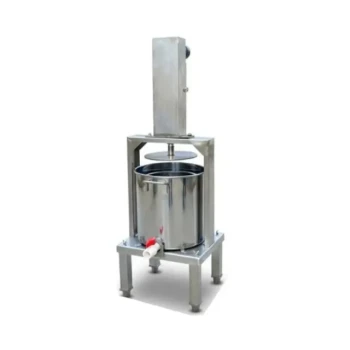
A honey press can recover residual honey from wax cappings or comb material after primary extraction. It is a supplementary machine rather than a universal requirement.
Presses are most useful where maximizing honey recovery and processing cappings efficiently justify the added equipment and cleaning requirements.
Filter and Clarify the Raw Honey
Use Strainers for Basic Debris Removal
A honey strainer removes larger particles such as wax fragments and comb debris after extraction. Stainless steel strainers are durable, washable, and appropriate for food-processing environments.
A coarse strainer may be sufficient for smaller operations, but commercial lines often benefit from staged filtration. Multiple filtration levels improve clarity while maintaining a controlled flow rate.
Add Multi-Stage Filtration for Commercial Lines
A multi-stage filtration system can provide more consistent removal of suspended solids than a single strainer. The appropriate configuration depends on the desired product specification and the viscosity of the honey.
Filtration should support quality goals without unnecessarily removing desirable natural characteristics. The system must also be easy to disassemble and sanitize between production runs.
Manage Viscosity, Settling, and Storage
Use Heating Cabinets or Controlled Warming
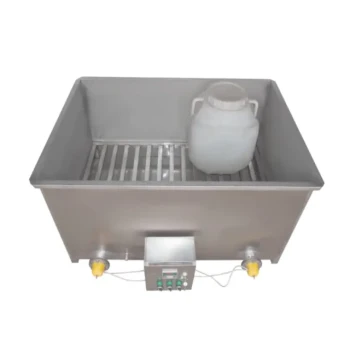
Honey viscosity changes with temperature and variety. Heating cabinets, warming rooms, or temperature-controlled tanks can make honey easier to transfer, filter, and fill.
Heating must be carefully controlled. Excessive heat can compromise product quality, so warming equipment should provide stable, adjustable temperature management rather than uncontrolled exposure.
Install Settling Tanks
A settling tank allows fine air bubbles and remaining particles to separate from the honey before bottling. This supports a cleaner appearance and more consistent filling performance.
Settling tanks are particularly useful after extraction and filtration, when honey may contain trapped air or small amounts of suspended material.
Add Food-Grade Storage Tanks
Dedicated stainless steel storage tanks provide hygienic holding capacity between processing stages. Tanks should have suitable outlets, secure covers, and fittings compatible with pumps, filters, and filling equipment.
Storage capacity should reflect harvest surges and bottling schedules. Insufficient tank capacity can force production interruptions even when extraction and filling machines have adequate throughput.
Automate the Bottling Stage
Choose a Honey-Filling Machine
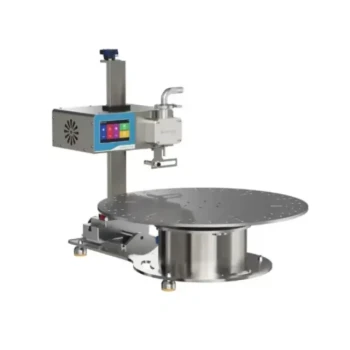
A honey-filling machine dispenses a controlled volume into jars, bottles, or other retail containers. Automated and semi-automated fillers improve filling speed, reduce product handling, and provide more consistent package volumes than manual pouring.
Volumetric filling is especially important for commercial distribution because inaccurate fills increase product giveaway and create packaging inconsistencies.
Select Manual, Semi-Automatic, or Automatic Operation
A manual filling tank with a gate valve may meet the needs of a small apiary. It is relatively simple and economical, but output depends heavily on operator speed and technique.
A semi-automatic filler provides a practical middle ground for growing operations. Fully automatic filling equipment is better suited to high-volume production lines that require repeatable output and integration with capping, labeling, and conveyor systems.
Integrate Filling With the Rest of the Line
The filler should be compatible with the storage tank, transfer method, container sizes, and downstream packaging equipment. A machine that cannot maintain a steady supply of honey will not deliver its rated filling performance.
For commercial users, the most efficient setup links storage, pumping, filling, capping, labeling, and case packing in a logical sequence. Even when some stages remain manual, consistent interfaces reduce downtime and simplify future expansion.
Understanding the Trade-offs
Automation Increases Throughput and Investment
Automated machinery reduces repetitive labor and improves consistency, but it requires greater upfront investment, operator training, maintenance, and cleaning procedures. The financial case depends on production volume and labor costs.
A semi-automatic line is often the most adaptable option for apiaries that are scaling gradually. It provides measurable productivity gains without requiring a fully automated facility.
Larger Equipment Requires Better Workflow Planning
High-capacity extractors, tanks, and fillers can process more honey, but only when upstream and downstream equipment can keep pace. Purchasing one high-output machine without balancing the rest of the line may shift the bottleneck rather than remove it.
Capacity planning should consider the complete workflow, including uncapping speed, extraction cycles, filtration rate, tank volume, filling speed, and available labor.
Heating Improves Flow but Requires Control
Warming honey can improve pumping and filling performance, particularly when viscosity is high. However, heating systems must be controlled and used according to the apiary's quality requirements.
Temperature management should be treated as a process-control issue, not simply a way to make honey flow faster.
Stainless Steel Improves Hygiene but Raises Cost
Food-grade stainless steel offers corrosion resistance, cleanability, and long service life. It generally costs more than lower-grade alternatives, but it is better suited to repeated commercial use and sanitation requirements.
Equipment with smooth surfaces, accessible fittings, removable screens, and minimal difficult-to-clean joints can reduce maintenance time and contamination risk.
Make the Right Choice for Your Operation
A complete sourcing strategy should cover both essential machinery and the supporting tools required to keep the line operating reliably.
- If your primary focus is small-scale commercial production: Use an uncapping tray, manual or electric uncapping knife, centrifugal extractor, stainless steel strainer, settling tank, and controlled filling tank with a gate valve.
- If your primary focus is rapid growth: Choose a semi-automatic filling machine, higher-capacity extractor, multi-stage filtration, wax melter, and stainless steel storage tanks with compatible transfer equipment.
- If your primary focus is high-volume processing: Build an integrated line around automated uncapping, commercial extraction, controlled warming, filtration, storage, filling, capping, labeling, and conveyor handling.
- If your primary focus is product hygiene and consistency: Prioritize food-grade stainless steel, cleanable designs, controlled temperature equipment, accurate volumetric filling, and documented sanitation procedures.
- If your primary focus is distributor or reseller flexibility: Source a complete portfolio with multiple equipment capacities, compatible accessories, responsive technical support, and reliable order fulfillment.
The right honey-processing line combines safe harvesting, efficient extraction, controlled clarification, hygienic storage, and accurate filling into one scalable workflow.
Summary Table:
| Equipment Category | Essential Equipment | Key Considerations |
|---|---|---|
| Preparation & Safety | Bee escapes, fume boards, brushes, protective gear | Safe handling of supers and frames |
| Transport & Storage | Honey supers, frame racks/carts, settling tanks, storage tanks | Smooth workflow, sufficient capacity |
| Uncapping | Uncapping tray/tank, knives (manual/electric/automated), wax melter | Efficient wax removal, beeswax recovery |
| Extraction | Centrifugal extractor (radial/tangential), honey press | Match capacity to harvest volume, preserve comb |
| Filtration & Clarification | Strainers, multi-stage filtration system | Remove debris, clarify honey while preserving quality |
| Viscosity Management | Heating cabinets/warming rooms, temperature-controlled tanks | Controlled warming to improve flow without damaging honey |
| Bottling | Honey-filling machine (manual/semi-automatic/automatic) | Accurate volume, integration with capping/labeling |
Ready to streamline your honey production? HONESTBEE offers a comprehensive range of beekeeping equipment, from extractors to filling machines, tailored for commercial apiaries and distributors. Benefit from our one-stop sourcing, rapid delivery, and expert support. Contact us today to discuss your needs and boost your operational efficiency.
Related Products
- Manual Honey Filling Machine Bottling Machine for Honey
- Honey Gate Valve with Ergonomic Ball Handle Plastic Bee Honey Tap for Beekeeping Bottling and Honey Extractor Equipment
- Double Nozzle Small Honey Filling Machine Honey Sachet Packing Packaging Equipment
- Automatic Honey Filling and Filtering Machine for Beekeeping Bottle Filling
- Fully Automatic Honey Filling Packaging Machine for Processing Line
People Also Ask
- What is a manual honey filler and where is it used? The Essential Guide for Small-Scale Honey Bottling
- What is a manual filling machine? The Ultimate Guide for Small-Batch Producers
- What types of filling mechanisms are used in honey filling machines? Find the Best Tech for Your Viscosity
- What are the benefits of utilizing professional honey filling machines? Scale Your Production with Precision
- What challenges can arise from packaging honey without a suitable filling machine? Optimize Your Production Today