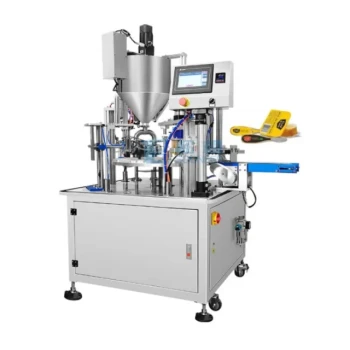
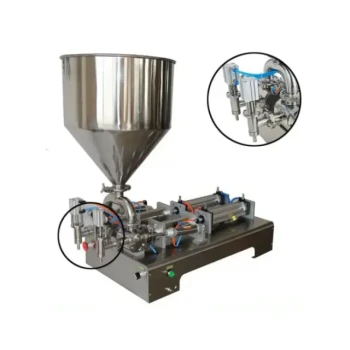
Honey filling machines utilize distinct mechanisms tailored to the fluid properties of the product. The primary mechanisms used are piston fillers, which force product through a cylinder, gravity fillers, which rely on the product's weight, and vacuum fillers, which draw liquid into the bottle. Additional configurations include pump fillers and overflow fillers, with the selection largely determined by the honey's viscosity and the desired fill speed.
Core Insight: The physical thickness (viscosity) of your honey dictates the machinery you need. While gravity and vacuum systems offer speed, piston and pump mechanisms are often superior for honey because they actively force the viscous liquid into containers, ensuring volumetric accuracy.
Mechanisms Based on Viscosity and Precision
Piston Filling Technology
Piston fillers are a standard choice for honey due to its thick, sticky nature. This system uses a cylinder and piston assembly to draw a specific amount of honey from a hopper and force it into the container. Because this is a volumetric method, it delivers a highly consistent volume of product with every cycle.
Gravity Filling Systems
Gravity fillers rely on an overhead tank to dispense honey using the natural weight of the liquid. While simple, this method is generally restricted to low-viscosity or heated honey that flows freely. If the honey is too thick, gravity alone may not provide sufficient flow rates for efficient production.
Vacuum Filling
Vacuum fillers operate by creating a pressure difference that draws the honey into the bottle. This method is effective for maintaining fill speeds. It is particularly useful when you need to manage the pressure within the container during the filling process.
Pump Filling
Pump filling machines are designed specifically for viscous liquids requiring high precision. These machines use positive displacement pumps to move the honey. They offer excellent control over the flow rate and are capable of handling heavier fluids without struggling.
Overflow Filling
Overflow filling machines are unique because they fill to a specific cosmetic level rather than a specific volume. This ensures that every bottle on the shelf appears filled to the exact same height, regardless of minor variations in bottle interior volume. This is ideal for clear glass containers where visual consistency is paramount.
Categorization by Automation and Measurement
Volumetric vs. Net Weight
Beyond the mechanical action, machines are classified by how they measure the product. Volumetric fillers (like pistons) measure by space occupied. Weighing filling machines dispense product based on weight, which can be critical for meeting legal trade standards regarding net weight.
Automatic vs. Semi-Automatic Configurations
Automatic viscous liquid filling machines handle the entire process, utilizing conveyors to move bottles through cleaning, filling, and capping stations. Semi-automated machines require manual intervention, such as an operator placing the bottle under the nozzle or activating the fill cycle, making them suitable for smaller operations.
Critical Trade-offs in Mechanism Selection
Speed vs. Accuracy
As noted in the primary reference, you must often choose between fill speed and fill accuracy. Piston and weighing fillers generally prioritize precise amounts (accuracy), while vacuum and gravity fillers often prioritize the speed of the line and consistent fill levels.
Viscosity Limitations
The most common pitfall is selecting a mechanism ill-suited for the product's thickness. Gravity fillers struggle with thick honey, leading to slow production or inconsistent fills. Conversely, aggressive piston or pump fillers must be calibrated carefully to avoid introducing air bubbles into the product.
Making the Right Choice for Your Goal
To select the correct machine, you must align the mechanism with your specific product characteristics and production targets.
- If your primary focus is handling thick, raw honey: Choose a Piston or Pump Filler to ensure the machine has enough force to move the product accurately.
- If your primary focus is visual consistency on the shelf: Choose an Overflow Filler to ensure every bottle is filled to the exact same liquid line.
- If your primary focus is high-speed production for thin syrups: Choose a Gravity or Vacuum Filler to maximize throughput without mechanical resistance.
- If your primary focus is small-batch or startup production: Choose a Semi-automated Machine, which balances cost with the ability to automate the difficult filling step.
Success in packaging honey relies on matching the mechanical force of the filler to the natural resistance of the honey.
Summary Table:
| Filling Mechanism | Ideal Viscosity | Measurement Type | Best For |
|---|---|---|---|
| Piston Filler | High (Thick) | Volumetric | Consistency and force for raw honey |
| Gravity Filler | Low (Heated) | Time-based | High-speed flow for thin liquids |
| Vacuum Filler | Low to Medium | Level-based | Maintaining fill speeds & pressure control |
| Pump Filler | High (Sticky) | Displacement | Precision control for heavy fluids |
| Overflow Filler | Any | Level-based | Visual uniformity in clear containers |
Streamline Your Honey Production with HONESTBEE
Choosing the right filling mechanism is critical to maintaining product quality and operational efficiency. At HONESTBEE, we specialize in empowering commercial apiaries and distributors with high-performance beekeeping machinery and equipment.
Whether you need precision piston fillers for raw honey, honey-filling machines for large-scale bottling, or complete hive-making hardware, we provide the industrial tools you need to grow. From specialized hardware to honey-themed cultural merchandise, our comprehensive wholesale offering is designed to scale your business.
Ready to upgrade your bottling line? Contact us today to find the perfect machinery for your apiary!
Related Products
- Precision Durable Efficient HONESTBEE Rotary Honey Filling Machine
- Semi Automatic Small Honey Bottle Filling Machine Honey Filler
- Economy Small Honey Filling Machine Honey Bottle Filler Packaging Machine
- Fully Automatic Honey Filling Packaging Machine for Processing Line
- Commercial Rotary Honey Filling Machine for Production
People Also Ask
- How do high-precision honey filling machines ensure quality? Optimize Your Commercial Production with HONESTBEE
- How do honey filling and processing machines aid native bee product conservation? Boost Value with HONESTBEE Technology
- What are the common types of bottling machines used for honey? Choosing the Right Solution for Your Apiary
- What quality control role does professional honey filling equipment perform? Ensure Consistency and Product Stability
- What is a key feature of the new generation of the honey filling machine? The Advanced Electronic Control Unit