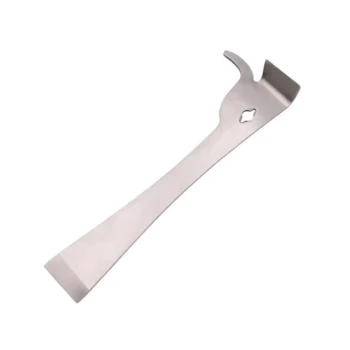
The single most critical safety measure for apiary health is ensuring the hive tool is cleaned before using it on a different hive. While personal injury prevention is vital, failing to sanitize your tool turns it into a vector for disease, potentially spreading pathogens across your entire apiary.
Core Insight: True hive tool safety encompasses both biosecurity and physical handling. You must prioritize sterilizing the tool between hives to prevent disease transmission, while simultaneously maintaining strict hand placement discipline to avoid personal injury from slips.
Biosecurity: Protecting the Apiary
The primary reference highlights that safety extends beyond the beekeeper to the health of the colony itself.
Preventing Pathogen Transmission
A hive tool comes into direct contact with wax, propolis, and hive components that may harbor bacteria or viruses.
If you move from an infected hive to a healthy one without cleaning the tool, you directly introduce those pathogens.
The "Between-Hives" Protocol
To maintain a safe environment, you must clean the hive tool before every transition to a new hive.
This simple habit breaks the chain of transmission and safeguards the collective health of your bees.
Physical Safety: Protecting Yourself
Supplementary data indicates that hive tools are necessarily sharp to function effectively, presenting a significant cut hazard.
Managing Leverage and Slippage
When prying apart boxes or scraping propolis, you often apply significant force.
If the tool slips while under pressure, it moves quickly and unpredictably.
Always ensure your free hand is never in the path of the tool.
Proper Hand Placement
When scraping wax or propolis off woodenware, position your holding hand behind the direction of the stroke.
Never pull the tool toward your body or your other hand.
Essential Protective Gear
Regardless of your skill level, appropriate protective gear is a non-negotiable safety layer.
Always wear a bee suit, gloves, and a veil to protect against stings that may occur if the tool slips and agitates the colony.
Operational Safety: Protecting the Colony
Beyond disease, how you mechanically use the tool impacts the safety and stress levels of the bees.
Monitoring Colony Temperament
Before inserting the tool, observe the hive entrance for defensive behavior, such as loud buzzing or darting bees.
If the colony appears aggressive, approach with extreme caution to avoid escalating the situation.
Gentle Manipulation
Use the tool gently to minimize vibration and crushing hazards.
Disruptions should be kept minimal; high stress can trigger defensive attacks, endangering both the beekeeper and the bees.
Common Pitfalls to Avoid
Understanding where most beekeepers fail is essential for maintaining high safety standards.
The Dull Tool Fallacy
It is a misconception that a dull tool is safer.
A dull blade requires excessive force to pry components apart, significantly increasing the likelihood of the tool slipping and causing injury.
Cleaning vs. Sanitizing
Simply scraping visible debris off the tool is not enough for biosecurity.
While removing propolis is good for maintenance, pathogen safety requires thorough cleaning to neutralize invisible threats.
Ensuring Safe and Effective Apiary Management
To operate safely, you must balance mechanical caution with biological vigilance.
- If your primary focus is Biosecurity: rigorously clean your hive tool before touching a new hive to prevent the spread of disease.
- If your primary focus is Personal Safety: always position your free hand behind the cutting edge to prevent injury during slippage.
- If your primary focus is Colony Welfare: use the tool gently and efficiently to minimize stress and prevent defensive reactions.
Mastering the hive tool requires treating it as both a surgical instrument for the hive and a sharp implement in your hand.
Summary Table:
| Safety Category | Key Measure | Objective |
|---|---|---|
| Biosecurity | Sanitize between every hive | Prevent pathogen & disease transmission |
| Physical Handling | Hand placement behind the tool | Prevent cuts and injuries from tool slippage |
| Colony Welfare | Minimal vibration & gentle prying | Reduce bee stress and defensive aggression |
| Tool Maintenance | Keep the blade sharp | Ensure controlled force and precise operation |
Elevate Your Apiary Operations with HONESTBEE
At HONESTBEE, we understand that the right tools are the foundation of a safe and productive apiary. Whether you are a commercial beekeeper managing thousands of colonies or a distributor seeking high-quality supplies, we provide the comprehensive wholesale solutions you need.
Our Value to You:
- Full Spectrum Supply: From professional-grade hive tools and protective gear to advanced hive-making and honey-filling machinery.
- Industry Consumables: A wide array of essential consumables to keep your operations running smoothly.
- Quality & Innovation: Specialized hardware designed for durability and efficiency in demanding commercial environments.
Ready to scale your beekeeping business with a partner you can trust? Contact us today to explore our wholesale catalog and see how HONESTBEE can support your success.
Related Products
- HONESTBEE Professional Long Handled Hive Tool with Precision Cutting Blade
- Professional Multi-Function Stainless Steel Hive Tool
- HONESTBEE Premium Italian Style Hive Tool with Hardwood Handle
- Ergonomic Plastic Frame Spacer Tool for Rapid Hive Management Beekeeping
- Professional Grade Foldable Beehive Handles
People Also Ask
- Why are professional hive tools considered indispensable? Master Beekeeping Maintenance with Precision Leverage
- What is the role of professional hive tools in routine apiary maintenance? Expert Tips for Hive Health and Longevity
- What is a bee hive tool? Discover Why It’s the Most Essential Hand Tool for Every Beekeeper
- How do hive tools and queen rearing equipment facilitate the bee colony splitting process? Restore Your Apiary Faster
- Why are professional hive tools & observation equipment necessary for queen rearing evaluation? Master Your Quality