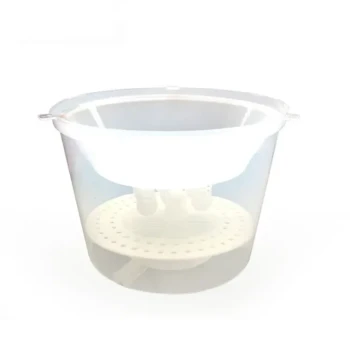
Beehives equipped with standardized pollen traps function as dual-purpose precision instruments that transform apiary management from simple containment into a controlled production and data collection system. By mechanically intercepting pollen loads from returning foragers at a standardized interface, these units enable the harvest of commercial-grade mono-floral pollen while simultaneously providing researchers with consistent biological samples necessary for nutritional analysis and ecological monitoring.
The core value of this technology lies in controlling biological variability. By standardizing how pollen is collected, these hives bridge the gap between scalable commercial diversification and the rigorous consistency required for scientific experimentation.
Commercial Application: Diversification and Efficiency
High-Value Product Diversification
Standardized pollen traps allow beekeeping enterprises to move beyond honey-only production. By installing these devices, beekeepers can efficiently separate and collect bee pollen, creating a secondary, high-value commercial product stream without altering the fundamental operations of the colony.
Component Interchangeability
The "standardized" aspect of these hives and traps is critical for scalability. Precision manufacturing ensures that traps fit uniformly across National Hives or other modern standard bodies. This interchangeability reduces operational friction, allowing apiary managers to deploy, harvest, and maintain equipment rapidly across large-scale operations.
Optimized Colony Energy Management
Modern standardized hives utilize precision structures that offer superior insulation and ventilation. This reduces the metabolic energy bees must expend on thermoregulation. Consequently, the colony can redirect that preserved energy toward increased foraging activity, maximizing the intake of both nectar and the pollen collected by the traps.
Research Application: Data Precision and Control
Production of Standardized Test Diets
For research purposes, the primary value of these traps is the ability to collect mono-floral pollen during specific nectar flows. This provides scientists with composition-controlled raw materials to create standardized dietary formulations. This consistency is essential for comparative experiments, eliminating the "noise" of random mixed-pollen diets.
Non-Destructive Biological Sampling
Pollen grid traps act as a non-invasive monitoring tool. Because the mechanical structure dislodges pollen from the bees' legs as they enter, researchers can obtain real-time samples of the colony's diet. This allows for the analysis of lipid and fatty acid compositions without harming the bees or disrupting the colony's development.
Ecological and Biodiversity Monitoring
These equipped hives serve as data nodes for ecological modeling. By analyzing the trapped pollen, researchers can monitor the diversity of plant species visited in specific landscapes, such as intensive agricultural zones. This converts a dispersed apiary site into a source of quantifiable spatial distribution data.
Understanding the Trade-offs
Nutritional Balancing Act
While traps are valuable for collection, they physically remove a portion of the colony's protein source. Beekeepers and researchers must balance the duration of trapping with the colony's nutritional needs to ensure the population remains healthy and productive.
Mechanical Impediment
The pollen trap is a physical barrier that bees must navigate. While designed to allow normal entry and exit, the grid structure inevitably alters the flow of traffic slightly. Precision manufacturing helps minimize this disruption, but it remains a factor in managing foraging rhythm studies.
Making the Right Choice for Your Goal
Whether you are managing a commercial apiary or designing a scientific study, the standardized pollen trap is a tool for precision.
- If your primary focus is Commercial Production: Prioritize standardized traps that offer seamless interchangeability with your existing hive bodies to maximize operational efficiency and diversify revenue through pollen sales.
- If your primary focus is Scientific Research: Leverage these traps to isolate specific mono-floral pollen sources, ensuring your dietary formulations and nutritional evaluations are based on consistent, controlled baselines.
Standardization in hardware leads to standardization in results; by controlling the input, you secure the quality of your output.
Summary Table:
| Application Category | Key Benefit | Technical Value |
|---|---|---|
| Commercial Production | Revenue Diversification | Enables high-volume collection of clean, commercial-grade bee pollen. |
| Operational Efficiency | Component Interchangeability | Fits standard hive bodies (e.g., National Hives) for rapid large-scale deployment. |
| Scientific Research | Data Consistency | Collects mono-floral samples for standardized test diets and nutritional analysis. |
| Ecological Monitoring | Biodiversity Tracking | Acts as a non-invasive data node to monitor local plant species and landscape health. |
| Colony Management | Energy Optimization | Combined with insulated hives to reduce thermoregulation stress during foraging. |
Elevate Your Apiary Operations with HONESTBEE
Whether you are managing a large-scale commercial apiary or conducting rigorous apicultural research, HONESTBEE provides the precision-engineered tools you need to succeed. As a leading global supplier for commercial apiaries and distributors, we offer a comprehensive wholesale portfolio—from standardized hive-making and honey-filling machinery to high-durability beekeeping tools and essential consumables.
Why Partner with HONESTBEE?
- Scale Your Production: Our standardized equipment ensures seamless interchangeability across your entire operation.
- Diversify Your Revenue: Access professional-grade pollen traps and processing machinery to move beyond honey production.
- Expert Support: We cater to the specific needs of the beekeeping industry with tailored hardware solutions.
Ready to optimize your yield and streamline your workflow? Contact us today to discuss your wholesale needs!
References
- Mahmut Dağ, Aytül Uçak Koç. Overwintering Performance and Spring Development of Honeybee Colonies Fed with Spirulina (Arthrospira platensis). DOI: 10.25308/aduziraat.1645404
This article is also based on technical information from HonestBee Knowledge Base .
Related Products
- Removable Plastic Pollen Trap With Ventilated Tray for Bees Pollen Collector
- 30 cm Plastic Entrance Hole Bee Pollen Trap and Collector
- Plastic Bee Pollen Trap Strips Comb Catcher Collector
- High-Efficiency Diamond Maze Bee Escape for Clearing Supers
- Heavy-Duty Ergonomic Grip Galvanized Pollen Shovel
People Also Ask
- What are the design principles and advantages of pollen traps in the collection of bee pollen? Boost Your Apiary Yield
- What is the function of professional pollen traps in evaluating honey plants? Quantifying Pollination and Crop Potential
- What functions do pollen traps serve for bee bread production? Optimize Your Raw Material Collection
- What maintenance and pest prevention measures should be taken for pollen traps? Protect Your Hive and Harvest Quality
- How does the use of pollen traps in honeybee hives enhance crop fertilization? Boost Your Yield Through Induced Activity