Worker bee glands are production organs that change with age. In young nurse bees, the hypopharyngeal glands produce protein-rich secretions, while the mandibular glands contribute lipid-rich material; together, these secretions form royal jelly for queen and larval nutrition. As workers mature into foragers, hypopharyngeal gland activity shifts toward invertase production, and mandibular glands produce defensive compounds such as 2-heptanone. This transition determines how an apiary should manage nurse-bee populations, nutrition, harvesting equipment, and colony labor.
Royal jelly production depends on keeping well-nourished, physiologically young nurse bees in the colony. Effective management therefore combines nurse-bee population control, adequate protein and energy nutrition, suitable queen-rearing equipment, and hygienic, acid-resistant collection systems.
How Worker Gland Function Changes With Age
Hypopharyngeal glands support brood and queen feeding
In young nurse bees, the hypopharyngeal glands produce a protein-rich secretion. This secretion is a major component of royal jelly and supports the development of larvae and the maintenance of the queen.
These glands are particularly active during the nurse-bee stage, commonly associated with workers approximately 5–15 days old, although colony conditions and worker roles can shift this timing.
Mandibular glands contribute lipids and defensive chemistry
The mandibular glands provide lipid-rich secretions that combine with hypopharyngeal gland products to form royal jelly. These glandular contributions help give royal jelly its distinctive composition and biological activity.
In older foragers, the mandibular glands instead contribute alarm-related compounds, including 2-heptanone. This reflects the broader transition from brood care to foraging, defense, and colony resource handling.
Forager glands support carbohydrate processing
As workers mature, hypopharyngeal glands regress from their primary jelly-producing role and produce more invertase. This enzyme breaks sucrose into the simpler sugars glucose and fructose, helping bees process nectar and sugar feed.
This is a functional reallocation of the worker’s metabolism: young workers invest heavily in brood food, while older workers support nectar processing and field work.
Why This Biology Matters for Royal Jelly Production
Production depends on nurse-bee physiology
A colony cannot maximize royal jelly output simply by adding more harvesting equipment. It must maintain a substantial population of young, actively secreting nurse bees.
Commercial production should therefore prioritize colony organization, brood availability, queen-rearing schedules, and conditions that retain workers in nursing roles rather than allowing the workforce to shift prematurely toward foraging.
Nutrition supplies the raw materials
Royal jelly synthesis requires intensive protein, amino acid, fatty acid, sugar, and oxidative metabolism. High-performing nurse bees need reliable access to pollen or an appropriate protein substitute, together with sufficient carbohydrate energy.
When natural pollen and nectar flows are weak, targeted supplementation can help preserve gland activity and prevent nutritional limitations from reducing royal jelly output.
Genetic potential must be supported operationally
Some colonies have greater biological potential for royal jelly production, reflected in stronger activity in pathways associated with protein synthesis, amino acid metabolism, and energy use. Reported markers include Dop2 and hexamerin storage proteins, which are associated with the demanding physiology of high-output nurse bees.
However, genetic potential is only valuable when supported by sound colony management, adequate feed, and efficient collection procedures.
How to Design a Practical Royal Jelly Production System
Maintain a high proportion of nurse bees
Production colonies should be managed to maintain a strong population of workers in the nurse-bee stage. This requires careful coordination of brood production, queen-rearing equipment, grafting schedules, and colony strength.
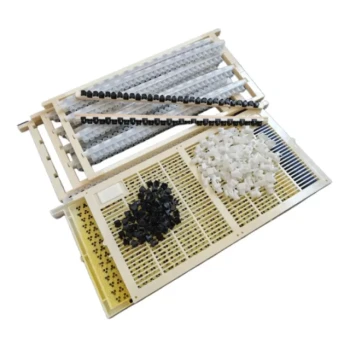
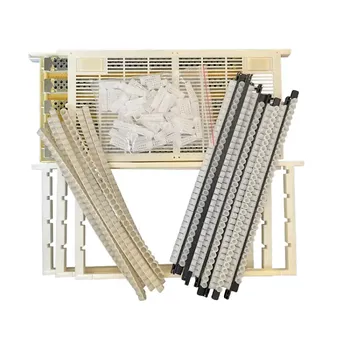
Specialized cell bar frames, grafting tools, and queen-rearing systems help create consistent larval sites and make nurse-bee access easier to manage.
Match feed to the colony’s metabolic workload
Protein-rich feed supports glandular secretion, while carbohydrate feed supplies energy for nursing and jelly synthesis. During shortages, supplemental feeding should be selected according to the colony’s current biological task rather than treated as a generic replacement for all natural forage.
Pre-inverted sugar syrup or suitable formulated feeds may reduce the need for bees to perform extensive sucrose conversion, particularly during spring build-up or nectar shortages. Feed quality, cleanliness, concentration, and timing still require careful control.
Use equipment compatible with royal jelly
Royal jelly is viscous and strongly acidic, with a reported pH of approximately 3.4–4.5. Pumps, collection devices, and contact surfaces should therefore tolerate acidic material and allow effective cleaning.
Equipment selection should emphasize:
- Acid-resistant materials
- Smooth, cleanable product-contact surfaces
- Controlled pumping that limits shear and mechanical stress
- Accurate grafting and collection settings
- Designs that reduce exposure to environmental contamination
Protect product purity during collection
Automated or semi-automated collection can improve consistency, but only when it is properly adjusted. Excessive mechanical force, poor sanitation, or unsuitable contact materials can damage product quality.
A hygienic extraction system should be integrated with rapid handling, appropriate storage, and disciplined cleaning procedures rather than viewed as a standalone machine purchase.
Using Gland Biology to Improve Apiary Nutrition
Diagnose whether the problem is protein or energy
Poor royal jelly production may result from inadequate pollen, insufficient carbohydrate energy, weak brood availability, or an unfavorable worker-age structure. Nutrition management should identify the limiting factor before selecting a supplement.
A protein supplement cannot fully correct an energy shortage, and sugar feed cannot replace the amino acids and lipids supplied by pollen or a properly formulated substitute.
Support nurse bees before peak production
Supplementation is most useful when it is provided before and during the period of high glandular demand. Building the nurse-bee population in advance gives workers time to develop the physiological capacity needed for brood care and royal jelly secretion.
Distributors and commercial apiaries should maintain dependable access to protein supplements, carbohydrate feeds, feeders, and replacement equipment so that supply interruptions do not coincide with critical production windows.
Interpret colony inspections biologically
Routine inspections should connect visible colony conditions with worker physiology. Brood pattern, pollen intake, food stores, worker age distribution, and queen performance all help indicate whether the glands are likely to be operating effectively.
Other anatomical observations, such as pollen collection on the hind legs or abnormalities around respiratory openings, can provide additional clues about nutrition, pests, or colony stress.
Understanding the Trade-offs
Maximizing harvest can weaken the colony
Removing royal jelly too aggressively can compete with the colony’s own need to feed larvae and maintain the queen. Production targets must be balanced against brood development, worker replacement, and long-term colony strength.
The correct objective is sustainable surplus production, not the highest possible extraction from a nutritionally or demographically stressed colony.
Supplements are not identical to natural forage
Formulated feeds can stabilize production during shortages, but they do not automatically reproduce the full nutritional complexity of diverse pollen and nectar sources. Feed should be treated as a targeted management tool, not a universal substitute for forage.
Poorly selected or contaminated feed can introduce additional risks, including reduced consumption and hygiene problems.
Worker age is useful but not absolute
The nurse-to-forager transition is a biological pattern, not a rigid calendar. Colony population, brood demand, season, weather, and forage availability can alter worker task allocation.
Management decisions should therefore combine age expectations with direct observations of colony behavior and food availability.
Automation improves consistency but adds complexity
Specialized grafting, pumping, and extraction systems can increase throughput and support rapid fulfillment of commercial orders. They also introduce requirements for equipment compatibility, sanitation, calibration, maintenance, and operator training.
The best system is not necessarily the most automated one; it is the system that reliably protects colony health and product quality at the required production scale.
How to Apply This to Your Apiary or Supply Program
The practical objective is to align bee physiology, feed supply, production equipment, and fulfillment capability.
- If your primary focus is maximum royal jelly yield: Maintain strong populations of well-nourished nurse bees, coordinate brood and queen-rearing schedules, and use suitable cell bars, grafting tools, and hygienic extraction equipment.
- If your primary focus is colony health and long-term productivity: Set harvest levels conservatively, preserve adequate royal jelly for brood and queen support, and monitor worker age structure, brood condition, and food stores.
- If your primary focus is nutrition management during forage shortages: Provide targeted protein and carbohydrate supplementation, considering pre-inverted sugar feed when appropriate, while maintaining strict feed hygiene and quality control.
- If your primary focus is commercial processing efficiency: Select acid-resistant, cleanable collection equipment and integrate rapid handling, sanitation, inventory availability, and responsive technical support into the supply plan.
Understanding worker gland function turns royal jelly production from a harvesting exercise into a coordinated system of colony biology, nutrition, equipment, and operational control.
Summary Table:
| Gland | Function | Active Stage | Role in Royal Jelly Production | Nutritional Needs |
|---|---|---|---|---|
| Hypopharyngeal glands | Produce protein-rich secretion | Nurse bees (5-15 days old) | Provide main protein component of royal jelly | Protein (pollen, substitutes) |
| Mandibular glands | Produce lipid-rich secretion; later produce defensive compounds | Nurse bees (for jelly); foragers (2-heptanone) | Contribute lipids to royal jelly | Lipids, energy |
| Hypopharyngeal glands (older bees) | Produce invertase for sugar digestion | Foragers | Indirect support by processing nectar | Carbohydrates |
Boost your apiary's royal jelly production with expert support. At HONESTBEE, we supply comprehensive beekeeping equipment and nutritional products tailored for commercial apiaries and distributors. Our one-stop sourcing covers everything from specialized hive tools and royal jelly harvesting kits to protein supplements and acid-resistant pumps. We offer fast delivery, dedicated service, and wholesale pricing to fuel your success. Contact us today to discuss your needs!
Related Products
- No Grafting Queen Rearing Kit: System for Royal Jelly Production and Queen Rearing
- HONESTBEE Improved No Grafting Queen Rearing Kit For Queen Rearing and Royal Jelly Production
- Plastic Chinese Queen Grafting Tool for Bee Queen Rearing
People Also Ask
- What is the primary function of a queen rearing kit? Eliminate Manual Grafting for Superior Bee Breeding
- How do specialized queen rearing kits and queen management tools improve the success rate of bee colony expansion?
- What are some alternative methods to grafting for queen cell production? Discover Graft-Free Queen Rearing Systems
- Are queen rearing systems generally suitable for all honeybee species? Master Efficient Breeding Methods
- Are queen rearing systems suitable for all beekeepers? Modern Tools for Every Experience Level