The crush-and-strain method is a manual, low-equipment approach to honey harvesting. It involves physically destroying the honeycomb structure to release the honey, rather than using centrifugal force to spin it out. The resulting mixture is then poured through a filter, allowing gravity to separate the liquid honey from the beeswax over several hours.
Core Takeaway: This technique is the most accessible entry point for small-scale beekeepers because it requires no specialized machinery. However, it is a "destructive harvest," meaning the bees must rebuild their wax comb from scratch after every extraction.
The Mechanics of the Process
The crush-and-strain method relies on simple physical force and gravity rather than complex mechanical separation.
Breaking Down the Structure
Unlike mechanical extraction, where the comb stays intact, this method requires you to cut the comb out of the frame entirely.
You then place the wax comb into a container and crush it thoroughly. This can be done with a simple kitchen tool, such as a potato masher. The goal is to rupture the capped cells and destroy the structural integrity of the wax to release the honey held inside.
Separation by Gravity
Once the comb is mashed into a slurry of wax and liquid, it must be strained.
The standard setup involves placing a filter cloth (such as cheesecloth) or a mesh bag inside a colander. This colander is positioned over a collection bowl or food-grade bucket. The mixture is poured into the filter, and gravity pulls the heavy honey through the mesh, leaving the solid wax particles behind.
Optimizing the Flow
This process is not instant; the honey drains slowly over several hours.
To ensure maximum yield, the environment should be warm. Warmer temperatures reduce the viscosity of the honey, allowing it to flow through the filter more efficiently. You can also periodically squeeze the filter bag or the crushed comb to force the remaining liquid out.
Strategic Suitability
This method is not universally applicable to all beekeeping setups. It is specifically aligned with certain hive types and production scales.
Ideal Hive Types
Crush-and-strain is the standard harvesting method for top-bar hives or Warre hives.
It is also commonly used for frames that do not have a plastic or wire foundation. Because the comb is destroyed during the process, this method is impractical for standard Langstroth frames where the goal is often to preserve the drawn comb for reuse.
Minimal Equipment Barrier
The primary advantage of this method is the lack of overhead.
You do not need an expensive centrifugal honey extractor, nor do you need a heated uncapping knife. The tools required—a masher, a colander, filter cloth, and a bucket—are inexpensive and readily available.
Understanding the Trade-offs
While accessible, the crush-and-strain method introduces specific limitations that every beekeeper must weigh.
The Cost of Wax Production
The most significant downside is the loss of the honeycomb.
Bees consume a significant amount of honey to produce the wax required to build comb. By destroying the comb during harvest, you force the colony to expend energy and resources rebuilding it next season. This can result in lower honey yields in subsequent years compared to methods that return intact comb to the hive.
Clarity and Processing Time
Because you are manually mashing the comb, the honey may contain more fine pollen or wax particles than spun honey, depending on the fineness of your filter.
Additionally, the process is slow. Relying on gravity means you cannot process high volumes of honey quickly, making this method inefficient for larger operations.
Making the Right Choice for Your Goal
This method is a tool, and like any tool, its value depends on your specific objective.
- If your primary focus is low initial cost: Choose crush-and-strain, as it allows you to harvest without investing hundreds of dollars in a centrifugal extractor.
- If your primary focus is maximum honey yield: Avoid this method, as preserving drawn comb allows bees to fill cells immediately rather than spending energy rebuilding wax.
- If your primary focus is wax harvesting: This method is excellent, as it naturally leaves you with a large volume of clean beeswax after the honey has strained out.
Ultimately, crush-and-strain is the definitive method for the hobbyist who prioritizes simplicity over volume.
Summary Table:
| Feature | Crush-and-Strain Method | Centrifugal Extraction |
|---|---|---|
| Equipment Cost | Very Low (Basic tools) | High (Extractor/Uncapping tools) |
| Comb Preservation | Destructive (Comb is destroyed) | Preservative (Comb is reused) |
| Beeswax Yield | High (Abundant wax harvest) | Low (Only cappings removed) |
| Processing Speed | Slow (Gravity-dependent) | Fast (Mechanical) |
| Best Suited For | Hobbyists & Top-bar hives | Commercial & Large-scale apiaries |
Scale Your Honey Production with HONESTBEE
Whether you are a hobbyist transitioning to a professional scale or a major distributor, HONESTBEE provides the industrial-grade machinery you need to maximize efficiency. From high-capacity honey-filling machines to durable hive-making hardware, we equip commercial apiaries and distributors with premium beekeeping tools and consumables.
Ready to upgrade your operation? Contact HONESTBEE today to discover how our comprehensive wholesale solutions and honey-themed cultural merchandise can grow your business!
Related Products
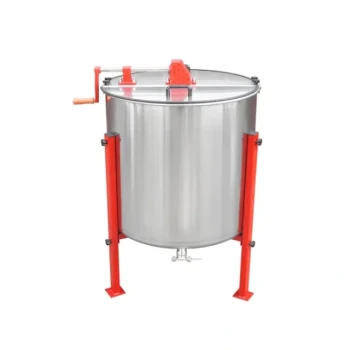
- Stainless Steel 3 Frame Manual Honey Extractor Spinner for Bee Honey Extraction
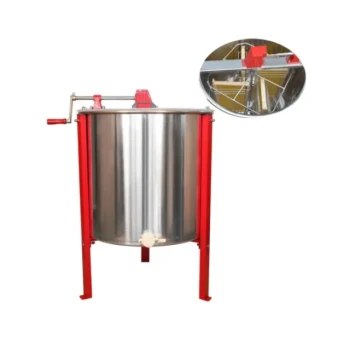
- Manual Hand Crank 4 Frame Honey Extractor Centrifuge for Beekeeping
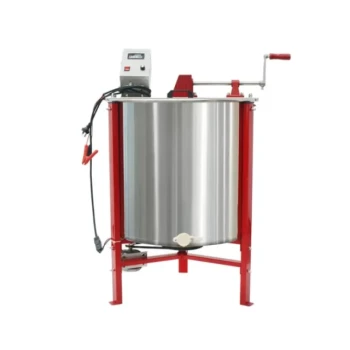
- electric honey extractor honey centrifuge 3 frame honey extractor stainless steel honey frame extractor
- HONESTBEE 3-Frame Manual Acrylic Honey Extractor
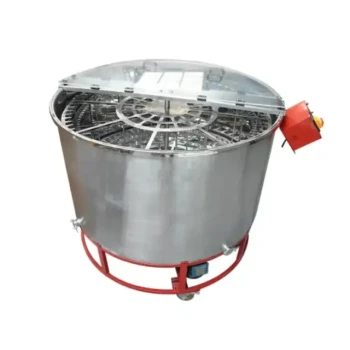
- Stainless Steel Manual 8 Frame Radial Honey Extractor Machine for Beehives
People Also Ask
- Which type of honey extractor is generally more durable? Focus on Material & Build Quality for Longevity
- What are the disadvantages of a manual honey extractor? Overcome Efficiency Bottlenecks in Your Apiary
- What is a manual honey extractor? The Essential Guide to Cost-Effective Beekeeping for Beginners
- Why are manual extractors popular among beginner beekeepers? A Guide to Starting Simple & Saving Money
- What are the primary advantages of utilizing a manual honey extractor? Cost-Effective & Gentle Harvesting