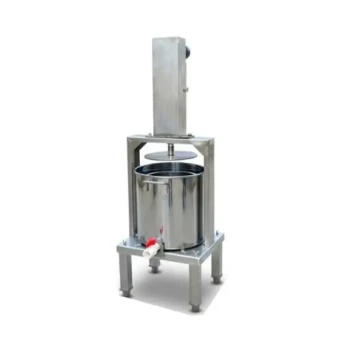
Choosing a honey press over an extractor is often a strategic decision driven by hive health and infrastructure limitations. Beekeepers primarily opt for presses to enforce comb renewal for disease control, manage storage constraints where protecting drawn comb from pests is difficult, or process fragile, wire-free frames that cannot withstand the centrifugal force of an extractor.
The Core Insight While extractors prioritize speed and comb preservation, a honey press is the superior choice for apiaries focusing on strict hygiene cycles, multi-purpose equipment utility, or foundationless beekeeping methods where the comb structure is too delicate to spin.
Prioritizing Hive Health and Hygiene
Breaking the Disease Cycle
The most significant biological advantage of a honey press is that it necessitates the destruction of the old comb. By crushing the comb to release honey, you are forced to supply the bees with new frames and fresh comb for the next cycle.
This acts as a natural reset button for the hive environment. Unlike extraction, which reuses comb where pathogens and pesticides can accumulate over years, pressing ensures that old, potentially contaminated wax is removed from the rotation.
Managing Pests Without Infrastructure
Preserving drawn comb for an extractor requires significant infrastructure to prevent destruction by wax moths. If you lack the freezer space required to kill moth larvae or the sealed storage necessary to monitor frames post-freezing, a press is the logical alternative.
By processing the wax immediately in a press, you eliminate the medium that wax moths target, removing the storage burden entirely.
Handling Delicate Comb Structures
Processing Wire-Free Frames
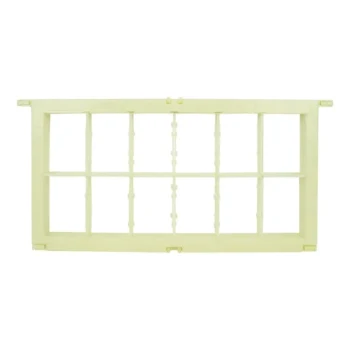
Standard honey extractors rely on centrifugal force, which can destroy comb that is not reinforced. Frames built by bees without wire support (often used in natural or foundationless beekeeping) are frequently not suitable for extraction.
These fragile combs are prone to "blowing out" or collapsing during the spin cycle. A press relies on compression rather than centrifugal force, making it the only safe method for harvesting honey from unsupported, natural comb.
Maximizing Equipment Utility
Versatility for Small Operations
For hobbyists or homesteaders, equipment that serves a single purpose can be hard to justify. A unique advantage of the honey press is its multi-functional design.
Unlike a honey extractor, which is a single-use machine, a high-quality press can often be used for pressing fruit and other produce. This versatility adds value to the investment for those managing a diverse small-scale operation.
Understanding the Trade-offs
The Cost of Renewal
While a press offers superior disease control, it comes at an energy cost to the colony. Because the comb is crushed, bees must consume significant resources to rebuild the wax every season.
Efficiency and Scale
Pressing is inherently slower and more labor-intensive than extraction. As noted in general equipment comparisons, automatic extractors are preferred when time and labor savings are the priority, particularly for larger commercial needs where volume is king.
Making the Right Choice for Your Goal
If you are deciding between these two methods, align your choice with your specific beekeeping philosophy and resources.
- If your primary focus is Disease Control: Choose a press to enforce a cycle of fresh comb and eliminate the buildup of pathogens in old wax.
- If your primary focus is Natural/Foundationless Beekeeping: Choose a press to safely harvest honey from fragile frames that lack wire reinforcement.
- If your primary focus is Volume and Speed: Choose an extractor to preserve drawn comb, allowing bees to refill frames immediately for higher honey production.
Ultimately, the honey press is the tool of choice for the beekeeper who values hygiene and equipment versatility over raw production speed.
Summary Table:
| Feature | Honey Press | Honey Extractor |
|---|---|---|
| Primary Goal | Hygiene & Disease Control | High Volume & Speed |
| Comb Impact | Crushed (Requires Renewal) | Preserved (Reusable) |
| Support Need | Safe for Wire-free/Natural Comb | Requires Reinforced/Wired Comb |
| Pest Risk | Low (No stored drawn comb) | High (Requires moth-proof storage) |
| Versatility | Multi-use (Fruit/Honey) | Single-purpose |
| Labor Level | High (Manual/Slower) | Low (Automatic/Fast) |
Elevate Your Apiary's Success with HONESTBEE
Whether you are prioritizing hive hygiene through comb renewal or scaling your production with high-speed machinery, HONESTBEE is your dedicated partner. We specialize in supporting commercial apiaries and distributors with a full spectrum of professional beekeeping tools, hive-making machinery, and honey-filling equipment.
Our value to you:
- Comprehensive Wholesale Range: From specialized hardware to essential industry consumables.
- Industry Expertise: Tailored solutions for large-scale operations and cultural merchandise.
- Global Distribution: Reliable supply chains for all your beekeeping needs.
Ready to optimize your honey production and equipment durability? Contact HONESTBEE today to discover how our wholesale solutions can grow your business!
Related Products
- Stainless Steel Manual Honey Press with Guard for Pressing Honey and Wax
- Stainless Steel Honey Press Wax Press with Tank
- Easy Use Manual Stainless Steel Honey Press for Honey Comb
- Electric Honey Press Machine for Squeezing Honey Comb Press Equipment
- 10L Stainless Steel Electric Honey Press Machine
People Also Ask
- What other functions can a honey press serve besides honey extraction? Discover Versatile Multi-Purpose Uses
- How does the honey press preserve the quality of honey during extraction? Maintain Pure Enzymes and Flavor
- What materials are used to construct the honey press? Choose Durable, Food-Grade Solutions for Your Apiary
- What are the fundamental differences between manual honey presses and centrifugal honey extractors? A Guide for Pros
- What are some general features of a honey press? Maximize Your Yield with Durable Extraction Tools