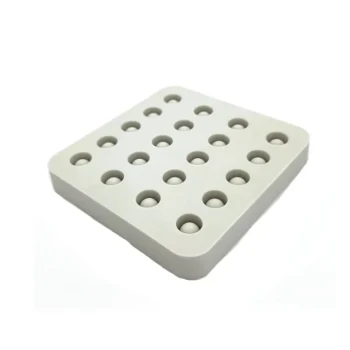
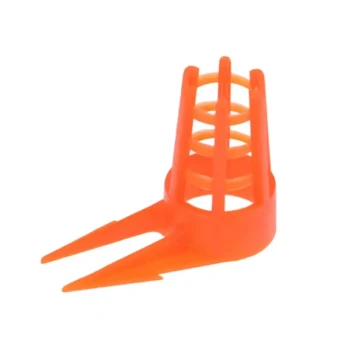
Detachable cell cups are the critical interface between efficient artificial manipulation and biological stability. Their design allows beekeepers to transfer larvae less than 24 hours old from the egg-laying device to the nurse colony without ever physically touching the larva itself. By moving the entire cup rather than just the insect, the larva and its surrounding royal jelly remain completely undisturbed.
The design of detachable cell cups bridges the gap between scalable production and natural biology. By acting as a portable "consumable," they allow for the seamless transport of delicate larvae, ensuring a continuous, stable physical foundation that is essential for rapid development and high survival rates.
The Mechanics of Undisturbed Transfer
Preserving the Larval Micro-Environment
The primary significance of the detachable design is the preservation of the larva's immediate surroundings. In traditional grafting, the larva is lifted out of its jelly, which risks injury and desiccation.
With detachable cups, the larva acts as a passenger inside its own vessel. You are moving the container, not the content, which ensures the bed of royal jelly remains intact during the transfer to queen cell bases.
Minimizing Physical Stress
Larvae under 24 hours old are incredibly fragile and susceptible to damage from handling. The detachable cup serves as a protective barrier.
By eliminating direct contact with grafting tools, the design drastically reduces the risk of physical injury. This "zero-touch" approach provides the stable physical foundation necessary for the larva to transition immediately into rapid growth once introduced to the nurse colony.
Standardization and Biological Simulation
Creating a Consistent Growth Chamber
While natural wax cells vary in shape and size, artificial detachable cups are produced using standardized molds. This ensures every potential queen has access to the exact same internal volume.
This consistency is vital because the internal volume directly dictates the storage capacity for royal jelly. A standardized cup ensures that every larva has ample space for extensive feeding, leading to uniform development and high queen vitality.
Simulating Natural Geometry
The geometry of these cups is not arbitrary; it is engineered to trigger specific biological responses from nurse bees.
Research suggests that specific dimensions, such as a cup depth of approximately 6mm, mimic the natural environment of swarming queen cells. This precise depth, combined with a downward-facing orientation, encourages nurse bees to accept the cup and actively provision it with royal jelly.
Scalability and Workflow Efficiency
Streamlining Large-Scale Operations
Detachable cups transform queen rearing from a bespoke art into a scalable process. Because they are designed as consumables, they can be fixed in groups onto grafting frames.
This modularity allows for the unified management of large batches of queens. Technicians can process dozens of cups simultaneously, facilitating efficient royal jelly collection and standardized observation without disrupting the colony.
Integration with Protection Systems
The design utility of the cup extends beyond the larval stage. As the queen cell matures, the detachable cup serves as a mounting point for protective equipment.
The cups fit seamlessly into queen rearing cages and protectors. This integration safeguards unhatched cells from worker aggression and prevents the first emerged virgin queen from eliminating her unhatched rivals.
Understanding the Trade-offs
Material Acceptance Issues
While standardized, plastic detachable cups do not always carry the same olfactory cues as natural beeswax. In some cases, nurse bees may be slower to accept the artificial material compared to a natural wax cup.
Sanitation and Maintenance
The reusability of detachable cups creates a burden of rigorous sanitation. Unlike natural cells which are built and torn down by bees, artificial cups must be meticulously cleaned to prevent the spread of pathogens between rearing cycles.
Making the Right Choice for Your Goal
To maximize the effectiveness of your queen rearing program, consider how the design features of detachable cups align with your specific objectives:
- If your primary focus is Larval Survival: Prioritize the "no-touch" capability of the cup to ensure the 24-hour-old larvae and their royal jelly bed are never physically disturbed.
- If your primary focus is Colony Acceptance: Ensure your detachable cups adhere to the 6mm depth standard to strictly mimic the natural geometry of a swarming cell.
- If your primary focus is Scalability: Utilize cups designed for frame mounting to enable batch processing and unified management of the rearing timeline.
The detachable cell cup is not merely a holder for a larva; it is a sophisticated tool that balances the efficiency of mass production with the delicate biological requirements of the honey bee.
Summary Table:
| Feature | Biological/Operational Significance | Key Benefit |
|---|---|---|
| Detachable Design | Allows "zero-touch" transfer of delicate larvae. | Minimizes physical stress & preserves royal jelly. |
| Standardized Molds | Provides consistent internal volume & geometry. | Uniform queen development & high vitality. |
| Modular Mounting | Enables batch processing on grafting frames. | Streamlines large-scale operations & efficiency. |
| Cage Integration | Acts as a mounting point for cell protectors. | Safeguards unhatched queens from worker aggression. |
| 6mm Depth Standard | Mimics natural swarming queen cell geometry. | Triggers higher acceptance rates from nurse bees. |
Elevate Your Queen Rearing with HONESTBEE
At HONESTBEE, we understand that high-quality queen rearing is the backbone of a productive apiary. We provide a comprehensive range of professional beekeeping tools and machinery—from precision-engineered cell cups and grafting frames to advanced hive-making equipment—tailored specifically for commercial apiaries and global distributors.
Why partner with us?
- Scalable Solutions: Our wholesale offerings ensure you have the specialized hardware and consumables needed for large-scale operations.
- Industry Expertise: We supply everything from honey-filling machines to honey-themed cultural merchandise to support your entire business ecosystem.
- Quality Guarantee: Our tools are designed to respect bee biology while maximizing your workflow efficiency.
Ready to scale your production? Contact us today to explore our full spectrum of beekeeping equipment and wholesale opportunities!
References
- Haitham Ramadan. Queen Rearing Activity and Virgin Queen’s Weight for Enhancing the Beekeeping Performance among the Carniolan, Buckfast, Italian and Cordovan Bees. DOI: 10.21608/asejaiqjsae.2023.314232
This article is also based on technical information from HonestBee Knowledge Base .
Related Products
- JZBZ Type Wide Base Plastic Queen Cell Cups for Base Mounting and Queen Rearing
- JZBZ Push-In Queen Cell Cups for Beekeeping
- Clear Black Plain Polystyrene Queen Bee Grafting Cell Cups No Lug for Bee Queen Cup
- Brown Nicot Queen Cell Cups for Breeding Queen Bees Beekeeping
- Premium Nicot Style Cell Bar Holder and Queen Cell Cup Holder System
People Also Ask
- What is the primary function of commercial plastic queen cell cups? Driving Efficiency in Mass Queen Rearing
- What are the primary advantages of using plastic queen cell cups? The Industrial Choice for High-Efficiency Apiaries
- What technical advantages do commercial plastic queen cell cups offer? Scale Your Queen Rearing for Maximum Efficiency
- What is the function of standardized plastic Queen Cell Cups? Boost Efficiency in Commercial Larval Grafting
- Why are standardized plastic queen cell cups preferred? Boost Commercial Queen Rearing Efficiency